
Tips for Long-Lasting Concrete Flatwork

Concrete flatwork, including driveways, sidewalks, patios, and flooring slabs, is one of the most durable construction elements when installed and maintained correctly. However, without proper planning, design, and care, even the strongest concrete can suffer from premature cracking, scaling, and surface deterioration. To ensure concrete flatwork lasts for decades, it's essential to focus on mix design, placement techniques, curing, and ongoing maintenance.
Choose the Right Concrete Mix for Durability
The longevity of flatwork starts with the right concrete mix design. Using a mix that balances strength, workability, and durability is critical.
- Compressive Strength: For driveways and heavy-load areas, a mix with at least 4,000 PSI strength is recommended.
- Water-Cement Ratio: A low w/c ratio (around 0.45 - 0.50) prevents shrinkage cracks and improves durability.
- Air Entrainment: Adding air-entraining admixtures helps concrete resist freeze-thaw cycles, reducing surface scaling.
- Supplementary Cementitious Materials (SCMs): Fly ash, slag, or silica fume can improve durability, workability, and resistance to chemical attacks.
Selecting a high-performance concrete mix ensures the foundation of your flatwork is resilient from the start.
Proper Subgrade Preparation and Compaction
The subgrade plays a vital role in supporting concrete. Poor preparation often leads to settlement cracks and uneven slabs.
- Soil Stabilization: Remove organic material, debris, and loose soil.
- Compaction: Use a vibratory compactor to achieve a uniform, well-compacted base.
- Granular Base Layer: A 4 - 6 inch layer of crushed stone or gravel provides better drainage and prevents slab movement.
- Moisture Control: Slightly dampening the subgrade before pouring prevents rapid moisture loss from the fresh concrete.
A stable subgrade reduces movement and prevents structural weaknesses in the flatwork.
Install Proper Reinforcement
Concrete is strong in compression but weak in tension. To resist cracking and flexural stresses, reinforcement is essential.
- Rebar: Use #3 or #4 rebar, spaced appropriately depending on slab thickness and load requirements.
- Welded Wire Mesh: Provides even reinforcement across the slab and helps limit crack width.
- Fiber Reinforcement: Adding synthetic or steel fibers improves crack resistance and impact strength.
Reinforcement ensures the slab maintains its structural integrity under heavy loads.
Ensure Correct Slab Thickness
Slab thickness depends on the application and load conditions:
- Sidewalks and Patios: Minimum 4 inches thick.
- Driveways: 5 - 6 inches thick for passenger vehicles.
- Commercial Parking Areas: 6 - 8 inches or more for heavy traffic.
Thicker slabs reduce the risk of cracking and ensure long-term performance.
Effective Joint Placement for Crack Control
Since all concrete shrinks during curing, control joints are critical to managing cracks.
- Joint Spacing: Should not exceed 2 - 3 times the slab thickness (e.g., 12 feet for a 4-inch slab).
- Joint Depth: Cut to at least 1/4 the slab thickness.
- Timing: Saw joints within 6 - 18 hours after placement, before random cracks appear.
- Expansion Joints: Installed where slabs meet fixed structures (walls, columns, or curbs) to absorb movement.
Well-designed joints keep cracks controlled and improve slab appearance.
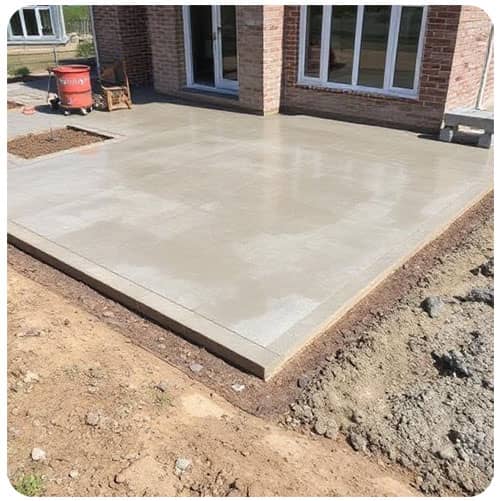
Proper Placement and Finishing Techniques
Concrete placement and finishing require precision to avoid weak surfaces and structural failures.
- Avoid Overworking: Excessive troweling or floating brings water and fines to the surface, leading to scaling and dusting.
- Surface Slope: Provide at least 1/8 inch per foot slope for drainage to prevent water pooling.
- Consolidation: Use vibration methods to eliminate air voids and improve density.
- Finishing Tools: Use magnesium floats instead of steel to avoid premature sealing.
A well-finished slab ensures both aesthetic appeal and strength.
Critical Curing Practices for Strength and Durability
Curing is one of the most overlooked yet essential steps in ensuring long-lasting concrete flatwork.
- Moist Curing: Keep the surface damp for at least 7 days to allow full hydration.
- Curing Compounds: Apply membrane-forming curing compounds to retain moisture.
- Covering: Use wet burlap, plastic sheets, or curing blankets to protect against rapid drying.
- Temperature Control: Protect slabs from freezing during the first 48 hours to prevent cracking.
Proper curing develops maximum strength, minimizes shrinkage, and enhances surface durability.
Protect Against Harsh Weather Conditions
Weather significantly affects flatwork performance.
- Hot Weather: Use retarders to slow setting, and place concrete during cooler times of day.
- Cold Weather: Use heated water, accelerators, and insulation blankets to prevent freezing.
- Rain Protection: If rain is forecast, cover fresh slabs with plastic sheeting immediately after finishing.
Weather-conscious practices protect slabs from early damage.
Seal the Surface for Long-Term Protection
Sealing adds a protective layer that improves the concrete's resistance to moisture, chemicals, and abrasion.
- Penetrating Sealers: Protect against water infiltration and salt damage.
- Acrylic Sealers: Enhance surface appearance while providing moderate protection.
- Epoxy or Polyurethane Sealers: Best for industrial applications with heavy traffic.
Reapply sealers every 2 - 3 years to maintain maximum protection.
Ongoing Maintenance for Longevity
Even well-built concrete flatwork requires regular maintenance.
- Cleaning: Remove dirt, oil, and debris regularly to prevent staining and surface damage.
- Crack Repair: Seal small cracks immediately with epoxy or polyurethane sealants to prevent water penetration.
- Avoid Deicing Salts: Use sand instead of salts in winter to prevent scaling and surface spalling.
- Re-Sealing: Apply fresh sealer periodically for sustained protection.
Routine maintenance extends the life of flatwork and reduces costly repairs.
Common Mistakes to Avoid in Concrete Flatwork
- Using too much water in the mix, leading to shrinkage cracks.
- Skipping or delaying curing, which causes weak and brittle concrete.
- Placing concrete on poorly prepared subgrade.
- Neglecting proper joint spacing and reinforcement.
- Using deicing chemicals during the first winter after installation.
Avoiding these mistakes ensures that your flatwork performs for decades.
Conclusion
Concrete flatwork can last for 30 - 40 years or more when installed and maintained correctly. By focusing on mix design, reinforcement, slab thickness, jointing, curing, sealing, and maintenance, you can ensure surfaces that withstand heavy use and harsh conditions without significant deterioration.
Please watch the following short video for Long-Lasting Concrete Flatwork
Also Read:
 Which Machine Is Best for Your Project: Backhoe or Excavator