
Waterproof a Concrete Roof in New / Old Construction: The Ultimate Guide

Waterproofing a concrete roof is a critical process that safeguards both new and existing structures from water ingress, structural deterioration, and long-term damage. Whether you're dealing with a fresh build or renovating an old rooftop, implementing robust waterproofing strategies ensures longevity, safety, and reduced maintenance costs.
Why Concrete Roofs Need Waterproofing
Concrete is a durable and strong material; however, it is inherently porous, meaning it can absorb water over time. Cracks, weather exposure, and poor drainage systems accelerate water penetration. This leads to:
- Corrosion of reinforcement steel
- Mold and mildew growth
- Thermal inefficiency
- Structural weakening
To prevent such issues, a comprehensive waterproofing system is mandatory in both new construction and retrofitting projects.
Waterproofing in New Concrete Roof Construction
1. Pre-Construction Waterproofing Planning
For new constructions, it is imperative to integrate waterproofing solutions during the design phase. A well-thought-out drainage layout, slope design, and choice of materials will reduce water accumulation and seepage risks.
2. Surface Preparation
Before waterproofing, the roof surface must be:
- Smooth and clean
- Free of dust, grease, and debris
- Crack-free or have all cracks properly sealed
A primer coat is often applied to promote better adhesion of the waterproofing membrane.
3. Selecting the Right Waterproofing System
There are several options available for new concrete roofs:
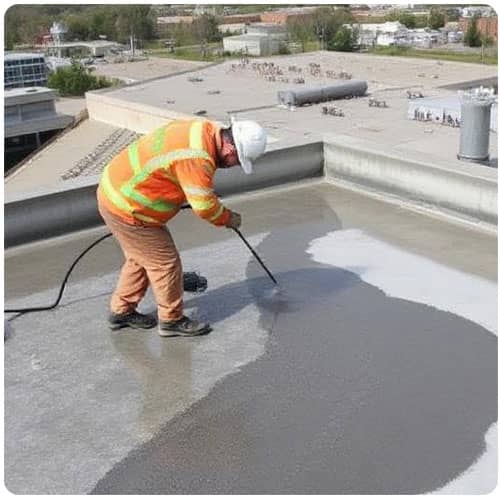
A. Liquid-Applied Waterproofing Membranes
- Polyurethane coatings: Highly elastic, seamless, and UV-resistant.
- Acrylic coatings: Cost-effective and reflective, but less durable than polyurethane.
- Bituminous coatings: Excellent water resistance but need protective screeds.
B. Sheet Membranes
- Modified Bitumen (SBS/APP): High tensile strength and easy to install.
- EPDM (Ethylene Propylene Diene Monomer): Durable rubber membrane with outstanding UV resistance.
C. Crystalline Waterproofing
- Applied as slurry or admixture, it forms crystals that block water pathways inside concrete.
4. Installation of Waterproofing Membranes
- Apply membranes over the sloped concrete surface to facilitate water runoff.
- Overlaps between sheets must be tightly sealed.
- All penetrations (vents, ducts, pipes) must be carefully treated using detailing tapes or additional coats.
5. Protective Screed or Insulation Layer
To shield the membrane from mechanical damage and temperature fluctuations, a protective cement screed or thermal insulation layer is applied over the waterproofing system.
Waterproofing Old Concrete Roofs (Retrofit Projects)
1. Initial Roof Condition Assessment
Inspect for:
- Visible cracks or ponding water
- Efflorescence and discoloration
- Blistering or peeling of old waterproof layers
A thorough inspection helps determine whether to repair, remove, or overlay the existing waterproofing.
2. Surface Repair and Preparation
All existing issues must be addressed:
- Seal cracks using polyurethane sealant or epoxy injection.
- Level undulations with polymer-modified mortars.
- Remove old damaged membranes if they're delaminated or beyond repair.
3. Waterproofing Techniques for Old Roofs
A. Elastomeric Coatings
- Water-based or solvent-based
- UV-resistant, flexible, and durable
- Ideal for areas with thermal movement
B. Bituminous Membrane Overlay
- Ideal for severely damaged surfaces
- Torch-applied or self-adhesive
- Ensure overlapping edges are fused tightly
C. Liquid Applied Membranes
- Great for complex roof shapes
- Seamless application
- Quick-drying and suitable for emergency waterproofing
D. Reinforced Fabric Systems
- Involves embedding polyester fabric in liquid waterproofing material
- Provides mechanical reinforcement
- Enhances lifespan and resistance to cracks
Key Waterproofing Components and Accessories
1. Waterproofing Primer
- Promotes strong adhesion between concrete and membrane.
- Must be applied uniformly and allowed to cure before membrane application.
2. Joint Sealants
- Polyurethane or silicone-based.
- Seals expansion joints, pipe penetrations, and flashing points.
3. Protective Layers
- Gravel ballast, tiles, or cementitious screeds protect against UV, traffic, and heat.
4. Drainage Systems
- Proper slope design ensures zero water stagnation.
- Drainage outlets and scuppers must be integrated with waterproof detailing.
Best Practices for Concrete Roof Waterproofing
- Always slope the roof: Minimum of 1:100 gradient to avoid water pooling.
- Use compatible materials: Primer, membrane, and protective layers should be chemically compatible.
- Regular inspection: Annual checkups for cracks, peeling, or ponding extend the waterproofing lifespan.
- Apply at optimal weather: Waterproofing should be done in dry and moderate temperature conditions for best adhesion.
Common Mistakes to Avoid
- Ignoring drainage planning
- Skipping surface preparation
- Choosing low-grade membranes to cut costs
- Inadequate detailing around joints and projections
Avoiding these pitfalls will greatly increase the effectiveness and lifespan of your waterproofing system.
Cost of Concrete Roof Waterproofing
The cost varies depending on:
- Type of waterproofing material
- Area of the roof
- Labor charges
- Surface condition
Estimated costs (India-based average, as of 2025):
- Liquid membranes: ?50 - ?150 per sq. ft.
- Bituminous sheets: ?70 - ?180 per sq. ft.
- PU coatings: ?120 - ?250 per sq. ft.
Investing in quality waterproofing will reduce long-term maintenance and repair costs, making it a cost-effective choice.
Conclusion
Whether it's new construction or renovation, waterproofing your concrete roof is not optional - it's essential. A professionally planned and executed waterproofing system ensures that your roof remains leak-free, structurally sound, and energy-efficient for decades. By using high-performance materials and expert techniques, we guarantee a leak-proof roofing solution that stands the test of time.
Please watch the short video for Waterproof a Concrete Roof
Also Read:
 Brief Note on Calculate Weight of Steel