
Construction Estimating: Mastering Construction Take-off Sheets
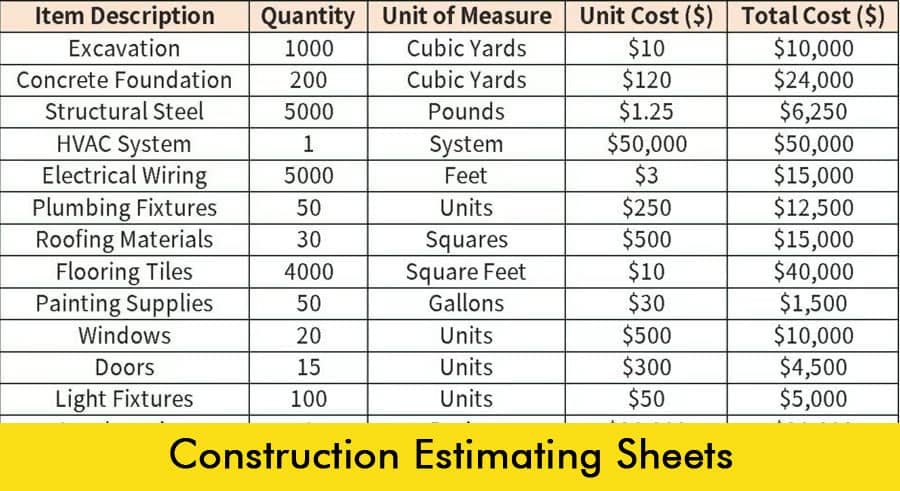
Construction estimating is a critical process that forms the foundation of successful project management in the construction industry. Among the various tools and techniques used for accurate cost estimation, construction take-off sheets play a pivotal role. These sheets help quantify the materials, labor, and other resources required for a construction project. Understanding how to effectively use and prepare take-off sheets is essential for ensuring precise and reliable estimates.
What is Construction Estimating?
Construction estimating is the process of predicting the costs associated with a construction project. This involves determining the quantities and costs of materials, labor, equipment, and other expenses necessary to complete the project. Accurate estimates are vital for setting realistic budgets, securing funding, and ensuring project feasibility.
Importance of Accurate Construction Estimating
- Budgeting: Ensures that the project stays within financial limits.
- Resource Allocation: Helps in efficient distribution of labor, materials, and equipment.
- Competitive Bidding: Provides a basis for contractors to submit competitive and realistic bids.
- Project Planning: Facilitates effective scheduling and planning of project activities.
- Risk Management: Identifies potential cost overruns and helps mitigate financial risks.
Understanding Construction Take-off Sheets
Construction take-off sheets are detailed documents that list all the materials and quantities required for a construction project. These sheets form the basis of the cost estimation process by providing precise measurements and descriptions of each item needed.
Components of a Take-off Sheet
A typical construction take-off sheet includes the following elements:
- Item Description: Detailed description of each material or component.
- Quantity: The measured amount of each item required for the project.
- Unit of Measurement: Standard units such as square meters, cubic meters, or kilograms.
- Unit Price: The cost per unit of each item.
- Total Cost: The aggregate cost for each item, calculated by multiplying the quantity by the unit price.
Types of Take-off Sheets
There are several types of take-off sheets, each suited for different aspects of the construction process:
- Material Take-off Sheet: Lists all the materials required, including their quantities and costs.
- Labor Take-off Sheet: Details the labor requirements, including hours and rates for different trades.
- Equipment Take-off Sheet: Enumerates the equipment needed, along with rental or purchase costs.
- Subcontractor Take-off Sheet: Outlines the work to be performed by subcontractors, including scope and cost.
Steps to Prepare a Construction Take-off Sheet
Preparing an accurate take-off sheet involves several critical steps:
- Review Project Plans and Specifications: Begin by thoroughly reviewing the architectural and engineering plans, along with the project specifications. This helps in understanding the scope of work and identifying all the materials and components required.
- Measure Quantities: Accurately measure the quantities of materials needed using the project plans. This step may involve taking dimensions from drawings or using digital take-off software to ensure precision.
- Describe Items: Provide detailed descriptions for each item listed in the take-off sheet. Clarity in descriptions ensures that there is no ambiguity about what is required.
- Determine Unit Prices: Research current market prices for materials, labor rates, and equipment costs. Unit prices can be obtained from suppliers, historical data, or industry databases.
- Calculate Total Costs: Multiply the quantities by their respective unit prices to calculate the total cost for each item. Sum up these totals to get the overall estimated cost for the project.
- Review and Validate: Review the take-off sheet for accuracy and completeness. Validate the quantities and costs with project stakeholders to ensure that all requirements are captured correctly.
Best Practices for Construction Take-off Sheets
To ensure the effectiveness of construction take-off sheets, adhere to the following best practices:
- Use Standardized Formats: Employ standardized formats and templates to ensure consistency and ease of use.
- Leverage Technology: Utilize digital take-off software to enhance accuracy and efficiency.
- Stay Updated: Keep abreast of market trends and price fluctuations to ensure that unit prices are current.
- Collaborate with Stakeholders: Involve project stakeholders in the review process to validate quantities and costs.
- Maintain Detailed Records: Keep detailed records of all measurements, prices, and assumptions for future reference and audit purposes.
Conclusion
In conclusion, construction estimating and the use of construction take-off sheets are fundamental to the successful planning and execution of construction projects. By mastering the preparation and application of take-off sheets, construction professionals can ensure accurate cost estimates, efficient resource allocation, and effective project management.