
Rate Analysis for Concrete in USA
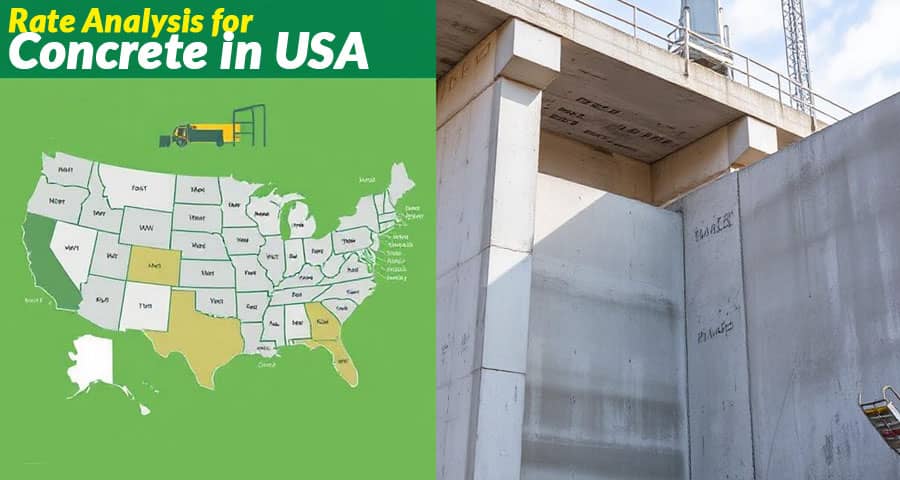
Concrete is one of the most widely used construction materials in the United States due to its durability, strength, and versatility. For contractors, builders, and engineers, understanding the rate analysis for concrete in the USA is essential for accurate project estimation and cost control.
What is Rate Analysis for Concrete?
Rate analysis for concrete is the systematic method of calculating the cost per cubic yard (or cubic meter) of concrete work, including materials, labor, equipment, and overhead. This analysis helps in:
- Preparing accurate project estimates.
- Comparing costs across suppliers and regions.
- Identifying cost-saving opportunities.
- Ensuring profitability in construction projects.
Key Components of Concrete Rate Analysis
The total cost of concrete work in the USA depends on several factors. A detailed breakdown includes the following:
1. Material Costs
Materials are the largest contributor to concrete cost. The main materials used are:
- Cement - Portland cement is most commonly used, with prices ranging between $130 - $180 per ton depending on region and supplier.
- Fine Aggregate (Sand) - Costs between $15 - $30 per ton, varying with location and transportation charges.
- Coarse Aggregate (Gravel/Crushed Stone) - Typically priced at $20 - $40 per ton.
- Water - Minimal in cost but critical for the water-cement ratio.
- Admixtures - Chemical additives like plasticizers, retarders, and accelerators cost around $5 - $15 per gallon.
On average, the material cost for 1 cubic yard of ready-mix concrete in the USA ranges between $130 - $170, depending on mix design and compressive strength requirements.
2. Labor Costs
Labor charges in concrete construction vary significantly depending on location, project size, and union rates.
- Formwork labor - $15 - $25 per hour.
- Mixing and placing concrete - $18 - $35 per hour.
- Finishing labor - $20 - $40 per hour.
In general, labor contributes 25% - 40% of the total concrete cost in large-scale projects.
3. Equipment Costs
Concrete works require various tools and machinery:
- Concrete Mixer Rental - $50 - $150 per day.
- Concrete Pump Rental - $900 - $1,200 per day.
- Vibrators and Finishing Tools - $20 - $50 per day.
For large-scale projects, equipment ownership may reduce long-term costs, but for small contractors, rentals remain common.
4. Transportation Charges
Transportation of ready-mix concrete plays a crucial role in cost estimation. Most suppliers charge delivery fees based on distance:
- Base delivery charge - $60 - $80 per truck.
- Additional per-mile cost - $2 - $4 per mile beyond the free radius.
Projects in urban areas tend to have lower transportation costs compared to remote sites.
5. Overhead and Contractor's Margin
Contractors typically add 10% - 20% overhead and profit margin to cover administrative costs, risks, and profitability.
Average Cost of Concrete in the USA
The national average cost for ready-mix concrete in the USA is:
- $130 - $170 per cubic yard for standard mixes.
- $180 - $250 per cubic yard for high-strength or specialty mixes.
- $10 - $15 per square foot for finished concrete slabs, including labor and materials.
Rate Analysis Example for 1 Cubic Yard of M20 Grade Concrete
Below is a typical rate analysis for 1 cubic yard (0.76 m3) of M20 concrete mix (1:1.5:3):
| Item | Quantity | Rate (USD) | Cost (USD) |
|---|---|---|---|
| Cement (6 bags, 94 lbs each) | 564 lbs | $0.09/lb | $50.76 |
| Sand | 0.42 tons | $25/ton | $10.50 |
| Aggregate | 0.83 tons | $30/ton | $24.90 |
| Water | 32 gallons | $0.002/gallon | $0.06 |
| Admixtures | 1 gallon | $12/gallon | $12.00 |
| Material Cost | - | - | $98.22 |
| Labor (3 hrs @ $25/hr) | - | - | $75.00 |
| Equipment Rental | - | - | $40.00 |
| Transportation | - | - | $60.00 |
| Overhead & Margin (15%) | - | - | $40.00 |
| Total Cost | - | - | $313.22 per cubic yard |
Regional Variations in Concrete Rates
Concrete costs differ across the USA due to local labor rates, availability of raw materials, and transportation expenses:
- Northeast (New York, New Jersey, Massachusetts): Higher costs due to labor rates; $160 - $190 per cubic yard.
- Midwest (Ohio, Illinois, Michigan): Moderate costs; $130 - $150 per cubic yard.
- South (Texas, Florida, Georgia): Competitive pricing; $120 - $140 per cubic yard.
- West (California, Washington, Oregon): Higher costs due to environmental regulations; $170 - $200 per cubic yard.
Factors Affecting Rate Analysis for Concrete
Several factors directly impact the final cost of concrete:
- Mix Design Requirements - Higher strength grades require more cement and admixtures.
- Site Accessibility - Remote or congested sites increase transportation and labor costs.
- Formwork Complexity - Intricate designs require more time and labor.
- Construction Timeline - Accelerated schedules may increase labor overtime and admixture usage.
- Market Fluctuations - Prices of cement and aggregates vary seasonally.
Cost-Saving Strategies in Concrete Construction
Contractors can optimize concrete rates by adopting the following strategies:
- Bulk Material Procurement - Buying cement and aggregates in bulk reduces per-unit costs.
- Efficient Mix Design - Using optimized proportions saves cement without compromising strength.
- On-site Batching - For large projects, on-site batching plants cut transportation charges.
- Recycled Aggregates - Environmentally friendly and cost-effective alternative.
- Labor Productivity Improvements - Skilled workers complete tasks faster and more efficiently.
Conclusion
Rate analysis for concrete in the USA is a crucial tool for ensuring accurate cost estimation and profitability in construction projects. By breaking down material, labor, equipment, and transportation expenses, contractors can develop realistic budgets while identifying cost-saving opportunities. With regional variations and market fluctuations, it becomes even more important to conduct a detailed analysis before execution.
Please watch the following short video for Rate Analysis for Concrete in USA
Also Read:
 What is Prestressed and difference between Pre-Tensioning and Post-Tensioning
3D Laser Scanning in Reverse Engineering
Choosing the Right Flyover Type: Design and Construction Guide
Software for Engineering with CAD in 2023: The Top 15 Options
Download excel sheet to make cost estimation of RCC building