
Types of Concrete Blocks
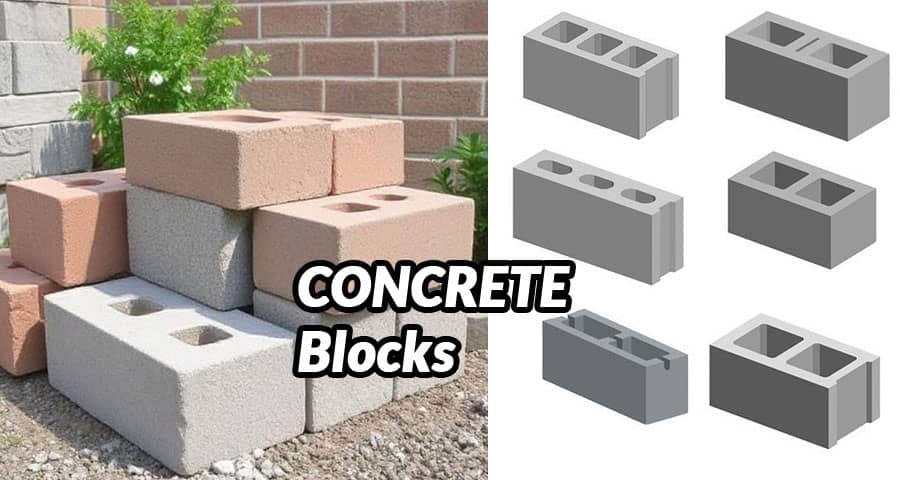
Concrete blocks are one of the most versatile building materials used in modern construction. Known for their durability, strength, and cost-effectiveness, these blocks are the backbone of residential, commercial, and industrial projects. From simple partition walls to high-rise structures, different types of concrete blocks are designed to meet specific functional and aesthetic requirements.
1. Solid Concrete Blocks
Solid concrete blocks are dense and heavy units made of cement, sand, aggregate, and water. They are primarily used in load-bearing walls because of their excellent compressive strength.
Characteristics:
- High density and strength
- Excellent fire resistance
- Good sound insulation
- Sizes typically range from 4 to 6 inches in thickness
Applications:
- Load-bearing walls
- Retaining walls
- Foundations and base courses
- Pavement and hardscaping
Solid blocks are widely used in large-scale projects due to their ability to withstand heavy structural loads.
2. Hollow Concrete Blocks
Hollow concrete blocks (HCBs) are lightweight units with hollow cavities that reduce material usage and weight.
Characteristics:
- 25% - 50% of the block is hollow
- Better insulation properties than solid blocks
- Easier to handle and transport
- Standard sizes: 16 x 8 x 8 inches
Applications:
- Non-load bearing walls
- Partition walls
- Cladding and infill panels
These blocks are preferred in projects where weight reduction and cost-efficiency are critical.
3. Aerated Autoclaved Concrete Blocks (AAC Blocks)
AAC blocks are lightweight, precast foam concrete blocks cured under high pressure in autoclaves.
Characteristics:
- 3 - 4 times lighter than traditional bricks
- Excellent thermal and acoustic insulation
- Fire resistance up to 6 hours
- Eco-friendly due to lower energy consumption
Applications:
- Residential and commercial walls
- Multi-story buildings
- Prefabricated structures
AAC blocks are rapidly replacing clay bricks in modern green building practices.
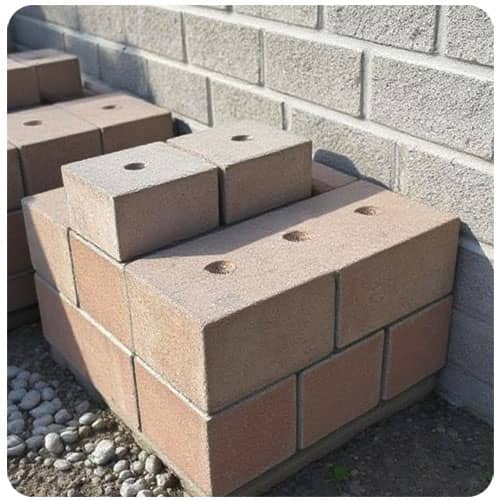
4. Paving Blocks
Paving blocks are specially designed concrete units used for external applications.
Characteristics:
- Available in various shapes (zigzag, square, hexagonal, etc.)
- High resistance to wear and tear
- Non-slip surfaces
- Available in multiple colors and finishes
Applications:
- Driveways
- Walkways and footpaths
- Parking areas
- Landscaping projects
Paving blocks enhance aesthetic appeal while providing long-lasting performance under heavy loads.
5. Decorative Concrete Blocks
Also known as architectural concrete blocks, these units combine functionality with design.
Characteristics:
- Decorative patterns and textures
- Available in polished, split-face, or glazed finishes
- Weather-resistant and durable
- Wide color options
Applications:
- Facades
- Garden walls
- Exterior cladding
- Interior feature walls
Decorative blocks add architectural elegance while maintaining structural integrity.
6. Lintel Blocks
Lintel blocks are U-shaped concrete units designed to create horizontal reinforcements over openings.
Characteristics:
- U-shaped groove for reinforcement bars and concrete filling
- Excellent for distributing loads above windows and doors
- Provide continuity in structural design
Applications:
- Lintels over door and window openings
- Beam and slab integration
Lintel blocks save time and materials compared to conventional shuttering methods.
7. Corner Blocks
Corner blocks are designed to form perfect corners in masonry construction.
Characteristics:
- Smooth finish for external edges
- Available in both solid and hollow designs
- Provide stability and neat alignment
Applications:
- External corners of walls
- Compound walls
- Pillar junctions
These blocks simplify construction by eliminating cutting and reshaping of regular units.
8. Split-Face Concrete Blocks
Split-face blocks have a rough, stone-like finish created by splitting the block during manufacturing.
Characteristics:
- Textured surface for aesthetic appeal
- Durable and weather-resistant
- Available in multiple colors
Applications:
- Exterior walls
- Landscape walls
- Architectural facades
They are ideal for projects requiring both strength and beauty.
9. Lightweight Concrete Blocks
These blocks are made with lightweight aggregates such as expanded clay, shale, or pumice.
Characteristics:
- 30 - 40% lighter than conventional concrete blocks
- Reduced dead load on structures
- Good thermal and sound insulation
Applications:
- High-rise buildings
- Non-load bearing walls
- Prefabricated construction
Lightweight blocks are preferred in seismic zones due to their reduced structural load.
10. Frogged Concrete Blocks
Frogged blocks have a frog-like indentation on the top surface to hold mortar firmly.
Characteristics:
- Provides stronger bond between courses
- Available in solid and hollow designs
- Improved stability in walls
Applications:
- Load-bearing masonry
- Boundary walls
- General building construction
Frogged blocks are ideal for mortar-rich masonry works requiring better bonding.
11. Bullnose Concrete Blocks
Bullnose blocks feature rounded edges for a smooth corner finish.
Characteristics:
- Rounded shape prevents chipping
- Available in single or double bullnose profiles
- Strong and durable
Applications:
- Staircase edges
- Compound walls
- Window sills and coping
These blocks are widely used where aesthetic curved edges are required.
12. Foundation Blocks
Foundation blocks are specially designed for substructure works.
Characteristics:
- High compressive strength
- Resistance to moisture and soil conditions
- Larger size for faster laying
Applications:
- Basement walls
- Footings
- Retaining walls
They provide a stable and durable base for all types of construction.
Advantages of Concrete Blocks
- Durability: Long lifespan compared to conventional clay bricks.
- Strength: Capable of bearing heavy loads.
- Thermal and Sound Insulation: Especially in hollow and AAC blocks.
- Fire Resistance: Excellent safety feature for buildings.
- Eco-Friendly Options: AAC and lightweight blocks reduce environmental impact.
- Faster Construction: Larger size leads to quicker wall completion.
Conclusion
Concrete blocks are an indispensable part of modern construction, offering flexibility, cost-effectiveness, and sustainability. From solid and hollow blocks to decorative and eco-friendly alternatives, each type is designed for specific applications. Choosing the right block ensures not only structural strength but also aesthetic appeal and long-term performance.
Please watch the following short video for Types of Concrete Blocks
Also Read:
 G+2 House Reinforcement Detail