
Specific Gravity Test of Bitumen

Bitumen is one of the most crucial binding materials in road construction and pavement engineering. To ensure its quality and performance, various tests are conducted. Among them, the Specific Gravity Test of Bitumen plays a significant role in determining the density and quality of bitumen. This test helps us understand how heavy bitumen is compared to water, thereby allowing engineers to assess its suitability for construction projects.
What is Specific Gravity of Bitumen?
The specific gravity of bitumen is defined as the ratio of the mass of a given volume of bitumen at a specified temperature to the mass of an equal volume of water at the same temperature. It gives insight into the composition of bitumen and indicates whether the material meets standard specifications.
Mathematically,
Specific Gravity (G) = Weight of Bitumen / Weight of Equal Volume of Water
The value of specific gravity for bitumen typically lies between 0.97 and 1.02, which indicates that bitumen is slightly lighter than water.
Importance of Specific Gravity Test of Bitumen
Understanding the specific gravity of bitumen is highly important for the following reasons:
- Quality Check: It helps in determining whether the bitumen is pure or adulterated.
- Mix Design: In road construction, specific gravity is required to calculate the voids and volume of aggregates in bituminous mixes.
- Material Selection: It ensures the proper selection of bitumen grades for different climatic and load conditions.
- Comparison of Materials: The test allows engineers to compare the density of different binders used in pavement construction.
- Durability Assessment: A correct specific gravity value ensures better stability, strength, and long-lasting pavement performance.
Apparatus Required for Specific Gravity Test of Bitumen
To conduct the test accurately, the following apparatus are needed:
- Specific Gravity Bottle (Pycnometer): A small glass bottle of 50 ml capacity fitted with a brass cap.
- Balance: A highly sensitive balance capable of weighing up to 0.001 g accuracy.
- Thermometer: To measure the temperature of the sample, typically ranging from 0°C to 50°C.
- Water Bath: To maintain a constant test temperature (usually 27°C).
- Distilled Water: Used for filling the pycnometer.
- Heating Apparatus: To soften the bitumen before pouring into the pycnometer.
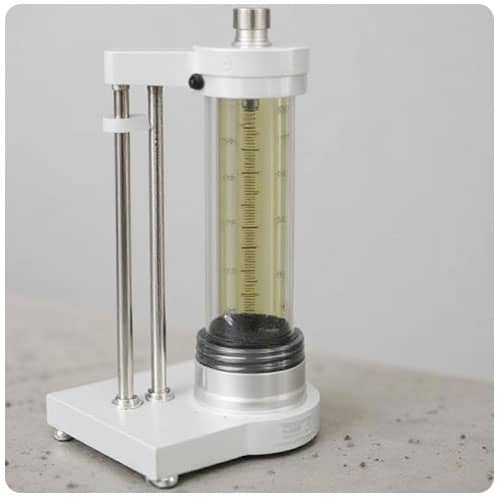
Procedure for Specific Gravity Test of Bitumen
The specific gravity test of bitumen is performed as per IS: 1202 - 1978 standards. The step-by-step procedure is as follows:
Step 1: Cleaning and Drying
- Clean the specific gravity bottle thoroughly and dry it completely.
- Record its empty weight as W1.
Step 2: Filling with Bitumen
- Heat the bitumen sample until it becomes sufficiently fluid.
- Pour the hot bitumen into the pycnometer up to half its capacity.
- Allow it to cool, and then record the weight of the bottle with bitumen as W2.
Step 3: Filling with Water
- Add distilled water carefully to the pycnometer containing bitumen until it is completely full.
- Maintain the bottle at a constant temperature (usually 27°C).
- Wipe the surface and weigh the bottle. Record this as W3.
Step 4: Water Only
- Empty the bottle, clean it again, and fill it completely with distilled water only.
- Maintain the same temperature and record the weight as W4.
Calculations for Specific Gravity of Bitumen
The formula for calculating the specific gravity is:
G = (W2 - W1) / (W4 - W1) - (W3 - W2)
Where,
- W1 = Weight of empty pycnometer
- W2 = Weight of pycnometer + bitumen
- W3 = Weight of pycnometer + bitumen + water
- W4 = Weight of pycnometer + water
Observation and Result
After conducting the test, the value of specific gravity of bitumen is usually found between 0.97 and 1.02. If the result falls outside this range, it indicates that the sample may be impure or unsuitable for standard construction applications.
Precautions in Specific Gravity Test of Bitumen
To ensure accuracy in results, the following precautions must be taken:
- The pycnometer should be clean and dry before use.
- Distilled water must be used to avoid contamination.
- All measurements should be carried out at a constant temperature (preferably 27°C).
- Ensure no air bubbles are trapped inside the pycnometer.
- Handle hot bitumen carefully to avoid accidents.
Significance of Specific Gravity Test in Civil Engineering
The specific gravity test of bitumen is a fundamental quality control test in pavement design. Its significance includes:
- Pavement Design Calculations: Used in Marshall Mix Design and other bituminous mix designs.
- Stability of Roads: Correct specific gravity ensures strong binding of aggregates, enhancing road stability.
- Material Suitability: Helps select the right type of bitumen for highways, runways, and heavy-duty pavements.
- Economical Construction: Accurate calculations prevent wastage of materials and reduce construction costs.
Conclusion
The specific gravity test of bitumen is an essential procedure in civil engineering that ensures the quality and suitability of bitumen used in road construction. By determining how dense bitumen is compared to water, engineers can ensure better mix designs, durability, and stability of pavements. The test is simple but highly important for achieving long-lasting, economical, and high-quality road projects.
Please watch the following short video for Specific Gravity Test of Bitumen
Also Read:
 How Chimney Caps Look: A Construction Guide