
What Is an Arch | Different Parts of an Arch
Understanding the Arch: An Engineering Marvel
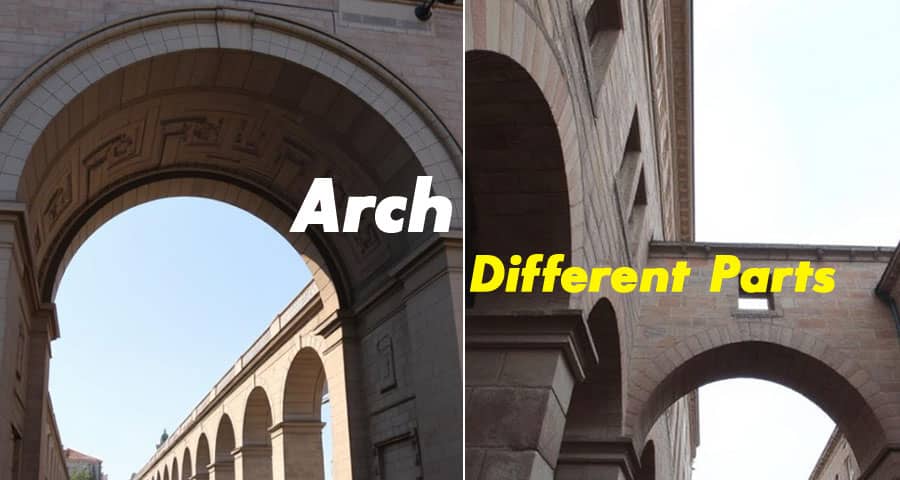
An arch is a curved structural element that spans an opening and supports loads from above, transferring them to the supports or abutments on either side. Arches have been pivotal in architecture and engineering since ancient civilizations, providing both strength and aesthetic appeal. Unlike beams, which primarily experience bending, arches work predominantly in compression, allowing them to support massive weights over large spans.
Historical Significance of Arches
Arches date back to Mesopotamian and Roman architecture, revolutionizing construction by enabling the creation of bridges, aqueducts, cathedrals, and monumental gateways. The Roman mastery of the arch, exemplified in structures like the Colosseum and aqueducts, spread across the world, laying the foundation for modern engineering.
Types of Arches Based on Shape
1. Semicircular or Roman Arch
This classic form features a perfect half-circle curve. It is the most recognizable arch type and distributes loads evenly along the curve.
2. Segmental Arch
Characterized by a curve that is less than a semicircle, segmental arches allow for wider spans with lower rise, making them ideal for bridges and low-height requirements.
3. Pointed or Gothic Arch
Distinguished by a sharp, pointed apex, the Gothic arch reduces horizontal thrust on supports, enabling taller and more slender structures - perfect for cathedrals and churches.
4. Flat Arch
Also called a jack arch, it appears almost straight with minimal curvature. Flat arches are commonly used in door and window openings for their modern appearance.
5. Horseshoe Arch
Its curve extends beyond a semicircle, forming a horseshoe-like shape. Popular in Islamic and Moorish architecture, it adds unique visual character.
6. Parabolic Arch
Designed to follow the shape of a parabola, this type efficiently distributes loads, making it suitable for bridges, hangars, and modern concrete structures.
Different Parts of an Arch
Understanding the components of an arch is essential for grasping how it functions structurally:
1. Voussoirs
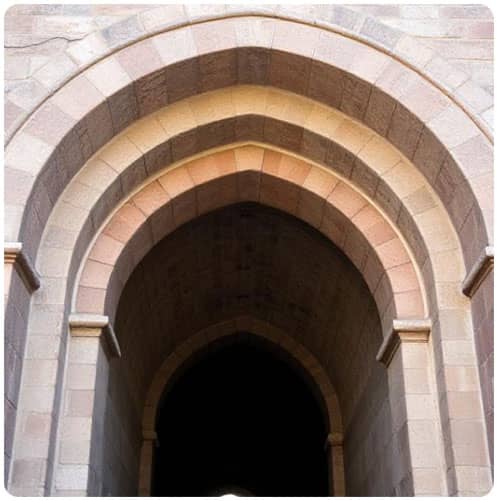
These are the wedge-shaped stones or bricks that form the body of the arch. Each voussoir plays a crucial role in transferring the load to adjacent voussoirs, ultimately to the supports.
2. Keystone
The central, topmost voussoir is the keystone. It locks the other voussoirs into place, maintaining the stability of the arch by pressing downward and outward.
3. Intrados
This is the inner curve or underside of the arch, visible from below. The shape of the intrados determines the aesthetic and structural behavior.
4. Extrados
The outer curve or upper surface of the arch. The extrados shape affects how external loads are resisted and distributed.
5. Springing Line
The imaginary line at the level where the arch begins to curve from its vertical supports. It defines the transition from the vertical pier or abutment to the curved arch.
6. Springer
The first voussoir on each side of the arch that sits immediately above the springing line. It initiates the curvature.
7. Crown
The highest point along the intrados, located directly beneath the keystone. It represents the midpoint of the arch's span.
8. Haunch
The part of the arch between the crown and the springing points, where bending stresses are typically the highest.
9. Spandrel
The triangular space between the outer curve of the arch (extrados) and the rectangular boundary formed by the supports or walls. In masonry arches, spandrels may be filled to stabilize the structure.
10. Abutments
The massive supports on either side of the arch, which resist the horizontal and vertical thrusts, ensuring stability. They are critical for countering the outward forces generated by the arch's shape.
11. Pier
A vertical support between two arches, especially in continuous arcade structures or multi-span bridges.
Structural Behavior of Arches
Arches primarily act in compression, transmitting loads from the crown to the supports. Unlike beams, which can fail in bending, arches disperse forces outward along their curve, allowing for construction with stone, brick, or concrete. The effectiveness of an arch depends on precise construction of voussoirs, a perfectly placed keystone, and strong abutments.
When loaded, arches produce horizontal thrust, requiring secure abutments or buttresses. In Gothic architecture, flying buttresses were developed specifically to handle these lateral forces, enabling taller, more light-filled buildings.
Advantages of Using Arches
- Efficient Load Distribution: The curved shape reduces bending moments and maximizes compressive strength.
- Material Savings: Less material is needed compared to beams for spanning large openings.
- Aesthetic Appeal: Arches offer timeless beauty and grandeur.
- Versatility: Suitable for bridges, tunnels, doors, windows, and decorative elements.
- Durability: Historically proven to withstand centuries when built correctly.
Modern Applications of Arches
Arches remain integral in modern construction:
- Bridges: Reinforced concrete arches span rivers and valleys with elegance and efficiency.
- Doorways and Windows: Architectural accents add classic charm to residential and commercial structures.
- Roofs and Domes: Parabolic and segmental arches enable large, column-free spaces in stadiums, auditoriums, and hangars.
- Tunnels: Circular and horseshoe-shaped arches resist ground pressures effectively.
Key Considerations in Arch Design
For successful arch construction, several factors must be meticulously analyzed:
- Accurate Geometry: A small deviation in voussoir angles can compromise the entire structure.
- Load Analysis: Understanding both live and dead loads ensures proper sizing of arch and abutments.
- Material Selection: Masonry, stone, reinforced concrete, or steel are chosen based on span length, aesthetics, and cost.
- Foundation Strength: Abutments must rest on solid ground to avoid settlement that could lead to cracking or collapse.
- Thrust Management: Employing buttresses or tie rods may be necessary in certain designs to handle horizontal forces safely.
Common Failures in Arches
Despite their inherent strength, arches can fail due to:
- Insufficient Abutments: Weak supports unable to resist horizontal thrust.
- Improper Centering During Construction: Arches require temporary frameworks (centering) until the keystone is placed.
- Foundation Movement: Uneven settlement can lead to cracking of voussoirs.
- Overloading: Excess weight beyond design capacity leads to collapse.
Conclusion
An arch is a masterpiece of engineering, blending beauty and structural efficiency. From ancient stone bridges to modern concrete marvels, the principles of arch design remain unchanged: precision, compression, and solid support. Mastery of the different parts of an arch and understanding their interaction are essential for any architect, engineer, or builder striving for excellence in design and construction.
<Please watch the following short video for an Arch/p>