
How Do Engineers Test if a Bridge Design is Safe Before Building It?
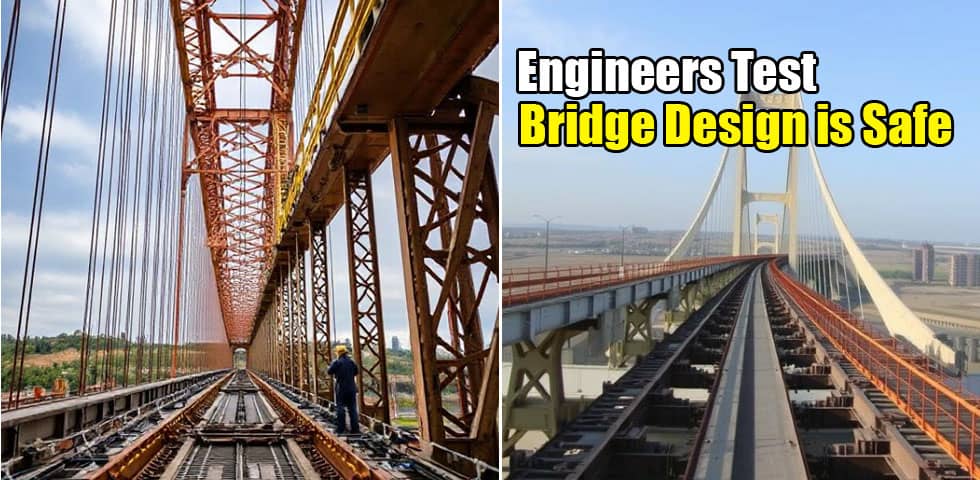
When it comes to bridge engineering, ensuring structural safety and integrity before actual construction is a top priority. Engineers use a comprehensive set of procedures, simulations, and real-world tests to evaluate whether a proposed bridge design can withstand the stresses it will encounter throughout its lifetime.
Understanding the Role of Preliminary Feasibility Studies
Before delving into complex simulations and stress tests, engineers begin with feasibility studies. These include evaluating the environmental conditions, geotechnical properties, and load requirements of the site. During this phase, we analyze:
- Topographical surveys
- Soil and foundation studies
- Hydrological and seismic assessments
- Expected traffic loads and usage patterns
This foundational data guides the conceptual design and ensures that all critical parameters are accounted for from the beginning.
Detailed Structural Analysis and Load Calculations
A key phase in bridge safety assessment is conducting structural analysis. We use advanced software like ANSYS, SAP2000, and STAAD.Pro to simulate how the bridge will behave under various loads and conditions. These calculations cover:
- Dead Loads: The bridge's own weight
- Live Loads: Traffic, pedestrians, and vehicles
- Environmental Loads: Wind, temperature changes, earthquakes, and floods
- Dynamic Loads: Vibrations from moving vehicles, resonance, and other forces
By calculating stress distributions, moment forces, shear forces, and deflections, we can determine if the structural components will remain within safe stress limits.
Finite Element Analysis (FEA) for Precision Modeling
One of the most powerful tools in modern bridge design is Finite Element Analysis (FEA). This method breaks down the bridge model into tiny elements and applies mathematical equations to predict how each element behaves under stress.
With FEA, we can simulate complex real-world conditions, including:
- Load combinations over time
- Crack propagation in materials
- Buckling and fatigue in beams and joints
- Material heterogeneity and nonlinear responses
FEA provides engineers with microscopic insights into how every inch of the structure will perform, helping eliminate weak points early in the design phase.
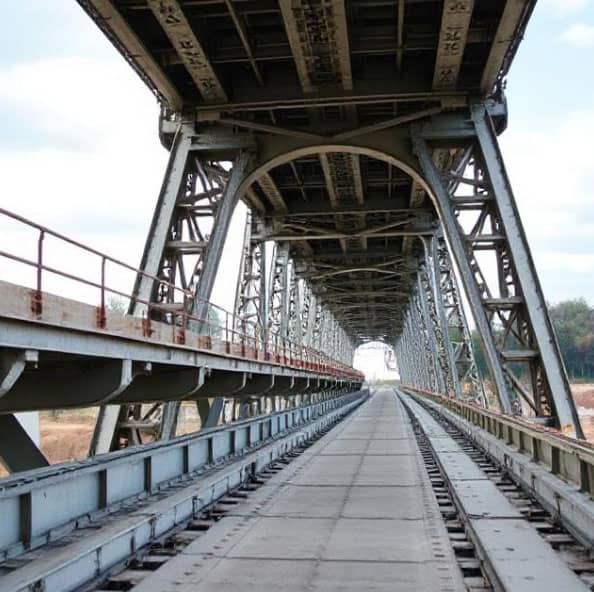
Wind Tunnel Testing for Aerodynamic Stability
For long-span bridges such as suspension or cable-stayed bridges, wind tunnel testing is essential. Engineers build scale models and expose them to varying wind speeds and directions to observe:
- Flutter and vortex shedding
- Torsional oscillations
- Drag and lift coefficients
Wind tunnel results influence the aerodynamic design of bridge decks and can lead to adjustments in deck geometry, parapets, or even the inclusion of dampers to reduce oscillations.
Earthquake Simulation and Seismic Resilience
In seismically active regions, we simulate earthquake loads using seismic design software and shake tables. These simulations test:
- Base shear response
- Displacement and drift ratios
- Energy dissipation capacity
- Soil-structure interaction
Seismic isolators, expansion joints, and damping systems are incorporated based on these results to enhance the bridge's ability to absorb seismic energy without catastrophic failure.
Use of Scaled Physical Models for Experimental Testing
Sometimes, software models alone are not enough. We construct scaled-down physical models to perform experimental testing in laboratories. These models help us examine:
- Load behavior and failure mechanisms
- Dynamic response to time-varying loads
- Material performance under repeated stress cycles
We also perform proof testing, where the bridge or its components are subjected to loads higher than what is expected in real conditions to observe their behavior under extreme stress.
Material Testing and Quality Control
No bridge design is complete without rigorous material testing. The properties of concrete, steel, composite materials, and asphalt must be verified to match the design specifications. These tests include:
- Tensile and compressive strength
- Elastic modulus
- Fatigue and fracture toughness
- Creep and shrinkage behavior
By ensuring materials meet the required performance standards, we prevent potential structural weaknesses that could compromise safety.
Peer Review and Independent Safety Audits
To eliminate bias and reduce human error, bridge designs undergo peer reviews and third-party audits. These are conducted by independent structural engineers who review the design for:
- Code compliance (AASHTO, Eurocodes, etc.)
- Redundancy and robustness
- Failure risk analysis
- Constructability
Feedback from these reviews often leads to important design revisions that improve the overall safety and reliability of the bridge.
Full-Scale Prototype Testing (When Applicable)
For novel or unique bridge designs, we sometimes construct full-scale prototypes or critical components (e.g., a section of the deck or a pylon) to conduct load tests. These allow us to measure:
- Actual versus theoretical performance
- Vibration characteristics
- Thermal expansion
- Connection integrity
This phase bridges the gap between theoretical assurance and practical feasibility.
Simulation of Long-Term Performance and Lifecycle Analysis
Safety isn't just about surviving the opening day. Engineers also use lifecycle analysis tools to predict how the bridge will perform over decades of use. These simulations factor in:
- Corrosion rates
- Traffic growth
- Fatigue loading
- Maintenance requirements
By forecasting deterioration, we can design bridges with optimized durability, maintainability, and resilience over time.
Monitoring and Instrumentation Plans
As a final step before actual construction begins, engineers design health monitoring systems to be embedded in the structure. These systems use:
- Strain gauges
- Accelerometers
- Tiltmeters
- Fiber optic sensors
These instruments provide real-time data during construction and after completion to validate the design assumptions and ensure continued safety.
Conclusion
The process of verifying a bridge design's safety is a meticulous blend of engineering science, advanced technology, and practical testing. From computer simulations to wind tunnels, from material analysis to peer reviews, every step is driven by the singular goal of ensuring that the bridge stands strong against time, traffic, and nature's forces.
Please view the following short video for How Do Engineers Test if a Bridge Design is Safe Before Building It?