
Oblique Drawing: Techniques, Examples, and Applications
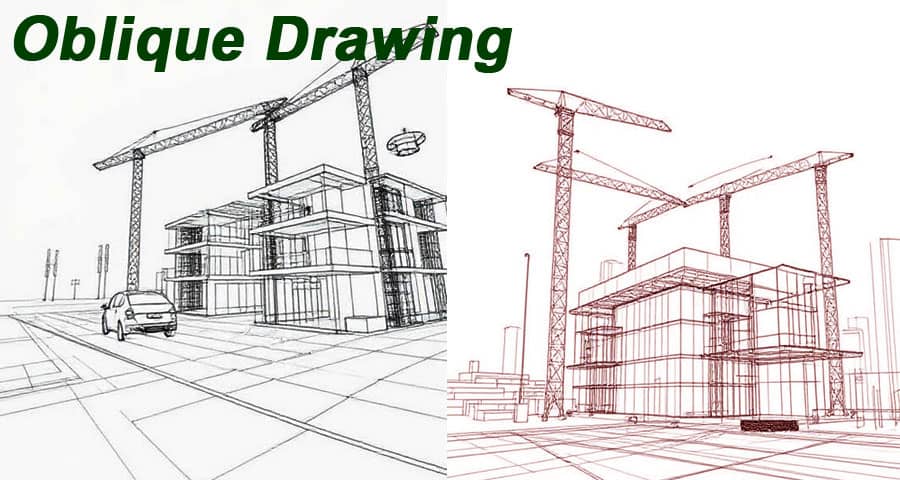
Oblique drawing is a fundamental technical drawing method used in engineering, architecture, design, and art to represent three-dimensional objects on a two-dimensional plane. It allows viewers to visualize depth while maintaining the true dimensions of the object's primary faces. Unlike perspective drawing, oblique projection preserves scale along principal axes, making it easier to measure and construct designs accurately.
What is Oblique Drawing?
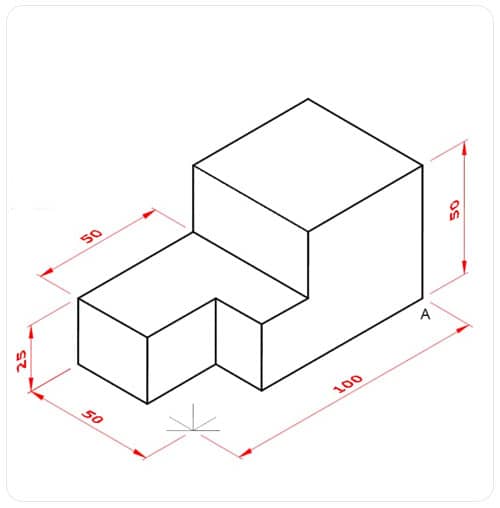
Oblique drawing is a pictorial representation technique where the front view of the object is drawn in its true shape, and the depth is represented using lines drawn at an angle (commonly 30°, 45°, or 60°) to the horizontal. It is widely used because it simplifies complex designs, making them easy to interpret without requiring advanced perspective knowledge.
Key characteristics include:
- True shape of front face is preserved.
- Depth lines are drawn at an angle, often with foreshortening.
- Easy to create and read for technical and educational purposes.
Types of Oblique Drawings
There are three primary types of oblique drawings, each serving different purposes in design visualization.
1. Cavalier Oblique Drawing
- Depth lines are drawn at full scale without foreshortening.
- Best for technical accuracy when depth measurements are crucial.
- Can sometimes look distorted because the depth appears exaggerated.
2. Cabinet Oblique Drawing
- Depth lines are drawn at half scale (foreshortened to 50%).
- More realistic appearance than cavalier projection.
- Commonly used in furniture design, cabinetry, and interior layouts.
3. General Oblique Drawing
- Depth lines are drawn at any foreshortening ratio other than 1:1 or 1:2.
- Provides flexibility to balance realism and measurement accuracy.
Angles Used in Oblique Drawing
The angle chosen for the depth axis significantly affects the drawing's clarity and visual appeal. Commonly used angles are:
- 45° - Most traditional and easiest to construct.
- 30° / 60° - Often used for isometric-like visual appeal.
- Other custom angles - Applied for specific project needs.
Step-by-Step Technique for Creating an Oblique Drawing
Follow these steps for accurate and professional oblique drawings:
Step 1: Draw the Front View
- Start with the true shape of the object's front face.
- Use precise measurements and keep all lines perpendicular or parallel.
Step 2: Set the Depth Angle
- Select the depth angle (e.g., 45°, 30°) based on your project requirements.
- Lightly draw construction lines from each corner of the front view at the chosen angle.
Step 3: Apply Depth Measurements
- Mark the required depth along the angled lines.
- For cavalier, use full measurement; for cabinet, use half; for general, use custom scaling.
Step 4: Draw the Rear Face
- Connect the depth endpoints to form the back face of the object.
- Ensure lines remain parallel to the corresponding front face lines.
Step 5: Finalize and Add Details
- Erase construction lines.
- Add details, shading, or hatching to enhance depth perception.
Advantages of Oblique Drawing
Oblique projection offers several benefits:
- Simple and quick to produce.
- True measurements for front view components.
- Ease of learning for beginners.
- Works well for mechanical and architectural designs.
Disadvantages of Oblique Drawing
While useful, oblique drawing has certain limitations:
- Can appear distorted if depth is not foreshortened.
- Not as realistic as perspective drawings.
- Limited application in photorealistic design rendering.
Examples of Oblique Drawing
1. Furniture Design
Cabinet oblique drawings are extensively used in illustrating chairs, tables, and wardrobes. These drawings help manufacturers visualize both measurements and proportions accurately.
2. Mechanical Components
Engineers use cavalier projections to design gears, bolts, and machine parts where exact depth measurements are crucial.
3. Architectural Elements
Architectural oblique drawings are effective for showcasing building facades and floor layouts without losing measurement accuracy.
4. Product Design
Industrial designers use general oblique projection to present consumer products like appliances, electronics, and packaging.
Applications of Oblique Drawing
1. Engineering and Technical Drafting
In engineering, oblique drawing helps in presenting machine parts and assemblies for manufacturing purposes. The true shape of the front face makes dimensioning straightforward.
2. Architecture and Construction
Architects use oblique projection for preliminary designs and structural detailing, especially when working with clients unfamiliar with complex perspective drawings.
3. Education and Training
Teachers often use oblique drawings to introduce students to 3D representation concepts before moving on to more complex projections like isometric or perspective.
4. Furniture and Interior Design
Cabinet oblique drawings allow designers to communicate furniture dimensions, materials, and finishes effectively.
5. Illustration and Graphic Design
Artists use oblique projection for stylized renderings in infographics, advertisements, and instructional diagrams.
Best Practices for Oblique Drawing
To create professional and accurate oblique drawings, follow these tips:
- Always use a consistent scale for depth lines.
- Choose angles that enhance readability without distorting the object.
- Use foreshortening when realism is important.
- Keep lines crisp and clean for better presentation.
- Add shading, texture, or color to improve visual clarity.
Conclusion
Oblique drawing remains an essential skill in engineering graphics, architecture, and product design because of its simplicity, accuracy for front views, and versatility across industries. By mastering cavalier, cabinet, and general oblique techniques, professionals can communicate design ideas effectively while maintaining precise measurements. Whether for educational purposes, technical documentation, or creative illustration, oblique drawing continues to be a valuable projection method in modern design workflows.
Please watch the following short video for Oblique Drawing
Also Read:
 A Budget Guide to Swimming Pool Tiles