
What Is Pneumatic Structures | Types | Advantages & Disadvantages | Uses
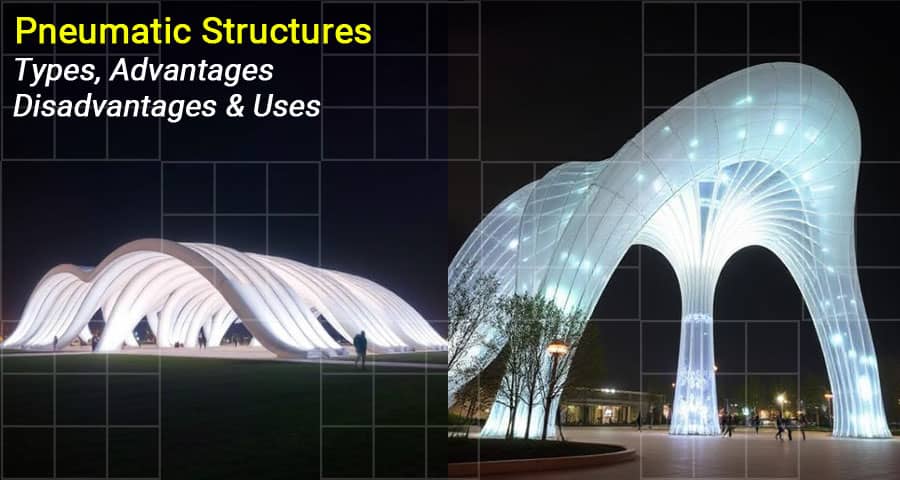
Pneumatic structures are an essential part of modern construction technology, recognized for their lightweight, cost-effective, and aesthetically innovative features. These structures rely on air pressure to maintain their shape and stability, offering unique architectural and engineering possibilities.
What Are Pneumatic Structures?
Pneumatic structures are architectural forms supported by internal or external air pressure rather than conventional framing systems. The envelope or membrane is usually made of flexible materials like PVC-coated polyester, ETFE (Ethylene Tetrafluoroethylene), or polyurethane, and is kept inflated through a continuous or static air pressure system.
There are two main pressure systems:
- Low-pressure systems, commonly used in temporary buildings.
- High-pressure systems, utilized for more permanent structures.
Air acts as the structural element, providing support without the need for columns or beams, allowing vast open interior spaces.
Types of Pneumatic Structures
1. Air-Supported Structures
Air-supported structures use internal air pressure to support the membrane, which is usually anchored to the ground or a rigid base. The pressure inside is slightly higher than the atmospheric pressure, creating a cushion effect.
- Example: Sports domes, temporary warehouses.
- Key Feature: Requires airlock doors to prevent air escape.
2. Air-Inflated Structures
In air-inflated structures, the pressure is contained within double-layered membranes or tubular elements. The structure is not dependent on internal air volume but uses pressurized air in components that maintain their rigidity.
- Example: Emergency shelters, exhibition pavilions.
- Key Feature: Stiffened by pressurized air-filled tubes.
3. Pneumatic Tensile Structures
These structures combine pneumatic components with tensile elements like cables. The air provides shape and volume, while the tension members support loads.
- Example: Large-scale roof covers.
- Key Feature: Combines aesthetic form with structural efficiency.
Materials Used in Pneumatic Structures
- PVC-Coated Polyester Fabric: Offers good tensile strength and fire resistance.
- ETFE Foils: Extremely lightweight, UV resistant, and self-cleaning.
- Neoprene-Coated Nylon: Durable with excellent weather resistance.
- Polyurethane Films: Transparent and highly flexible.
These materials are chosen based on transparency, insulation properties, UV resistance, and mechanical strength.
Advantages of Pneumatic Structures
1. Lightweight Construction
Pneumatic structures eliminate the need for heavy foundations and framing, significantly reducing the dead load.
2. Rapid Installation
Due to prefabrication and modular design, they can be erected quickly, often in a matter of hours or days.
3. Cost-Efficient
They offer a lower cost alternative to traditional structures, especially for temporary installations or emergency applications.
4. Flexible and Modular Design
The flexible nature of the membrane materials allows for innovative and organic shapes, ideal for exhibitions, events, or temporary halls.
5. Large Clear Span
Because of the absence of internal supports, pneumatic structures provide unobstructed space, making them perfect for stadiums, arenas, and airplane hangars.
6. Energy Efficiency
The enclosed air layer acts as an insulating barrier, reducing heating and cooling needs in controlled environments.

Disadvantages of Pneumatic Structures
1. Continuous Power Requirement
Air-supported structures require continuous pressurization, making them dependent on electricity or backup generators.
2. Limited Lifespan
Materials like fabric membranes degrade over time, especially under UV radiation, extreme temperatures, and mechanical stress.
3. Vulnerability to Damage
Sharp objects or storms can puncture the membrane, causing deflation or structural failure.
4. Maintenance and Monitoring
They need regular inspection to detect air leaks and maintain pressure systems. Lack of maintenance can result in sudden collapse.
5. Limited Acoustic and Thermal Insulation
While effective in many environments, they may not provide sufficient soundproofing or thermal resistance for certain applications.
Uses of Pneumatic Structures
1. Sports Facilities
Used for tennis courts, football fields, and swimming pools due to their ability to cover large spans economically.
2. Temporary Event Spaces
Ideal for exhibition pavilions, trade shows, and concerts because they can be quickly deployed and dismantled.
3. Emergency Shelters
Highly useful in disaster relief scenarios, offering fast shelter solutions after earthquakes, floods, or war.
4. Industrial Applications
Utilized as temporary warehouses, maintenance covers, or containment shelters at construction or mining sites.
5. Military and Aviation
Pneumatic hangars provide lightweight, portable shelter for aircraft, vehicles, and equipment in remote locations.
6. Greenhouses and Agricultural Use
Transparent ETFE structures allow maximum light transmission while offering temperature and humidity control for horticulture.
7. Transport Infrastructure
Applied in temporary pedestrian walkways, canopies, and covered bridges during infrastructure maintenance projects.
Structural Behavior and Performance
Pneumatic structures operate based on equal distribution of internal air pressure. This uniform pressure results in a stress membrane, which means the fabric is always in tension. This behavior demands precise design calculations related to:
- Wind and snow loads
- Membrane pre-tension
- Anchor design
- Pressure regulation systems
They must conform to safety codes, especially where human occupancy is involved, ensuring redundancy in blower systems, emergency exits, and fire resistance.
Future Trends in Pneumatic Architecture
With increasing demand for sustainable, adaptive, and modular buildings, pneumatic structures are gaining traction globally. Emerging technologies such as:
- Smart membranes with embedded sensors
- Self-inflating systems
- ETFE cushions with integrated photovoltaics
- Adaptive form-change via dynamic pressurization
are revolutionizing the field.
From futuristic biospheres to space habitat concepts, pneumatic construction continues to push the envelope of what's possible in architecture and engineering.
Conclusion
Pneumatic structures represent a remarkable advancement in modern architecture, combining form, function, and efficiency. Their versatility spans multiple industries and environments, making them an essential tool in the arsenal of designers and engineers aiming for innovation and adaptability. Whether it's temporary event spaces or futuristic space habitats, pneumatic structures offer a compelling blend of economy, aesthetics, and performance.
Please watch the following short video for Pneumatic Structures