
Curb and Gutter: Its Types, Advantages & Disadvantages
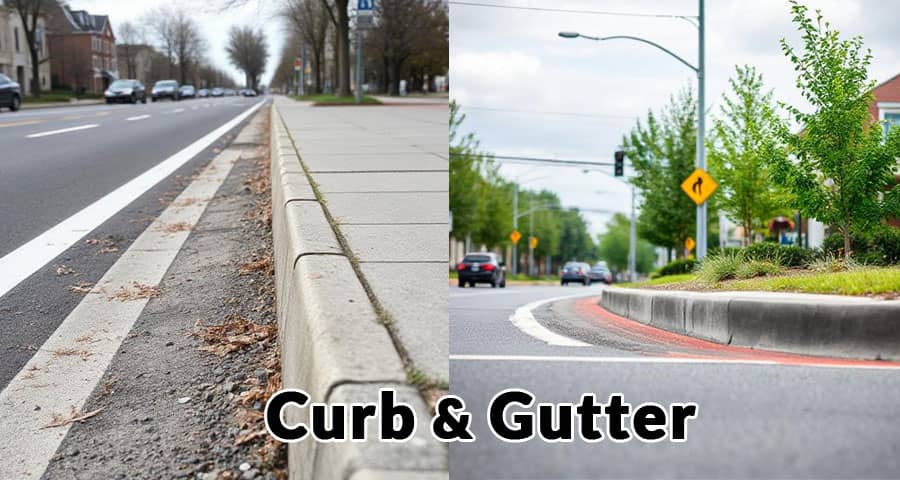
Curb and gutter systems are essential components in modern road infrastructure, playing a pivotal role in stormwater management, roadway safety, and defining the edge of pavement structures. Their proper design and implementation influence traffic efficiency, pedestrian safety, and urban aesthetic.
What is Curb and Gutter?
Curb and gutter refers to a concrete or stone structure that lines the edge of a roadway, serving dual purposes: the curb forms a vertical or sloped barrier that separates the road from adjoining areas like sidewalks or landscaping, while the gutter is a shallow drainage channel that collects surface runoff and directs it to stormwater systems.
Together, they offer structural support to the pavement, enhance water drainage, and improve the safety and appearance of urban roadways.
Types of Curbs
Curbs are categorized based on their shape, function, and installation method. Here are the most widely used types:
1. Barrier Curb (Straight Curb)
Also known as vertical curb, this type features a steep, vertical face designed to prevent vehicles from leaving the roadway.
- Applications: Highways, expressways, and parking lots.
- Height: Typically 6 to 8 inches.
2. Mountable Curb
With a sloped face, mountable curbs allow vehicles to drive over them with minimal damage.
- Applications: Driveway entrances, residential areas.
- Shape: Parabolic or slanted.
3. Mower or Sloped Curb
This curb type is designed to facilitate mowing operations without damaging equipment.
- Applications: Parks, landscaped medians.
- Profile: Smooth, shallow slope.
4. Monolithic Curb
Also called integral curbs, they are constructed as a single unit with the pavement.
- Applications: Low-volume roads, cost-effective projects.
- Benefit: Reduced jointing and seamless appearance.
5. Decorative or Rolled Curb
Used for aesthetic appeal and often combined with landscaping.
- Applications: Residential neighborhoods, gardens, commercial zones.
- Advantage: Enhances curb appeal.
Types of Gutters
Gutters serve the purpose of conveying surface water away from roadways and into drainage inlets. Based on design and construction, these include:
1. V-Shaped Gutter
- Design: A simple "V" cross-section.
- Advantage: Effective for small areas with moderate rainfall.
- Limitation: Less efficient for heavy stormwater loads.
2. U-Shaped Gutter
- Design: Rounded bottom that allows smoother flow.
- Application: Urban roads with higher runoff volumes.
- Maintenance: Easier cleaning due to smooth base.
3. Trapezoidal Gutter
- Design: Wider base with inclined sides.
- Efficiency: Supports large stormwater flow and resists clogging.
- Best For: High rainfall and heavy traffic areas.
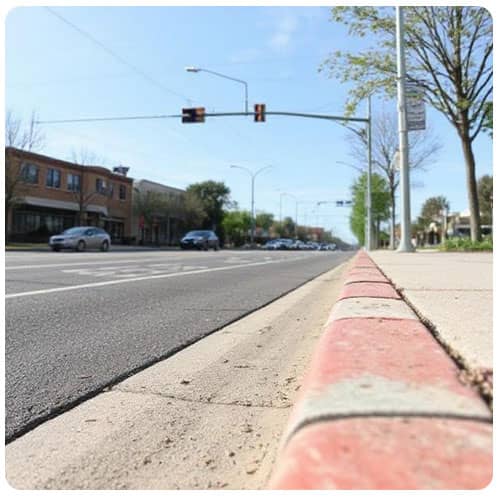
Materials Used in Curb and Gutter Construction
The choice of materials influences durability, cost, and maintenance. Common materials include:
1. Concrete
- Most widely used material.
- Advantages: Durable, low maintenance, high compressive strength.
- Usage: Commercial, residential, and highway projects.
2. Asphalt
- Used primarily in temporary or low-cost applications.
- Limitations: Shorter lifespan, more maintenance.
- Best For: Rural or low-volume roads.
3. Stone or Brick
- Preferred for heritage or aesthetic projects.
- Strength: Visually pleasing and durable.
- Cost: High installation and maintenance expense.
Construction Process of Curb and Gutter
1. Surveying and Layout
Proper planning includes marking alignment, elevations, and identifying drainage patterns.
2. Excavation and Formwork
- Excavate the area along the road edge.
- Wooden or metal forms are used to define shape and dimensions.
3. Placement of Reinforcement (if required)
- Steel bars or mesh are added for structural integrity in high-load areas.
4. Concrete Pouring and Curing
- High-strength concrete is poured into forms and compacted.
- Curing ensures durability and resistance to cracking.
5. Finishing and Removal of Forms
- Troweling and edging provide a smooth finish.
- Forms are removed after initial set.
Advantages of Curb and Gutter
1. Improved Drainage Control
Curb and gutter systems channel stormwater efficiently into catch basins, preventing road surface flooding and erosion.
2. Enhanced Pavement Longevity
By supporting the edge of the pavement, they prevent edge cracking and pavement deterioration.
3. Increased Traffic Safety
Curbs define traffic lanes and prevent vehicles from veering off-road, ensuring pedestrian safety and smoother traffic movement.
4. Aesthetic Appeal
With decorative options available, curbs can enhance the visual character of neighborhoods and commercial districts.
5. Better Property Definition
They clearly mark property boundaries, improving urban zoning and property management.
Disadvantages of Curb and Gutter
1. Higher Construction Costs
The installation of curbs and gutters involves skilled labor, specialized equipment, and high-quality materials, which increase upfront costs.
2. Maintenance Requirements
Over time, curbs may crack, and gutters can accumulate debris and silt, requiring regular cleaning and repair.
3. Limited Use in Rural Areas
Due to cost and lack of stormwater infrastructure, curbs and gutters are not viable in rural or undeveloped areas.
4. Potential Obstacle for Cyclists and Disabled Persons
Improper curb design may become a hazard for cyclists or make it difficult for wheelchair users to cross streets safely.
Curb and Gutter vs. Open Drainage
| Feature | Curb and Gutter | Open Drainage |
|---|---|---|
| Aesthetics | Clean and modern | Less visually appealing |
| Safety | Higher for vehicles and pedestrians | Lower, open ditches can be hazardous |
| Maintenance | Moderate to high | Lower, but prone to erosion |
| Drainage Efficiency | Excellent in urban areas | Suitable for rural and less dense areas |
Innovations in Curb and Gutter Systems
Modern infrastructure projects are integrating sustainable drainage solutions like:
- Permeable curbs: Allow water infiltration and reduce runoff.
- Curb extensions (bulb-outs): Reduce crossing distance for pedestrians.
- LED integrated curbs: Enhance nighttime visibility and safety.
Conclusion
Curb and gutter systems are indispensable in urban development. Their role extends beyond aesthetics to ensuring roadway durability, efficient drainage, and public safety. Whether for a residential driveway or a multi-lane highway, selecting the right type, material, and design is crucial. While there are disadvantages, the benefits overwhelmingly justify their use in modern infrastructure.
Please watch the following short video for Curb and Gutter
Also Read:
 Steps to make Salt Finish Concrete Surface