
Difference Between Fat Lime and Hydraulic Lime
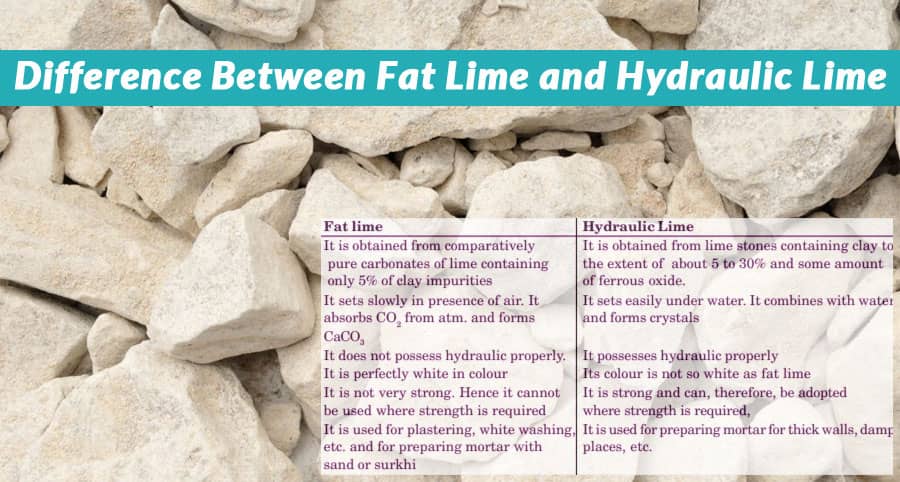
Lime is an essential building material in the construction industry, known for its binding properties, durability, and environmental benefits. Among the various types of lime, Fat Lime and Hydraulic Lime are two of the most widely used. Understanding their differences is crucial for selecting the right material for specific applications.
What is Fat Lime?
Fat Lime, also known as high calcium lime, pure lime, or rich lime, is derived by calcining pure limestone (CaCO3). The resulting product is quicklime (CaO), which is then slaked with water to form slaked lime or lime putty (Ca(OH)2). It is called "fat" because of its high plasticity and workability.
Key Characteristics of Fat Lime
- High calcium content (usually over 90% CaO)
- White in color
- Slow setting in air due to carbonation
- High plasticity and smoothness
- Low strength compared to hydraulic lime
- Non-hydraulic (does not set under water)
What is Hydraulic Lime?
Hydraulic Lime is produced from limestone containing clayey impurities such as silica, alumina, and iron oxides. Upon calcination, it forms compounds like dicalcium silicate and tricalcium aluminate, which contribute to its hydraulic setting property - it sets in the presence of water.
Types of Hydraulic Lime
Hydraulic lime is classified into three types as per the EN 459-1 standard:
- Feebly Hydraulic Lime (NHL 2) - Sets slowly and gains strength gradually.
- Moderately Hydraulic Lime (NHL 3.5) - Medium setting time and strength.
- Eminently Hydraulic Lime (NHL 5) - Sets quickly with high strength.
Major Differences Between Fat Lime and Hydraulic Lime
| Property | Fat Lime | Hydraulic Lime |
|---|---|---|
| Source Material | Pure limestone | Limestone with clay impurities |
| Calcium Oxide Content | Above 90% | 60 - 80% |
| Setting Mechanism | Carbonation (with air CO2) | Hydration (with water) |
| Setting Time | Very slow | Moderate to fast |
| Workability | Highly workable | Less workable |
| Compressive Strength | Low | High |
| Water Resistance | Poor | Good |
| Use in Wet Conditions | Not suitable | Suitable |
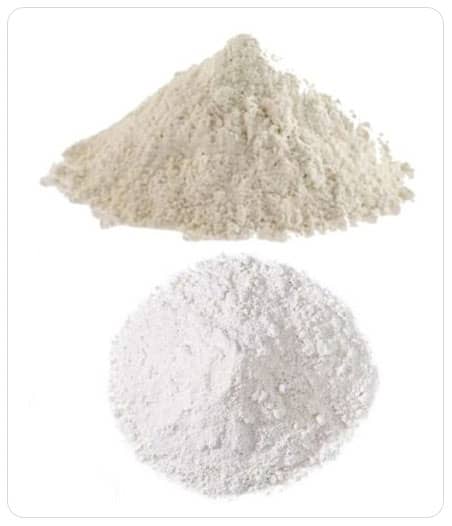
| Appearance | White and fine | Greyish or buff color |
| Heat of Reaction | High during slaking | Lower compared to fat lime |
| Storage Life | Long as dry quicklime | Shorter; must be protected from moisture |
Production Process
Fat Lime Production
- Calcination: Heating pure limestone at 900 - 1000°C to release carbon dioxide.
- Quicklime Formation: CaCO3 → CaO + CO2↑
- Slaking: CaO + H2O → Ca(OH)2 (Slaked lime or lime putty)
Hydraulic Lime Production
- Calcination: Impure limestone with clay content is calcined.
- Formation of Silicates and Aluminates: These compounds give hydraulic properties.
- Controlled Slaking: Reacts partially with water but also sets with available moisture.
Applications of Fat Lime
- Plastering and whitewashing due to its smooth texture
- Mortar preparation for historic buildings and restoration works
- Soil stabilization in agriculture and civil engineering
- Chemical industries where high purity is required
However, fat lime is unsuitable for damp conditions or waterlogged areas, as it requires exposure to carbon dioxide to set.
Applications of Hydraulic Lime
- Structural masonry mortars in areas exposed to moisture
- Lime concrete in foundations and basements
- Marine construction, retaining walls, and sewage systems
- Restoration of heritage structures, especially where water exposure is a concern
Hydraulic lime's ability to set in wet environments and develop strength makes it ideal for modern and traditional construction alike.
Advantages and Disadvantages
Fat Lime
Advantages:
- Excellent workability and spread
- Very white and fine texture
- Cost-effective for indoor applications
- Long shelf life in dry conditions
Disadvantages:
- Slow setting
- Poor strength in structural applications
- Not water resistant
Hydraulic Lime
Advantages:
- Faster setting than fat lime
- Develops high early and final strength
- Suitable for damp and wet conditions
- Enhances breathability in wall construction
Disadvantages:
- Lower workability
- Shelf life is shorter due to hydraulic properties
- Slightly more expensive than fat lime
When to Use Fat Lime vs Hydraulic Lime
| Scenario | Recommended Lime Type |
|---|---|
| Indoor plastering | Fat Lime |
| Heritage structure with dry interiors | Fat Lime |
| External wall mortar | Hydraulic Lime |
| Foundation or basement construction | Hydraulic Lime |
| Marine or sewage infrastructure | Eminently Hydraulic Lime |
| Decorative whitewash | Fat Lime |
Environmental Impact and Sustainability
Both fat lime and hydraulic lime are eco-friendly alternatives to cement. They:
- Absorb CO2 during carbonation (especially fat lime)
- Are less energy-intensive in production
- Allow for reversibility in restoration works
- Offer breathability to walls, reducing moisture buildup
However, hydraulic lime typically has a slightly higher carbon footprint due to additional processing and clay content.
Conclusion
The difference between fat lime and hydraulic lime lies in their composition, setting mechanism, strength, and use cases. Fat lime is best suited for non-structural, dry applications, offering excellent workability, while hydraulic lime is the go-to choice for structural or moisture-prone environments, providing the strength and durability required in modern construction.
By understanding the strengths and limitations of each, engineers and architects can make informed decisions to ensure longevity, sustainability, and performance of their structures.
Please watch the following short video for Fat Lime and Hydraulic Lime
Also Read:
 Fineness test of Cement and its Significance