
Gantry Girder: Load on Gantry Girder and Types of Gantry Girder
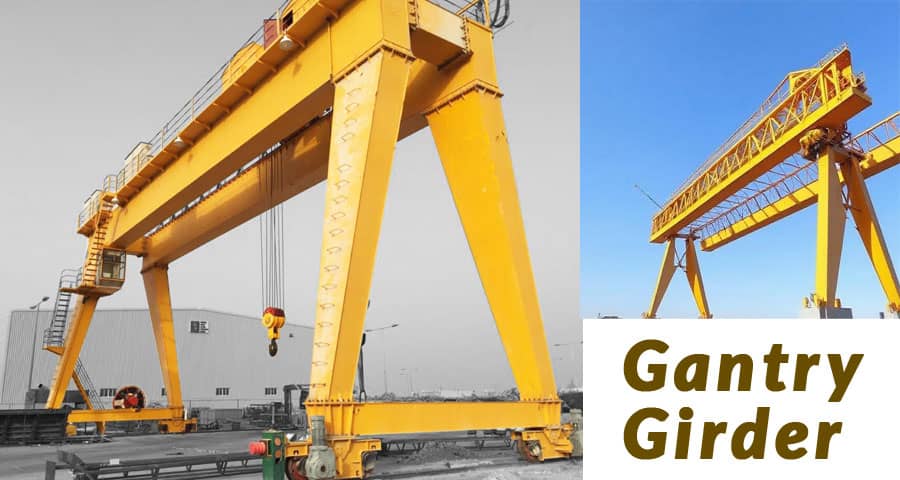
A gantry girder is a critical structural element used in industrial buildings where heavy machinery, cranes, and material handling systems operate. It serves as the supporting beam for the crane system, ensuring safe and efficient transfer of heavy loads across the factory floor.
What is a Gantry Girder?
A gantry girder is a specially designed steel beam that supports the load of an overhead gantry crane. It carries the crane rails on which the trolley or hoist moves, enabling the transportation of materials across large spans. These girders are subjected to dynamic and static loads, making their design highly critical for the safety and efficiency of industrial operations.
Gantry girders are usually installed in:
- Heavy industrial workshops
- Steel plants
- Shipyards
- Warehouses
- Power stations
They form the backbone of material handling systems by ensuring cranes can move smoothly and safely while carrying heavy loads.
Loads Acting on Gantry Girders
The design of a gantry girder requires careful consideration of the various types of loads that act on it. Unlike ordinary beams, gantry girders are exposed to dynamic forces due to crane movement, impact, and vibration. The following are the major loads acting on gantry girders:
1. Vertical Load from Crane Wheels
- The vertical load is the most significant force acting on the gantry girder.
- It comes from the weight of the crane, trolley, hoist, and the lifted load.
- Each wheel of the crane transfers a concentrated point load on the gantry girder through the rails.
- The distribution of this load depends on the wheelbase and span of the crane.
2. Horizontal Longitudinal Load (Crane Surge)
- When the crane is accelerating or decelerating, horizontal forces act in the longitudinal direction of the gantry girder.
- These forces, known as surge loads, occur due to sudden braking or starting of the crane trolley.
- They are usually considered as 10% of the lifted load in design calculations.
3. Horizontal Lateral Load (Crab Movement)
- The crane trolley or crab moves transversely across the span of the gantry girder.
- This movement induces lateral forces on the girder.
- These are generally taken as 5 - 10% of the lifted load.
4. Impact Load
- Due to sudden application of loads, impact factors are considered.
- The Indian Standard (IS 875) recommends multiplying the live load by a factor (usually 1.25) to account for impact.
- These impact loads ensure the girder design remains safe during abrupt operations.
5. Wind Load
- In open sheds or outdoor gantry structures, wind loads act on the crane and gantry girder.
- They create additional horizontal forces that need to be considered, especially in high-wind zones.
6. Lateral Thrust from Crane Movement
- When the crane traverses along the gantry girder, it exerts lateral thrust on the rail and girder.
- This thrust is a significant design consideration to prevent derailment or structural instability.
Design Considerations for Gantry Girders
The structural design of gantry girders is more complex than standard beams due to combined vertical, horizontal, and dynamic forces. Key considerations include:
- Material Selection: High-strength structural steel is generally used for durability.
- Deflection Limits: Excessive deflection can affect crane operation; limits are kept stricter than ordinary beams.
- Fatigue Resistance: Repeated loading cycles require girders to be fatigue-resistant.
- Connections: Welded and bolted connections must be designed for dynamic stresses.
- Bracing Systems: Lateral bracing is provided to resist side thrusts and vibrations.
Types of Gantry Girders
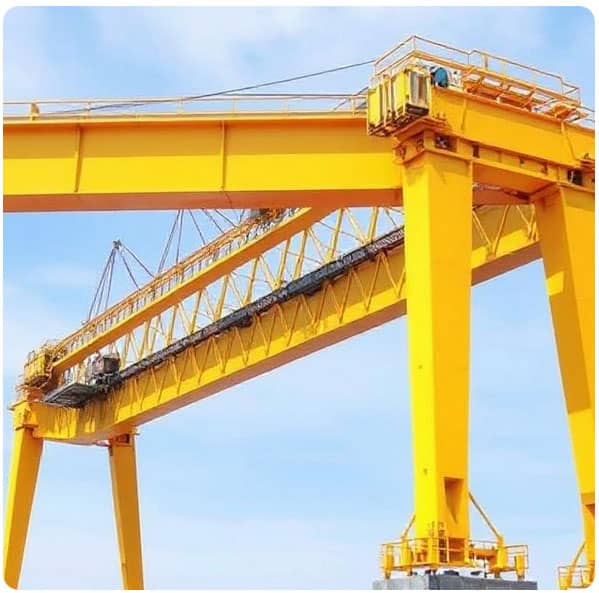
Gantry girders are classified based on structural configuration and application requirements. The most commonly used types are:
1. I-Section Gantry Girder
- Consists of standard rolled I-beams.
- Used in light-duty cranes where loads are moderate.
- Economical and easy to fabricate.
- However, they have limited resistance to lateral buckling.
2. Plate Girder Type Gantry Girder
- Constructed by welding steel plates to form an I-section of required depth.
- Suitable for heavy-duty cranes where rolled sections are insufficient.
- Provides high load-carrying capacity.
- Can be designed for longer spans and heavier impact loads.
3. Box Section Gantry Girder
- Made from two plate girders joined with cover plates to form a box section.
- Offers excellent torsional resistance and strength.
- Commonly used in high-capacity crane systems.
- Provides greater stability against lateral thrust and vibrations.
4. Built-Up Section Gantry Girder
- Made by combining angles, channels, and plates.
- Used where structural steel economy is a priority.
- Provides flexibility in fabrication but requires careful welding and assembly.
5. Curved Gantry Girders
- Specially designed for curved crane tracks.
- Used in industries where cranes need to cover circular or semi-circular areas.
- Complex in design and fabrication but highly functional in specialized applications.
Advantages of Gantry Girders
- Provide safe support for overhead cranes.
- Allow efficient material handling in industries.
- Can be designed for heavy dynamic loads.
- Offer structural stability to crane systems.
- Versatile - can be customized for different load capacities and spans.
Applications of Gantry Girders
- Steel manufacturing plants
- Shipbuilding yards
- Automobile workshops
- Power generation stations
- Mining industries
- Warehouses and logistics hubs
Conclusion
The gantry girder plays an essential role in supporting crane systems, ensuring the safe and efficient handling of heavy loads. By understanding the various loads acting on gantry girders and the different types available, engineers can design durable and efficient structures that enhance industrial productivity. Whether for light-duty cranes or heavy-capacity systems, the correct choice and design of gantry girders are crucial for long-term performance and safety.
Please view the following short video for Gantry Girder
Also Read:
 Retainage in Construction : Merits & Demerits