
What Is Guniting and Its Advantages & Disadvantages
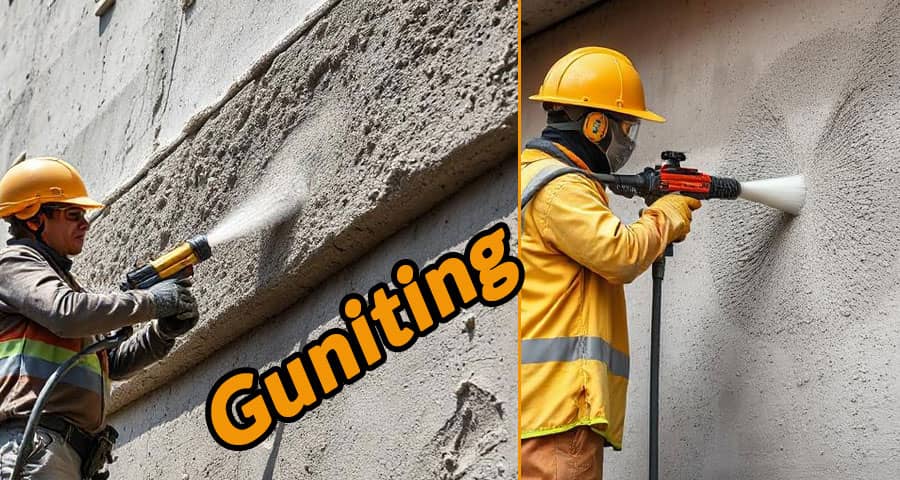
Guniting, also known as shotcrete, is a technique widely used in the field of civil engineering and construction to apply a dense, compact layer of concrete or mortar onto a surface using a high-pressure hose. This process allows for exceptional adhesion, durability, and efficiency, especially on irregular or vertical surfaces. It has become a preferred method in tunnels, swimming pools, retaining walls, slope stabilization, and various repair works due to its remarkable performance characteristics.
Understanding Guniting in Construction
Guniting involves spraying a mixture of cement, sand, and water through a nozzle using compressed air onto a target surface. The technique is divided into two types:
- Dry-Mix Guniting: In this method, dry materials are mixed and conveyed through a hose. Water is added at the nozzle just before application.
- Wet-Mix Guniting: Here, all ingredients including water are mixed before being pumped through the nozzle.
Each method has its own merits and is selected based on project-specific requirements like surface condition, environmental constraints, and structural design.
Applications of Guniting in Civil Engineering
Guniting is extensively applied in various civil infrastructure and industrial settings due to its versatility and robustness. Major applications include:
- Slope Protection and Stabilization
Used on embankments and rock faces to prevent soil erosion and landslides. - Tunnel Lining Offers strong bonding and uniform
coverage, essential for tunnel integrity and durability. - Retaining Walls
Applied on mesh-reinforced frameworks to construct high-retaining earth walls. - Swimming Pools
Preferred for creating seamless, watertight shells with custom shapes and finishes. - Water Tanks and Reservoirs
Ideal for structures requiring high impermeability and strength. - Bridge Repairs and Strengthening
Enables precise application over damaged or corroded surfaces with minimal formwork.
Materials Used in Guniting
For effective guniting, the following materials are typically used:
- Cement: Ordinary Portland Cement (OPC) or Sulphate Resistant Cement depending on exposure.
- Fine Aggregates: Clean, well-graded sand with controlled moisture content.
- Water: Clean and free from harmful salts or organic matter.
- Additives/Admixtures: Accelerators, plasticizers, and bonding agents may be used to enhance setting time, workability, and adhesion.
Process of Guniting - Step by Step
The success of guniting lies in the controlled execution of the process. Here's a step-by-step outline:
- Surface Preparation
The receiving surface is cleaned, roughened, and moistened to promote better adhesion. - Setting up the Equipment
A compressor, gun nozzle, and hoses are properly configured based on the mix type (dry or wet). - Material Feeding
For dry-mix, dry components are loaded into the gun; water is added at the nozzle. In wet-mix, the pre-mixed slurry is pumped. - Spraying
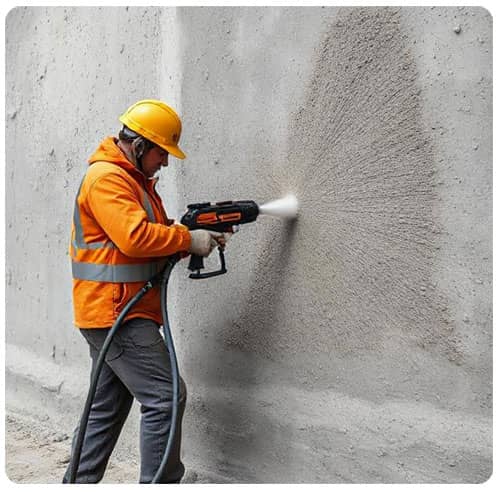
The nozzleman applies the mixture at a right angle to ensure compact application and minimal rebound. - Finishing
The sprayed surface is leveled and troweled for a smooth finish. - Curing
Moist curing is done to prevent premature drying and cracking, typically for 7 days.
Advantages of Guniting
Guniting offers multiple advantages that make it a go-to solution for complex construction needs:
1. Superior Bonding and Adhesion
Thanks to high-velocity application, the material adheres firmly to concrete, steel, or masonry surfaces.
2. Minimal Formwork Required
Guniting reduces or eliminates the need for formwork, saving on materials, time, and labor.
3. Ideal for Complex Surfaces
Perfect for curved, sloped, or vertical structures where traditional concrete application would be impractical.
4. High Strength and Durability
The compact, dense nature of guniting ensures high compressive strength and weather resistance.
5. Quick Application and Setting
Especially beneficial in repair and rehabilitation work requiring fast turnaround.
6. Cost-Effective Over Time
While initial costs may be comparable to traditional methods, reduced formwork, labor, and quicker execution lead to long-term savings.
Disadvantages of Guniting
Despite its benefits, guniting has a few limitations that should be considered:
1. Skilled Labor Required
Highly trained personnel are needed for effective application and to avoid poor workmanship.
2. Dust and Rebound Loss in Dry Mix
Dry-mix method can produce excessive dust and material rebound, resulting in wastage and health risks.
3. Equipment and Maintenance Costs
Initial investment in specialized equipment and its maintenance can be high.
4. Limited Thickness Per Application
Only a specific thickness can be applied in one pass; multiple layers may be required for thicker builds.
5. Curing Challenges
Improper curing may lead to cracking or reduced strength, especially in dry or hot environments.
Guniting vs Shotcrete: Are They the Same?
The terms Guniting and Shotcrete are often used interchangeably, but technically, shotcrete refers to both wet and dry mix processes, while guniting traditionally refers to dry-mix only. Over time, the industry has largely accepted both terms to describe high-pressure concrete spray methods.
Factors Affecting Guniting Performance
To achieve optimal results, certain parameters must be carefully monitored:
- Nozzle Distance and Angle
Should be maintained between 0.5 to 1 meter and perpendicular to the surface for best results. - Mix Proportions
Proper ratio of cement, sand, and water is critical to avoid segregation and rebound. - Air Pressure
Should be between 6 to 7 kg/cm2 for dry mix and 3 to 5 kg/cm2 for wet mix. - Weather Conditions
High temperatures or winds can affect setting and curing. Protective measures should be taken.
Maintenance and Safety in Guniting
- Personal Protective Equipment (PPE) must be worn due to high dust and noise levels.
- Regular equipment checks prevent blockages and ensure consistent flow.
- Surface inspection post-application is vital to detect any voids or de-bonded sections.
Conclusion
Guniting is a technically sound, economical, and flexible method for applying concrete in a variety of construction scenarios. While it demands skilled application and proper equipment, the benefits it brings in terms of strength, adaptability, and speed make it an invaluable technique in modern construction.
For successful results, we must focus on quality control, equipment maintenance, and skilled operation, ensuring guniting remains a top choice for both new builds and rehabilitation projects.
Please watch the following short video for Guniting and Its Advantages & Disadvantages
Also Read:
 Uses of Roofs and Its Types