
Toward a Sustainable Construction Industry through Building Regulations
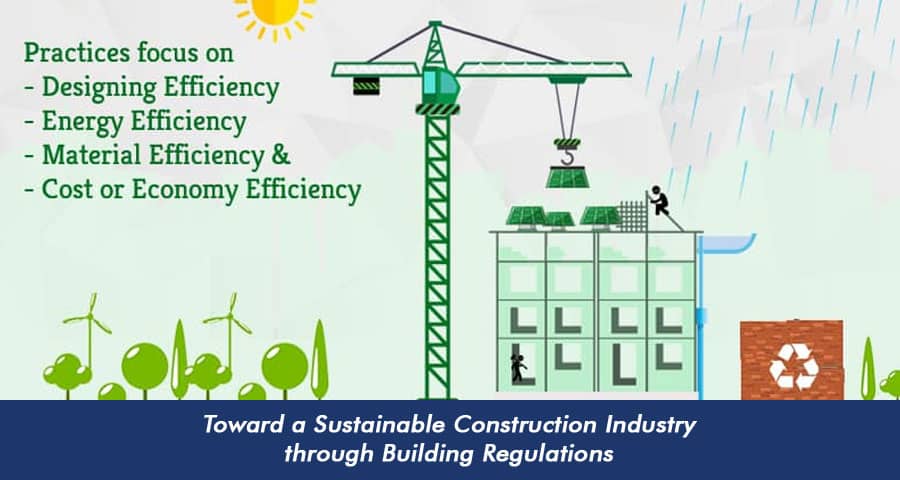
In an era where environmental concerns are paramount, the construction industry is undergoing a significant transformation towards sustainability. One of the crucial avenues for achieving sustainability in construction is through effective building regulations. This article explores how building regulations play a pivotal role in steering the construction industry toward sustainability.
Introduction
The construction industry has long been a significant contributor to environmental degradation and resource depletion. To combat these issues, the concept of sustainable construction has gained prominence. Sustainable construction aims to create buildings and infrastructure that meet our present needs without compromising the ability of future generations to meet their own needs.
Understanding Sustainable Construction
What Is Sustainable Construction?
Sustainable construction involves designing, constructing, operating, maintaining, and demolishing buildings and infrastructure in a way that reduces their environmental impact while enhancing social and economic benefits. It takes into account the entire lifecycle of a structure, from its inception to its eventual removal.
The Importance of Sustainable Practices
Sustainable construction practices are essential to mitigate climate change, reduce waste generation, conserve natural resources, and create healthier living environments. By adopting sustainable principles, the construction industry can play a pivotal role in addressing global challenges.
The Role of Building Regulations
Building regulations act as the backbone of the construction industry, ensuring that structures are safe, durable, and meet certain quality standards. In recent years, these regulations have evolved to incorporate sustainability as a fundamental criterion.
Ensuring Safety and Quality: Building regulations have traditionally focused on safety and structural integrity. However, they now encompass sustainability aspects, such as seismic resilience and fire safety, which are crucial for reducing environmental risks.
Promoting Energy Efficiency: Energy-efficient buildings are at the core of sustainable construction. Building codes now mandate the use of energy-efficient materials, designs, and technologies. This not only reduces greenhouse gas emissions but also lowers utility bills for occupants.
Minimizing Environmental Impact: Sustainable building regulations encourage the use of environmentally friendly materials and construction practices. They also emphasize waste reduction and recycling, minimizing the environmental footprint of construction projects.
Challenges in Implementing Sustainable Building Regulations
While sustainable building regulations offer numerous benefits, they are not without challenges.
Resistance to Change: The construction industry is often resistant to change, and implementing new regulations can be met with resistance from stakeholders who may perceive them as costly or burdensome.
Cost Implications: Adhering to sustainable building regulations may initially incur higher costs. However, these costs are often offset by long-term savings in operational and maintenance expenses.
Lack of Awareness: Many in the construction industry may not be fully aware of the latest sustainable building regulations and their benefits. Educating stakeholders is essential for successful implementation.
Success Stories: Countries Leading the Way
Several countries have taken significant steps towards sustainable construction through stringent building regulations.
Sweden's Stringent Energy Efficiency Standards: Sweden boasts some of the world's strictest energy efficiency standards, leading to energy-efficient buildings that reduce carbon emissions and energy consumption.
Singapore's Green Building Masterplan: Singapore's comprehensive Green Building Masterplan focuses on sustainable designs, water efficiency, and innovation in construction practices.
The Future of Sustainable Building Regulations
As technology advances and global awareness of environmental issues grows, the future of sustainable building regulations looks promising.
Technological Advancements: Incorporating smart technologies, renewable energy sources, and innovative materials will become standard practices, further enhancing sustainability.
Global Collaboration: International cooperation will play a significant role in setting global standards and sharing best practices, fostering a sustainable construction industry worldwide.
Benefits of Sustainable Construction
Embracing sustainable construction offers numerous benefits.
Environmental Preservation: Reduced environmental impact, lower carbon emissions, and resource conservation contribute to a healthier planet.
Economic Advantages: Sustainable construction can lead to cost savings, increased property values, and job creation in green industries.
Enhanced Quality of Life: Buildings designed with sustainability in mind provide healthier indoor environments, improving the quality of life for occupants.
Conclusion
Building regulations are pivotal in steering the construction industry toward sustainability. They ensure that construction projects not only meet safety and quality standards but also adhere to eco-friendly practices. Embracing sustainable construction is essential for preserving our environment, promoting economic growth, and enhancing our quality of life.
FAQs
Are sustainable building regulations the same worldwide?
Sustainable building regulations vary from country to country, reflecting local priorities and environmental conditions.
Do sustainable construction practices increase construction costs significantly?
While there may be initial costs associated with sustainable construction, they are often outweighed by long-term savings in energy and maintenance.
How can I stay updated on the latest sustainable building regulations in my area?
You can stay informed by regularly checking your local building authority's website and attending industry conferences and workshops.
What are some examples of sustainable construction materials?
Sustainable construction materials include bamboo, recycled steel, reclaimed wood, and low-VOC paints.
How can I make my existing building more sustainable?
Retrofitting with energy-efficient systems, improving insulation, and implementing water-saving measures are ways to enhance the sustainability of existing buildings.