
Land Moving Equipments in Construction Site
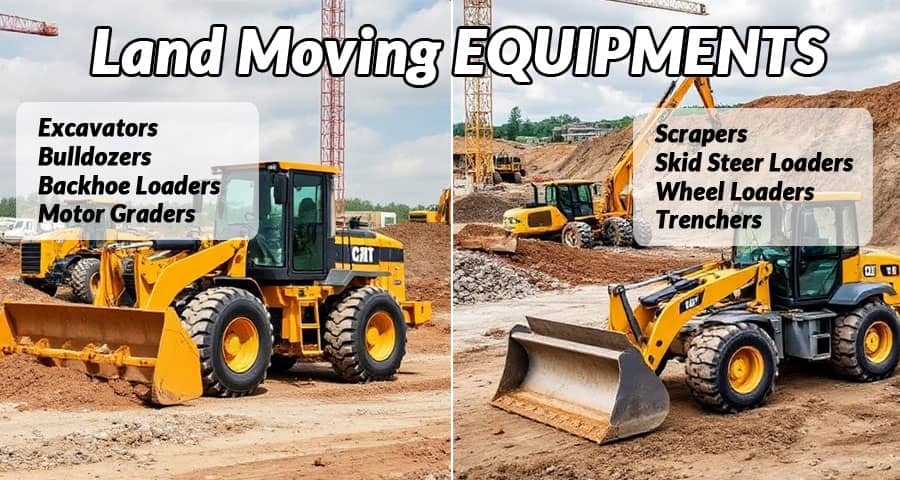
In any construction project, land moving equipment plays a critical role in site preparation, excavation, and grading. These machines are engineered to perform heavy-duty tasks with precision and efficiency, ensuring that construction progresses seamlessly from the ground up.
What is Land Moving Equipment?
Land moving equipment, also known as earthmoving machinery, comprises a group of heavy machines used to dig, haul, level, and move soil and debris. These machines are the backbone of infrastructure and civil construction work, enabling efficient execution of tasks such as foundation excavation, terrain modification, material transport, and site clearance.
Types of Land Moving Equipment Used in Construction Sites
1. Excavators
Excavators are among the most versatile and commonly used land moving equipment in the construction industry.
Key Features:
- Long hydraulic arm (boom and dipper)
- Rotating cab (360 degrees)
- Mounted on tracks or wheels
- Variety of attachments (bucket, breaker, auger, grapple)
Applications:
- Digging trenches and foundations
- Demolition work
- Material lifting and placement
- River dredging
- Forestry and mining operations
2. Bulldozers
Bulldozers are powerful machines equipped with a large metal blade at the front, primarily used for pushing large quantities of soil, sand, rubble, or debris.
Key Features:
- Crawler or wheel-based design
- Strong front blade (straight, universal, or semi-U)
- Rear ripper for breaking up tough ground
Applications:
- Rough grading
- Land clearing
- Road construction
- Mining and quarrying
3. Backhoe Loaders
Backhoe loaders combine the functionality of a loader and an excavator in one compact machine, making them ideal for medium-duty applications.
Key Features:
- Front-mounted loading bucket
- Rear-mounted digging arm
- Suitable for tight spaces
Applications:
- Small-scale excavation
- Trenching
- Pipe laying
- Snow removal
- Loading materials
4. Motor Graders
Motor graders are precision machines used to create flat surfaces during the grading process.
Key Features:
- Long adjustable blade between front and rear axles
- Rear ripper attachment (optional)
- High maneuverability and control
Applications:
- Final grading for road construction
- Spreading materials like gravel
- Maintaining dirt and gravel roads
- Creating drainage ditches
5. Scrapers
Scrapers are specialized machines used to cut, collect, and transport soil over short to medium distances.
Key Features:
- Bowl-shaped front end with a sharp horizontal blade
- Conveyor and ejector system
- Can load and unload on the go
Applications:
- Large-scale earthmoving
- Leveling and filling
- Site preparation for highways and airports
6. Skid Steer Loaders
Skid steers are small, agile machines known for their compact size and powerful lifting capabilities.
Key Features:
- Skid-steer mechanism (fixed wheels with differential speed)
- Multiple attachments (buckets, forks, augers, sweepers)
- Operate in confined spaces
Applications:
- Landscaping
- Site cleanup
- Material handling
- Minor excavation
7. Wheel Loaders
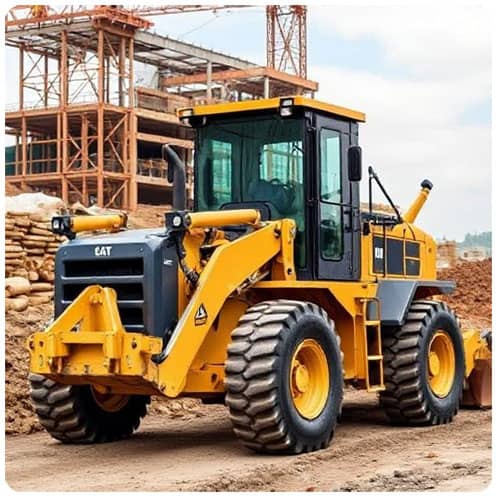
Wheel loaders, also known as front-end loaders, are used for loading materials into dump trucks or stockpiles.
Key Features:
- Large front-mounted bucket
- High-capacity lifting arms
- Fast and efficient loading cycles
Applications:
- Material transport
- Stockpiling
- Quarry operations
- Waste management
8. Trenchers
Trenchers are land moving machines designed to cut narrow trenches for pipes and cables.
Key Features:
- Chain-type or wheel-type cutting mechanism
- Can be walk-behind or ride-on
- Precise trench width and depth control
Applications:
- Utility installation
- Drainage systems
- Cable laying
- Agricultural irrigation
9. Dump Trucks
While not used to move land themselves, dump trucks are integral to transporting excavated materials off-site or between locations.
Key Features:
- Open-box bed with hydraulic lift
- Articulated or rigid frame
- High load capacity
Applications:
- Earth hauling
- Debris disposal
- Supply of sand, gravel, and aggregates
Advantages of Using Land Moving Equipment
1. Enhanced Productivity
These machines enable fast and accurate completion of labor-intensive tasks, drastically improving project timelines.
2. Cost-Efficiency
Despite the high upfront investment, they reduce overall labor costs and time spent on site preparation and excavation.
3. Precision and Safety
Advanced hydraulic systems and operator controls allow for precise land grading, minimizing errors and enhancing jobsite safety.
4. Versatility
With interchangeable attachments, a single piece of equipment can perform multiple functions, maximizing utility.
Selection Criteria for Land Moving Equipment
When selecting the right land moving equipment, several factors should be considered:
- Nature of the Terrain: Rocky, soft, muddy, or uneven terrain may require specialized tracks or wheels.
- Project Scale: Large projects benefit from high-capacity machines like scrapers and dozers, while small-scale operations may prefer skid steers or backhoe loaders.
- Budget and Fuel Efficiency: Operating costs and fuel consumption must be weighed against machine productivity.
- Availability of Attachments: Attachments enhance flexibility and may eliminate the need for multiple machines.
Maintenance and Safety Considerations
Proper maintenance ensures prolonged equipment life and optimal performance. Routine inspections, timely lubrication, and component checks are essential. Operators must also be trained and certified to handle heavy machinery safely, adhering to construction safety regulations and personal protective equipment (PPE) protocols.
The Future of Land Moving Equipment
The industry is evolving with the integration of automation, GPS, telematics, and electric-powered machinery. Modern equipment offers real-time diagnostics, autonomous operation, and improved fuel economy, helping construction companies reduce their carbon footprint while boosting efficiency.
Conclusion
Understanding the types, uses, and features of land moving equipment is crucial for efficient and safe execution of construction projects. The right equipment can transform a challenging site into a ready-to-build foundation, laying the groundwork for successful development.
Please watch the following short video for Land Moving Equipments in Construction Site
Also Read:
 Importance of the Construction of the Check Dams