
What can replace wood for building materials?
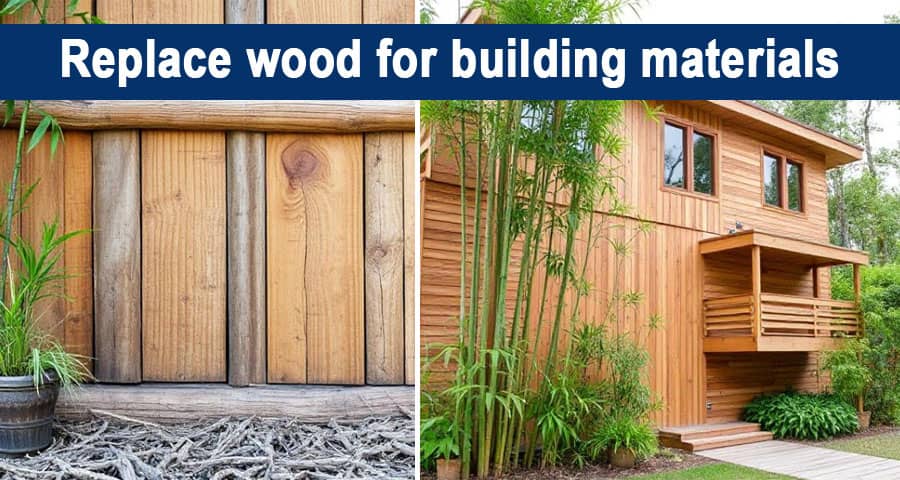
In today's age of sustainable innovation, the construction industry is shifting away from traditional wood-based materials toward more eco-friendly, durable, and technologically advanced alternatives. Whether it's due to environmental concerns, cost-effectiveness, or performance benefits, modern materials are rising to meet the demand for high-quality substitutes that can fully replace wood in structural and aesthetic applications.
Engineered Bamboo: A Renewable Powerhouse
Engineered bamboo is one of the most promising alternatives to wood. Grown rapidly and harvested sustainably, bamboo matures within 3 - 5 years, unlike hardwoods which take decades.
- Strength and Durability: Compressed bamboo can exceed the compressive strength of concrete and the tensile strength of steel.
- Versatility: Ideal for flooring, panels, structural supports, and even furniture.
- Aesthetic Appeal: Offers a clean, modern look with a natural texture similar to hardwoods.
- Eco Credentials: Sequesters large amounts of carbon dioxide, contributing positively to environmental goals.
Cross-Laminated Timber (CLT): Reimagining Wood's Potential
Though made from wood, Cross-Laminated Timber (CLT) deserves mention as it reduces waste and enhances wood's structural performance.
- Construction Efficiency: Pre-fabricated panels reduce on-site construction time.
- Strength: Multi-layered construction resists warping and provides exceptional load-bearing capacity.
- Sustainability: Uses smaller pieces of wood, allowing for more efficient use of resources.
- Fire Resistance: Thick CLT panels char on the outside, protecting inner layers from combustion.
Recycled Plastic Lumber: Turning Waste Into Wonders
Recycled plastic lumber (RPL) is made from post-consumer plastics, offering a durable and maintenance-free alternative to traditional wood.
- Zero Rot or Insect Damage: Perfect for decks, fences, and landscaping in humid environments.
- Low Maintenance: No painting, staining, or sealing required.
- Long Lifespan: Resistant to UV, moisture, and chemicals.
- Environmental Impact: Diverts plastic waste from landfills and oceans.
Hempcrete: The Bio-Composite Revolution
Hempcrete is a mixture of hemp hurds and lime, creating a lightweight and insulating building material.
- Thermal Insulation: Superior thermal mass, ideal for passive solar design.
- Breathability: Prevents mold and regulates humidity.
- Eco-Friendly: 100% biodegradable and absorbs more carbon than it emits during production.
- Applications: Non-load-bearing walls, insulation panels, and green retrofitting projects.
Structural Insulated Panels (SIPs): Efficiency Meets Strength
SIPs consist of an insulating foam core sandwiched between two structural facings, often oriented strand board (OSB) or magnesium oxide boards.
- Energy Efficiency: Exceptional insulation properties reduce energy consumption in homes and commercial buildings.
- Speed of Construction: Prefabricated systems drastically cut down build time.
- Customization: Available in various dimensions and configurations for versatile use.
- Reduced Waste: Factory manufacturing ensures precise measurements with minimal scrap.
Fiber Cement Board: The Durable All-Rounder
Fiber cement boards combine cement with cellulose fibers, creating a tough, fire-resistant material that mimics the appearance of wood siding.
- Resilience: Resistant to fire, termites, and rot.
- Appearance: Can be textured and painted to match wood grain aesthetics.
- Low Maintenance: Requires less upkeep than wood cladding.
- Applications: Ideal for external cladding, soffits, and weatherboards.
Steel and Aluminum: Industrial-Grade Alternatives
For structural applications where strength is paramount, metal framing systems are often used in place of wood.
- Longevity: Corrosion-resistant treatments extend material life.
- Precision Engineering: Ideal for modern modular construction.
- Fire Safety: Inherently non-combustible.
- Weight-to-Strength Ratio: Steel in particular offers excellent structural performance with reduced material volume.
Magnesium Oxide (MgO) Boards: The Fireproof Contender
MgO boards are fireproof panels used in place of plywood or drywall in many construction applications.
- Fire Resistance: Withstands extreme temperatures, ideal for fire-prone regions.
- Moisture and Mold Resistant: Unlike wood, it doesn't deteriorate in damp environments.
- Eco-Friendly: Contains no hazardous chemicals and is recyclable.
- Usage: Interior walls, flooring underlayment, and exterior sheathing.
Mycelium Composites: Nature's Innovation
Mycelium, the root structure of fungi, can be molded into dense, fire-resistant building materials.
- Biodegradability: Fully compostable at end of life.
- Low Energy Production: Grown in days with minimal energy.
- Applications: Insulation, bricks, tiles, and interior wall systems.
- Innovation in Practice: Still in developmental stages but shows massive potential for carbon-neutral construction.
Cork: Lightweight and Sustainable
Cork, harvested from the bark of cork oak trees, is a renewable resource that regenerates without harming the tree.
- Natural Insulator: Excellent thermal and acoustic properties.
- Lightweight: Reduces dead load on buildings.
- Pest Resistant: Naturally repels insects and mold.
- Applications: Flooring, wall panels, and insulation layers.
Composite Materials: Advanced Performance
A variety of composite materials combine resins, polymers, and natural or synthetic fibers to create high-performance building components.
- High Strength-to-Weight Ratio: Ideal for structural beams, panels, and facades.
- Customization: Can be engineered for specific thermal, acoustic, or fire-resistant properties.
- Weather Resistance: Outperforms wood in demanding climates.
- Examples: Glass fiber reinforced plastics (GFRP), carbon composites, and wood-plastic composites (WPCs).
Why We Must Move Beyond Wood
The global construction sector is responsible for a significant portion of deforestation and greenhouse gas emissions. By embracing sustainable wood alternatives, we not only reduce environmental degradation but also improve the longevity, efficiency, and resilience of our buildings.
Innovative materials like hempcrete, bamboo, recycled plastics, and composites are more than just substitutes - they're superior building solutions tailored for the needs of the 21st century. Their use in modern architecture signals a broader transformation toward green building practices and climate-conscious design.
Please watch the following short video for Replace Wood for Building Materials