
All About Waffle Slab Foundation and Its Features, Pros & Cons
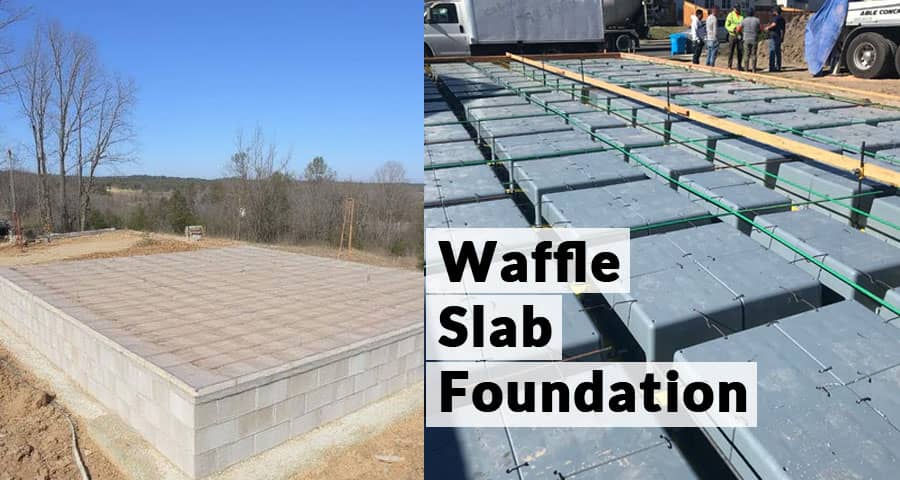
A waffle slab foundation is a modern construction innovation, highly appreciated in structural engineering for its strength, load distribution, and adaptability in different soil conditions. Known for its grid-like pattern resembling a waffle, this type of slab provides a robust foundation for residential, commercial, and industrial buildings.
What is a Waffle Slab Foundation?
A waffle slab foundation is a reinforced concrete slab with a grid pattern of ribs running in two directions on its underside. These ribs, created using molds or void formers (often polystyrene), significantly enhance the load-bearing capacity while reducing the overall weight of the slab. The design provides strength in both directions, making it ideal for large-span structures with minimal columns.
Structural Design of Waffle Slab Foundations
The waffle slab system comprises:
- Top slab thickness: Typically ranges between 100mm to 150mm.
- Ribs (beams): Spaced at regular intervals of 600mm to 1200mm, with depths usually ranging from 300mm to 600mm.
- Pods or void formers: These are lightweight forms placed in a grid layout that remain in place during casting and create the waffle-like cavities.
- Post-tensioned or reinforced concrete: Reinforcement is designed as per structural loads and span requirements.
This design allows for a high strength-to-weight ratio, reducing the volume of concrete needed and leading to material efficiency.
Key Features of Waffle Slab Foundations
1. Grid Reinforcement Pattern
The defining feature of a waffle slab is its grid-like pattern, formed by intersecting ribs. This design efficiently distributes loads and reduces deflection.
2. Flexibility in Design
Waffle slabs are highly customizable, which means they can be adapted for varying structural loads, soil conditions, and architectural requirements.
3. Reduced Dead Load
Due to the hollow grid system, waffle slabs use less concrete and steel, reducing the dead load without compromising strength.
4. Superior Load Distribution
The two-way reinforcement and ribbed structure allow uniform load distribution, making waffle slabs ideal for earthquake-prone and expansive soil zones.
5. Minimal Shuttering Requirements
Modern construction techniques using reusable waffle pods reduce shuttering time and cost, accelerating construction timelines.
Types of Waffle Slabs
1. In-situ Waffle Slab
This type is cast on-site using void formers or reusable plastic pods. It is suitable for buildings requiring custom dimensions and specific load configurations.
2. Precast Waffle Slab
Manufactured off-site and assembled at the construction location, precast waffle slabs are ideal for mass production and modular buildings.
3. Ribbed Waffle Slab
Used when there's a need for higher structural performance, especially in commercial and industrial buildings. It includes deeper ribs and heavier reinforcement.
Advantages of Waffle Slab Foundations
1. Excellent Load-Bearing Capacity
Waffle slabs offer greater structural capacity, which supports longer spans and heavier loads without intermediate columns.
2. Economical Material Usage
By eliminating the need for thick solid slabs, they save concrete and steel, leading to more cost-effective construction.
3. Enhanced Thermal Insulation
The air pockets formed by the waffle pods contribute to better thermal performance, reducing heating and cooling demands in buildings.
4. Architectural Aesthetics
The exposed waffle pattern adds an aesthetic appeal to ceilings in architectural designs, particularly in commercial interiors and cultural buildings.
5. Crack Resistance
The even distribution of stresses minimizes the formation of cracks, resulting in greater structural durability over time.
6. Reduced Foundation Settlement
Due to broader load dispersion, waffle slabs help in minimizing differential settlement, making them suitable for weak or reactive soil types.
Disadvantages of Waffle Slab Foundations
1. Complex Formwork
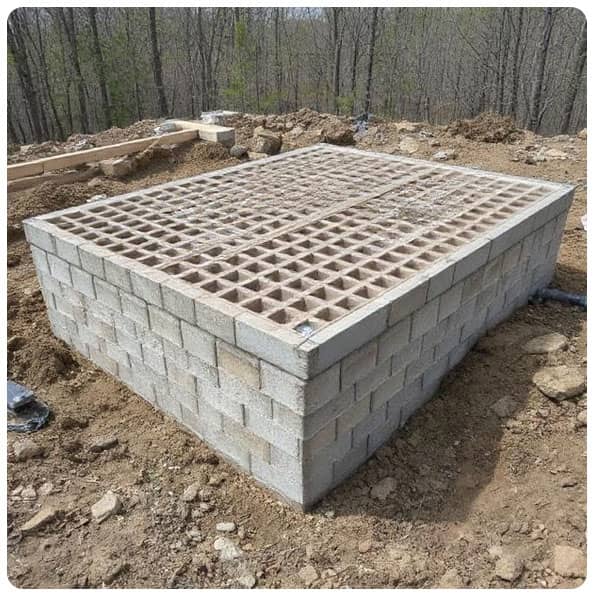
The construction requires precise and labor-intensive formwork, which may increase the upfront cost and complexity during installation.
2. Not Ideal for Small Areas
In small buildings or irregularly shaped sites, waffle slabs may not be the most efficient choice, given the difficulty in forming proper grid alignment.
3. Increased Floor-to-Floor Height
The depth of ribs adds to the overall height of the structure, which may not be suitable in height-restricted zones.
4. Higher Initial Cost
While material savings occur, the initial cost for formwork systems and specialized labor can be high compared to traditional slabs.
5. Voiding Issues
Improper compaction or placement of void formers can lead to honeycombing or voids, compromising the slab's integrity.
Applications of Waffle Slab Foundations
Waffle slabs are increasingly preferred in:
- Commercial complexes
- Underground car parks
- Multi-storey residential apartments
- Hospitals and educational institutions
- Warehouses and manufacturing units
They are particularly valuable where large column-free spaces and structural performance are critical.
Waffle Slab vs Flat Slab vs Raft Foundation
| Feature | Waffle Slab | Flat Slab | Raft Foundation |
|---|---|---|---|
| Load Distribution | Two-way grid system | Uniform but limited span | Distributes load over entire area |
| Thickness | Thinner slab with deep ribs | Uniform thickness | Thick continuous slab |
| Construction Time | Moderate (requires precise formwork) | Fast | Longer (depends on soil condition) |
| Material Cost | Lower concrete usage | Higher concrete usage | High for large structures |
| Ideal Use | Large spans, unstable soils | Small-medium residential buildings | Poor soil, heavy loads |
Best Practices for Installing Waffle Slab Foundations
- Soil Testing and Engineering Assessment: Always conduct a geotechnical investigation to determine soil compatibility.
- Precision in Formwork Placement: Ensure accurate placement and leveling of void formers to maintain structural integrity.
- Reinforcement Detailing: Adequate rebar spacing and placement must comply with design codes to prevent sagging and cracking.
- Proper Concrete Vibration: Eliminate air gaps and avoid honeycombing by using appropriate vibration techniques.
- Curing and Surface Treatment: Allow sufficient curing period and surface finishing for optimal slab strength.
Conclusion
A waffle slab foundation is a versatile, durable, and cost-effective structural system that offers superior load-bearing capacity and reduced material usage. Despite its few drawbacks, the benefits far outweigh the disadvantages, especially in modern construction projects that demand efficiency, strength, and design flexibility. When executed correctly, waffle slabs serve as a smart long-term investment in sustainable construction.
Please watch the following short video for Waffle Slab Foundation
Also Read:
 Chemical : European Standards for Aggregates