
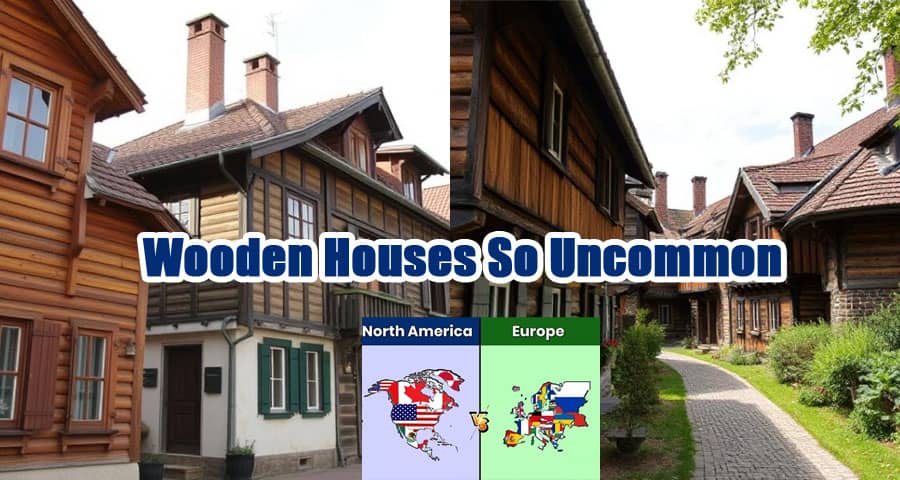
Why Are Wooden Houses So Uncommon in Europe Compared to North America?
The Historical Roots of Building Preferences
The divergence in housing materials between Europe and North America stems primarily from historical availability of resources and cultural evolution. In North America, vast forests covering the continent provided settlers with an abundance of timber, which quickly became the primary material for residential construction. Lightweight, adaptable, and fast to build with, wood suited the early American pioneers who needed to erect homes rapidly.
By contrast, Europe's long and dense history of settlements meant stone, brick, and masonry became the dominant materials over centuries. Forests in parts of Europe were depleted earlier due to intensive agriculture and industrialization, making timber a less sustainable long-term choice. Additionally, Europe's emphasis on building structures to last centuries encouraged the use of durable materials like stone and concrete.
Climate and Environmental Influences
Climate plays a pivotal role in construction choices. In large parts of North America, particularly the United States and Canada, climates range from temperate to continental, with many areas ideal for wood construction due to less exposure to prolonged moisture. Wood is well-suited to these climates because it insulates well and adapts to temperature changes without cracking.
However, much of Europe experiences long, damp winters and humid conditions, especially in countries like the UK, Germany, and the Netherlands. These conditions can lead to mold, rot, and insect infestations in wooden structures. Hence, non-organic materials like brick and concrete are more suitable for resisting the wear and tear caused by Europe's environmental factors.
Building Regulations and Fire Safety Concerns
One of the major barriers to wooden housing in Europe is strict building codes and fire safety regulations. European construction laws are often more rigid than their North American counterparts, particularly regarding fire resistance. Masonry and concrete offer superior fire resistance compared to wood, aligning with urban planning policies and insurance standards in many European nations.
While modern engineered timber, such as cross-laminated timber (CLT), offers improved fire resistance and structural strength, local authorities in Europe are slower to approve wood-based high-rise or urban housing projects. This cautious approach further discourages the adoption of timber homes on a large scale.
Economic and Practical Considerations
Cost efficiency is another major factor influencing construction choices. In North America, timber remains a cheap, accessible, and easily transportable building material. The prevalence of prefabricated homes, mobile homes, and timber-frame construction supports faster, more affordable development across suburban and rural areas.
In Europe, the cost of timber can be higher, and the construction industry is more heavily unionized and regulated, which adds to the overall cost and complexity of wood-based home projects. Additionally, traditional bricklaying and masonry techniques are deeply embedded in the European workforce, making transitions to timber less economically appealing.
Longevity and Cultural Perceptions of Housing
Cultural attitudes towards housing also differ significantly. In North America, especially the United States, homes are often viewed as temporary or mid-term assets, with many homeowners relocating every 5 - 10 years. As a result, quick-build wooden homes meet consumer expectations without a long-term structural lifespan.
Conversely, European homeowners typically view property as a multi-generational investment. The expectation is for homes to last 50 to 100 years or more, which favors masonry, stone, and reinforced concrete structures. There is a cultural premium placed on solid, enduring architecture, contributing to the perceived inferiority of wood as a primary building material.
Urban Density and Land Use Patterns
In North America, particularly in the U.S. and Canada, urban sprawl has led to low-density residential developments. These areas, with ample space for detached homes, are ideal for timber construction. The wide road networks and open plots facilitate the transportation and installation of pre-fabricated wooden houses.
Europe's cities, however, are typically more compact and densely populated. Urban centers often require multi-story apartment complexes, which are better suited to reinforced concrete and steel frames for safety and space efficiency. The scarcity of available land also leads to vertical building, a trend where wood is less frequently employed due to load-bearing limitations and fire safety codes.
Timber Framing: Still Present in Parts of Europe
It's important to note that timber-framed housing is not entirely absent in Europe. Regions such as Scandinavia, Austria, and Switzerland have embraced modern sustainable wooden architecture, particularly using CLT and glulam beams. Norway and Sweden, with their abundant forests and low seismic activity, continue to champion timber construction, even in public buildings.
However, even within these countries, urban cores still rely heavily on non-wood materials for large-scale residential construction. The timber trend is often limited to rural or experimental developments, not the mainstream housing market.
Sustainability Trends and the Future of Wooden Homes in Europe
Despite current challenges, Europe is witnessing a gradual revival in wooden architecture, driven by climate change awareness and sustainability goals. Engineered wood products, when sourced from sustainable forestry, offer carbon sequestration benefits and lower embodied energy than traditional concrete or steel.
Countries like France, Germany, and the UK are investing in pilot programs and subsidies to encourage the adoption of eco-friendly timber buildings. Nevertheless, overcoming regulatory, cultural, and structural hurdles will take time. Until then, wooden houses will remain a minority choice in most parts of Europe, unlike the dominant residential model in North America.
Please view the following short video for Wooden Houses So Uncommon in Europe Compared to North America