
Difference Between H-Beam and I-Beam
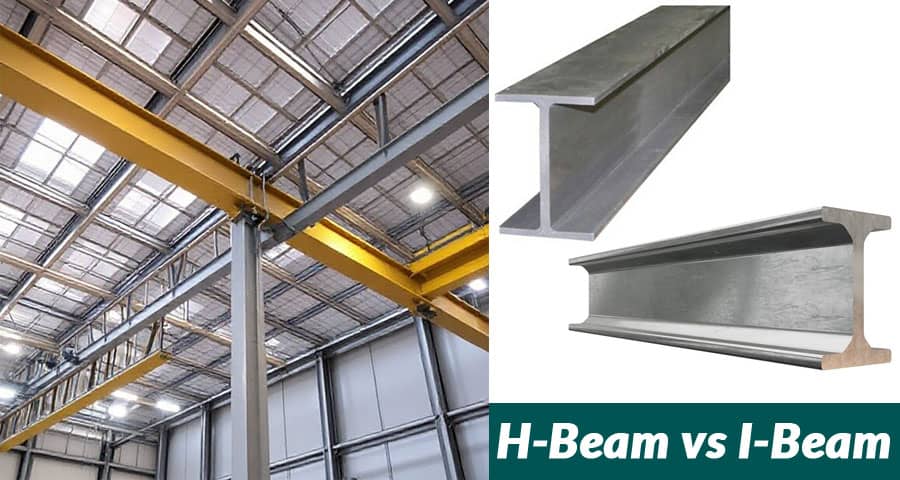
Structural steel is the backbone of modern construction, and among the most commonly used members are H-Beams and I-Beams. Both serve as essential components in building frameworks, bridges, and industrial structures. However, while they may look similar, their design, functionality, strength distribution, and applications differ significantly. Understanding the difference between H-Beam and I-Beam is crucial for engineers, architects, and construction professionals when selecting the right steel section for a project.
What Is an H-Beam?
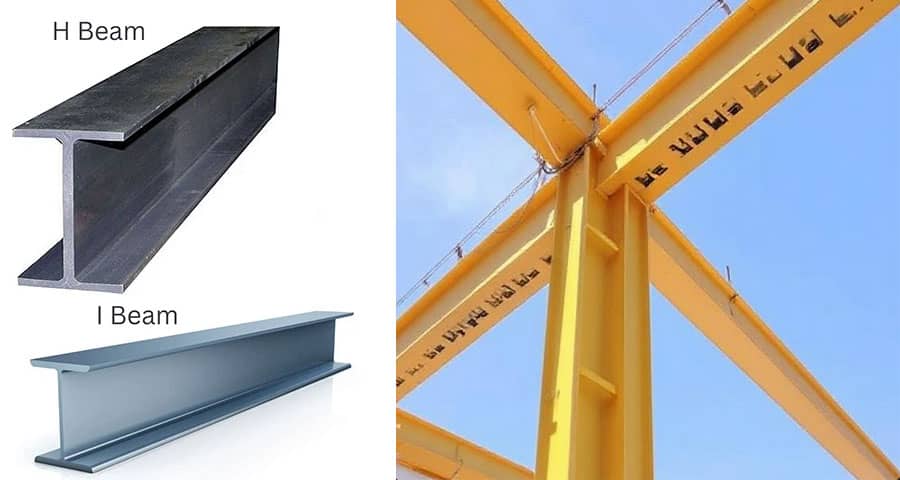
An H-Beam is a structural steel section shaped like the letter "H" when viewed in cross-section. It has wide, parallel flanges and a thicker web, making it a strong and stable choice for heavy loads.
Key Features of H-Beam
- Flanges: Wide, parallel, and usually thicker.
- Web Thickness: Stronger and thicker compared to I-Beams.
- Weight: Heavier due to more material.
- Load Capacity: Superior strength, ideal for taller structures and longer spans.
- Manufacturing: Usually produced by rolling or welding.
Advantages of H-Beam
- Provides greater moment of inertia, allowing it to resist bending.
- Can carry heavier loads due to its robust flanges and web.
- Offers excellent stability for large-scale structures.
- Ideal for column and beam applications in tall buildings and industrial projects.
What Is an I-Beam?
An I-Beam, also called a Universal Beam (UB) or Standard Beam, has a cross-section shaped like the letter "I". Its flanges are narrower compared to H-Beams, and the web is typically thinner.
Key Features of I-Beam
- Flanges: Narrower and tapered.
- Web Thickness: Generally thinner.
- Weight: Lighter compared to H-Beam.
- Load Capacity: Well-suited for smaller spans and lighter loads.
- Manufacturing: Produced through hot rolling.
Advantages of I-Beam
- Cost-effective due to less material usage.
- Easier to handle and transport because of lighter weight.
- Commonly used in residential construction and smaller-scale structures.
- Provides adequate strength for moderate load-bearing needs.
Key Differences Between H-Beam and I-Beam
| Feature | H-Beam | I-Beam |
|---|---|---|
| Shape | Looks like the letter “H” | Looks like the letter “I” |
| Flanges | Wide and parallel | Narrow and tapered |
| Web Thickness | Thicker | Thinner |
| Load Capacity | Can handle heavier loads | Suitable for lighter loads |
| Weight | Heavier | Lighter |
| Manufacturing | Rolled or welded | Hot rolled |
| Applications | Bridges, tall buildings, industrial structures | Residential construction, smaller spans |
| Moment of Inertia | Higher, resists bending effectively | Lower, less resistance to bending |
Strength and Load-Bearing Capacity
The strength difference between H-Beam and I-Beam lies in the flange design. H-Beams, with their wider flanges and thicker webs, distribute loads more evenly and resist bending under larger stresses. This makes them highly effective for long spans and tall columns.
On the other hand, I-Beams are lighter and designed for efficiency in carrying smaller loads. They work best in shorter spans where excessive weight is unnecessary.
Applications of H-Beam
H-Beams are preferred in large-scale construction due to their strength and durability. Common applications include:
- High-rise buildings and skyscrapers.
- Bridges and flyovers.
- Industrial facilities and warehouses.
- Large-scale platforms and heavy machinery supports.
- Marine and offshore structures.
Applications of I-Beam
I-Beams are widely used in residential and small-scale projects, such as:
- House framing and floor joists.
- Small bridges and walkways.
- Roof trusses and support beams.
- Lightweight industrial applications.
- Temporary structures where easy handling is crucial.
Cost Comparison Between H-Beam and I-Beam
- H-Beam Cost: Higher because it uses more steel and has a heavier profile.
- I-Beam Cost: More economical as it requires less material and is easier to transport.
When budgeting for a project, I-Beams are often chosen for residential projects, while H-Beams are selected for large-scale industrial and commercial structures that demand higher load-bearing capacity.
Durability and Stability
- H-Beams are more durable and stable, resisting torsion and bending effectively. This makes them the preferred choice for permanent and heavy-duty structures.
- I-Beams provide adequate stability but are not as strong against twisting and buckling as H-Beams. They are best for lighter construction needs.
Which Is Better: H-Beam or I-Beam?
The choice between H-Beam and I-Beam depends on the scale, load requirements, and budget of the project.
- Use H-Beam when:
- The structure is tall or requires long spans.
- Heavy load capacity and durability are critical.
- Industrial, commercial, or bridge construction is involved.
- Use I-Beam when:
- The project is smaller in scale.
- Weight reduction is necessary.
- Budget-friendly construction is the goal.
Conclusion
The difference between H-Beam and I-Beam is rooted in their design, strength, and applications. While H-Beams are stronger, heavier, and ideal for large-scale structures, I-Beams are lighter, economical, and perfect for residential or small projects. Choosing the right steel beam ensures safety, cost-efficiency, and structural stability in construction.
Please watch the following short video for Difference Between H-Beam and I-Beam
Also Read:
 The Meaning of Dewatering and its construction site methods