
Lintel: Functions and Types
What Is Lintel in Construction?
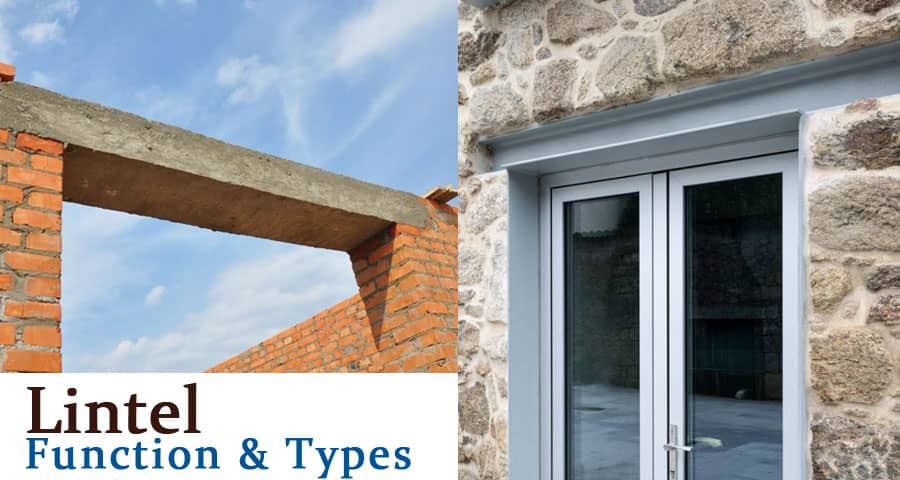
A lintel is a horizontal structural member placed across the top of openings such as doors, windows, ventilators, and other voids in a building. We provide lintels to support the load of masonry or structural elements above the opening and safely transfer that load to the adjoining walls.
In building construction, any interruption in a wall - such as a window or door - creates a structural weakness. Without a proper load-carrying member across the opening, the masonry above would crack or collapse. We install lintels to maintain structural integrity, load distribution, and stability of the building envelope.
Lintels are widely used in residential, commercial, and industrial structures. Depending on the span, load intensity, wall thickness, and construction material, lintels are designed using reinforced concrete, steel, brick, stone, timber, or precast systems.
Primary Function of Lintel in Building Construction
1. Load Transfer and Structural Support
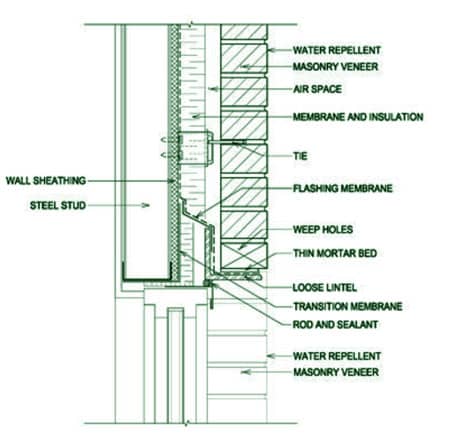
The core function of a lintel is to carry the superimposed load from above the opening. This includes:
- Dead load of masonry
- Live load from floors and roofs
- Additional structural loads (if applicable)
We ensure the lintel distributes these loads uniformly to the side walls, preventing stress concentration around the opening edges.
2. Preventing Cracks Around Openings
Cracks commonly appear at door and window corners due to stress concentration. A properly designed lintel reduces tensile stress and prevents diagonal cracking. This increases the durability and service life of the structure.
3. Maintaining Alignment and Stability
Lintels help maintain wall alignment and rigidity, particularly in load-bearing structures. They prevent sagging or settlement above openings.
4. Enhancing Architectural Appearance
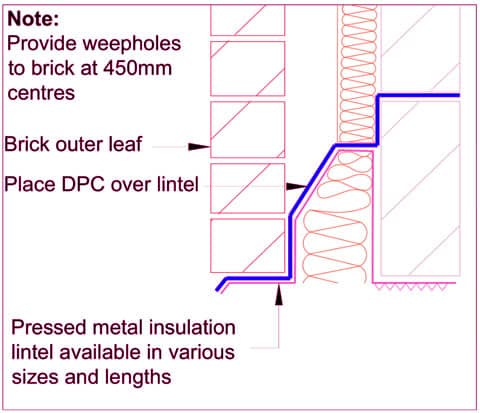
Apart from structural functionality, lintels also contribute to architectural detailing. In traditional and decorative construction, exposed lintels enhance façade aesthetics.
Difference Between Lintel and Beam
Although lintels and beams are horizontal structural members, their functions differ:
| Aspect | Lintel | Beam |
|---|---|---|
| Location | Above door/window openings | Anywhere in structure |
| Load Type | Masonry load above openings | Slab, wall, roof loads |
| Span | Usually shorter spans | Longer spans |
| Structural Role | Opening support | Primary load-bearing member |
We typically design lintels for localized loads, whereas beams form part of the overall structural framework.
Types of Lintel Used in Construction
Different types of lintels are used depending on structural requirements, cost, material availability, and design specifications.
1. Timber Lintel
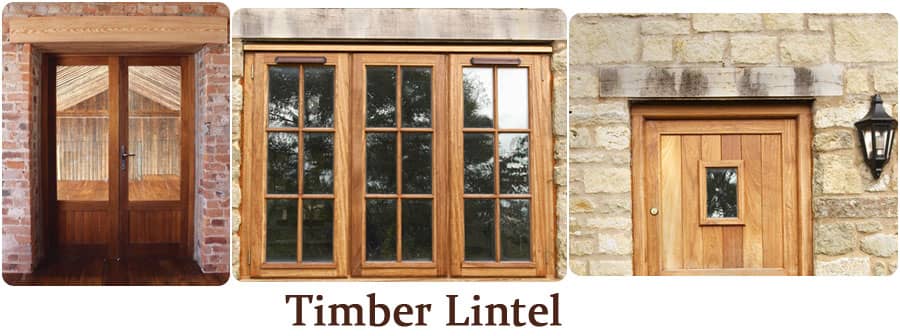
A timber lintel is one of the earliest forms used in construction. It consists of solid wooden sections placed across openings.
Advantages
- Easy to install
- Lightweight
- Economical in timber-rich regions
Disadvantages
- Susceptible to decay and termite attack
- Limited load capacity
- Not fire-resistant
Timber lintels are now rarely used in modern reinforced concrete structures but are still found in heritage and rural buildings.
2. Stone Lintel
A stone lintel is a solid stone slab placed across the opening. It is commonly seen in historical monuments and traditional masonry structures.

Advantages
- Excellent compressive strength
- Highly durable
- Long lifespan
Limitations
- Heavy and difficult to handle
- Limited availability
- Not suitable for large spans
Stone lintels are primarily used where stone masonry is already part of the structural system.
3. Brick Lintel
A brick lintel is constructed using specially arranged bricks across the opening.
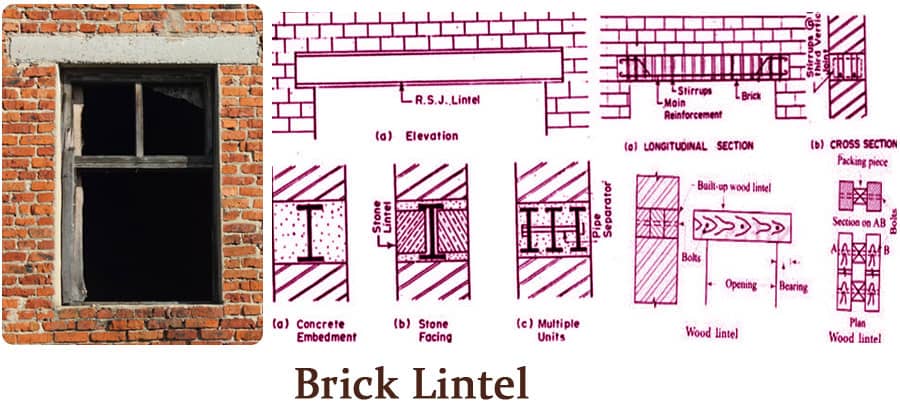
Types of Brick Lintels
- Plain brick lintel
- Reinforced brick lintel
Reinforced brick lintels include steel reinforcement embedded in mortar joints to improve strength.
Advantages
- Economical
- Suitable for small spans
- Easy construction
Disadvantages
- Lower strength compared to RCC lintels
- Not suitable for heavy loads
Brick lintels are commonly used in low-rise residential buildings.
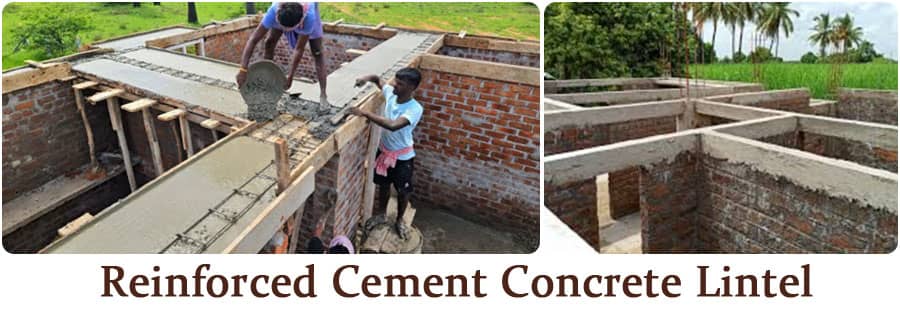
4. Reinforced Cement Concrete (RCC) Lintel
The RCC lintel is the most widely used lintel type in modern construction. It consists of concrete reinforced with steel bars to resist tensile and compressive stresses.
Advantages
- High load-bearing capacity
- Suitable for large spans
- Durable and fire-resistant
- Customizable size and shape
Design Considerations
- Span length
- Wall thickness
- Load intensity
- Reinforcement detailing
RCC lintels are typically cast in situ or precast and installed above all structural openings in residential and commercial buildings.
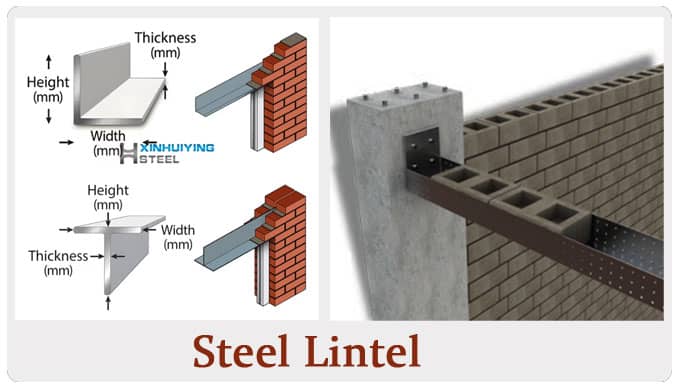
5. Steel Lintel
A steel lintel is made using rolled steel sections such as angles, channels, or I-sections.
Advantages
- High strength-to-weight ratio
- Ideal for heavy loads
- Suitable for larger openings
Disadvantages
- Corrosion risk
- Requires protective coating
- Higher cost
Steel lintels are frequently used in industrial buildings and high-load applications.
6. Precast Concrete Lintel
Precast lintels are factory-manufactured reinforced concrete members.
Benefits
- Uniform quality
- Faster construction
- Reduced on-site labor
They are ideal for repetitive construction projects such as housing developments.
Standard Size of Lintel
Lintel dimensions depend on:
- Span width
- Wall thickness
- Structural load
Common residential lintel depth ranges from 100 mm to 200 mm, with bearing on each side typically 150 mm minimum. Proper bearing length ensures safe load transfer.
Installation Guidelines for Lintel
To ensure structural safety, we follow these practices:
- Provide adequate end bearing.
- Maintain proper reinforcement cover.
- Cure concrete lintels sufficiently.
- Align lintel with wall course level.
Improper installation can lead to stress cracks and structural instability.
Why RCC Lintel Is Most Preferred
Among all types, RCC lintels dominate modern construction due to:
- Structural reliability
- Long service life
- Low maintenance
- Compatibility with reinforced concrete frames
They integrate seamlessly into framed structures and load-bearing systems alike.
Conclusion
A lintel is an essential structural component placed above door and window openings to support loads and maintain structural stability. Its primary function is to transfer the load from above the opening safely to adjacent walls. Depending on construction requirements, we use timber, stone, brick, steel, RCC, or precast lintels.
In modern building practice, reinforced cement concrete lintels are the most efficient and widely adopted solution due to their strength, durability, and versatility. Proper design, adequate bearing, and correct installation ensure long-lasting performance and crack-free openings.
Understanding the function of lintel and types of lintel allows us to select the most appropriate structural solution for safe and durable construction.
Please watch the following short video for Lintel in construction
Also Read:
 What Is the Best Sand for Filling Foundation and Why?