
Weep Holes: Function and Types

Weep holes are small but essential openings in construction that play a crucial role in ensuring the durability and safety of structures. These tiny gaps, often overlooked, provide an effective way to relieve water pressure, enhance ventilation, and protect building elements from moisture-related damage. By understanding the function and types of weep holes, we can appreciate their importance in architecture, civil engineering, and everyday construction practices.
What Are Weep Holes?
A weep hole is a small opening designed in walls, retaining structures, window sills, or other construction elements to allow water to escape from within a structure. They are typically located at the base of masonry walls, behind retaining walls, and at the bottom of window frames. Without these openings, water buildup could lead to structural damage, dampness, and reduced longevity of the building.
Functions of Weep Holes
1. Preventing Water Accumulation
One of the primary functions of weep holes is to drain out water that seeps into cavities. Whether it's rainwater, groundwater, or condensation, these openings ensure there is no waterlogging within walls or behind retaining structures.
2. Reducing Hydrostatic Pressure
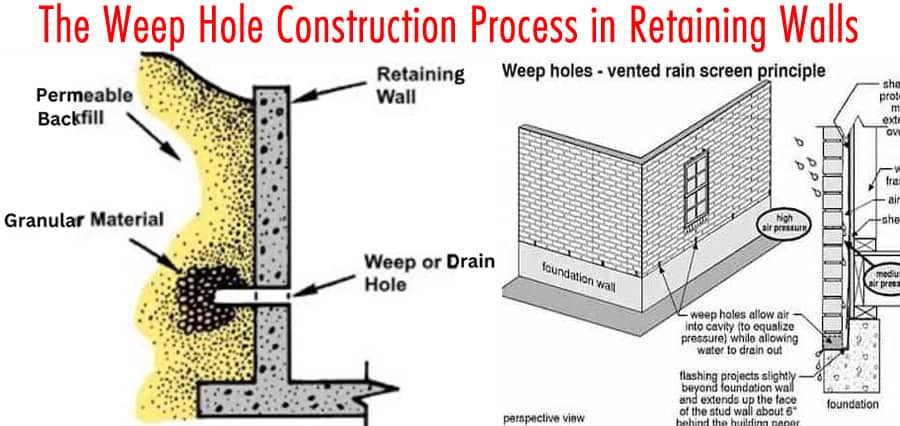
In retaining walls and basement walls, water accumulation can exert hydrostatic pressure that pushes against the structure. Weep holes relieve this pressure by providing an outlet, preventing cracks, wall tilting, or even collapse.
3. Allowing Ventilation
Weep holes also serve as ventilation points, enabling air circulation within wall cavities. This airflow helps in drying out dampness and controlling moisture-related problems like mold growth.
4. Enhancing Structural Durability
By preventing moisture buildup and water stagnation, weep holes increase the lifespan of construction materials such as bricks, concrete, and mortar.
5. Protecting Finishes and Interiors
Buildings without proper drainage often experience peeling paint, efflorescence, and seepage stains. Weep holes safeguard interior finishes and maintain aesthetics.
Types of Weep Holes
Different weep hole types are designed depending on the location, material, and functional requirements of the structure.
1. Open Head Joint Weep Holes
- Found in brick masonry walls.
- Created by leaving gaps (open vertical joints) between bricks at intervals.
- Simple and cost-effective but may be prone to clogging by insects or debris.
2. Tube Weep Holes
- Plastic or metal tubes are inserted at an angle into mortar joints.
- Provide a clear passage for water to escape.
- Commonly used in retaining walls and cavity walls.
3. Cotton Rope Weep Holes
- A piece of cotton rope is inserted into the wall cavity and extended outward.
- The rope absorbs water and allows it to drain outside.
- Not as durable as other options, and effectiveness decreases over time.
4. Plastic or Vent Inserts
- Manufactured weep hole vents made from durable plastic or stainless steel.
- Designed to prevent insect entry while ensuring drainage and ventilation.
- Aesthetic and long-lasting compared to open head joints.
5. Weep Holes in Retaining Walls
- Typically circular holes of 5 - 10 cm diameter are left at the bottom.
- Relieve hydrostatic pressure by allowing groundwater to escape.
- Spaced at regular intervals for uniform pressure release.
6. Window Frame Weep Holes
- Found in aluminum or UPVC window frames.
- Allow rainwater collected inside the frame tracks to drain out.
- Prevents seepage into interiors and protects window mechanisms.
7. Weep Holes in Bridges and Culverts
- Incorporated in abutments and wing walls.
- Facilitate drainage and prevent structural stress due to trapped water.
Design Considerations for Weep Holes
When designing or installing weep holes, engineers consider several important factors:
- Size: Typically ranges from 4 mm (in window frames) to 100 mm (in retaining walls).
- Spacing: Weep holes in masonry walls are usually placed every 24 - 36 inches horizontally. In retaining walls, spacing depends on wall height and soil conditions.
- Location: Positioned at the lowest point of cavities to ensure effective drainage.
- Material: Should be durable, corrosion-resistant, and resistant to blockage by debris or insects.
Advantages of Weep Holes
- Prevents structural failure caused by hydrostatic pressure.
- Improves indoor comfort by reducing dampness and mold growth.
- Protects materials from deterioration caused by trapped moisture.
- Enhances safety in retaining structures and bridges.
- Cost-effective solution for long-term maintenance and durability.
Disadvantages and Challenges
While highly beneficial, weep holes also present certain challenges:
- Blockage risk from dirt, mortar droppings, or insect nests.
- Entry point for pests if not protected by screens or inserts.
- Reduced effectiveness if improperly spaced or incorrectly sized.
To counter these issues, modern construction often uses vent inserts, filters, or mesh covers to improve performance.
Maintenance of Weep Holes
Regular inspection and cleaning of weep holes are essential for optimal performance. Some recommended practices include:
- Checking for blockages caused by paint, sealants, or debris.
- Clearing clogged holes using compressed air, wires, or water jets.
- Installing covers or vents to prevent insect entry.
- Monitoring moisture levels in walls to ensure proper functioning.
Conclusion
Weep holes may seem like minor construction details, but their role in protecting buildings, retaining walls, and window systems is vital. They ensure structural safety, moisture control, and long-term durability. With different types available, proper design and maintenance of weep holes can save structures from costly damage and extend their service life.
Please watch the following short video for Weep Holes
Also Read:
 Swimming Pool Design Spreadsheet