
Difference Between Marble and Granite
Introduction to Marble and Granite
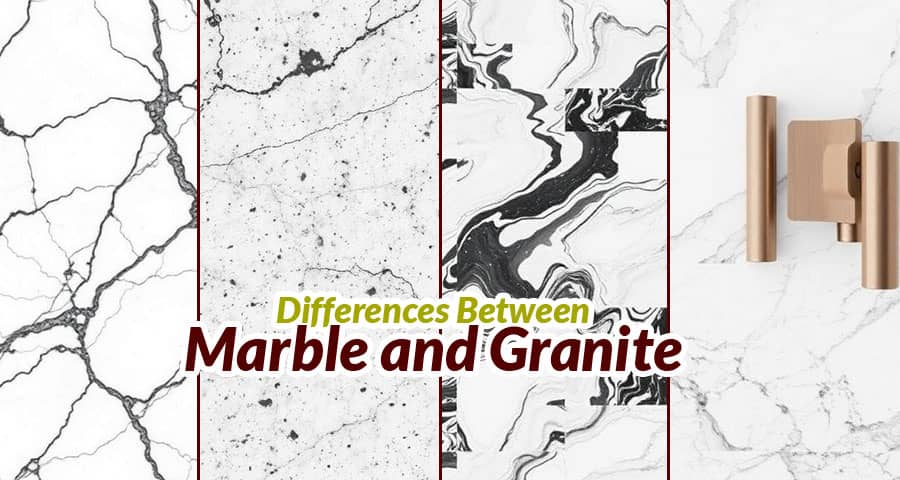
We often encounter marble and granite as premium natural stones used extensively in construction, interior design, and architecture. While both are admired for their durability and aesthetic appeal, they differ significantly in composition, appearance, strength, maintenance, cost, and applications. Understanding the difference between marble and granite is essential for making informed decisions in residential, commercial, and industrial projects.
Origin and Geological Formation
Marble Formation
Marble is a metamorphic rock, formed when limestone is subjected to intense heat and pressure over long geological periods. This transformation recrystallizes calcite minerals, giving marble its characteristic veining patterns and smooth texture.
Granite Formation
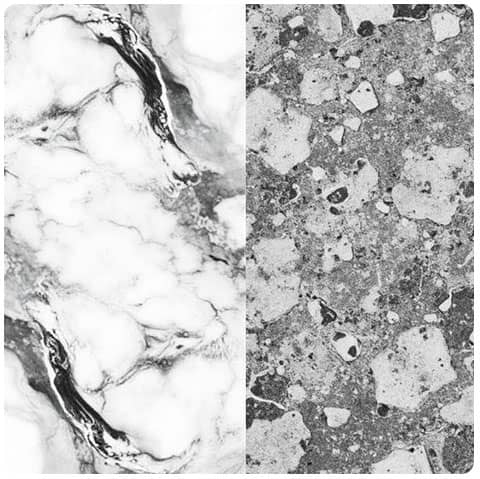
Granite is an igneous rock, formed from the slow crystallization of magma beneath the Earth's surface. This slow cooling process results in a coarse-grained structure composed mainly of quartz, feldspar, and mica, contributing to its exceptional hardness.
Physical Composition and Mineral Content
Marble Composition
Marble primarily consists of:
- Calcite (Calcium Carbonate)
- Minor amounts of dolomite, graphite, and clay minerals
This composition makes marble softer and more porous, but visually refined.
Granite Composition
Granite contains:
- Quartz (enhances hardness)
- Feldspar (adds strength and color)
- Mica (provides sparkle and texture)
The high quartz content makes granite extremely hard and resistant.
Appearance and Aesthetic Appeal
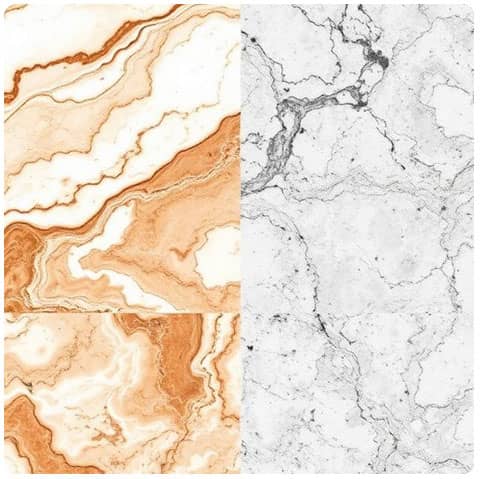
Marble Appearance
Marble is renowned for its:
- Elegant veining
- Smooth and polished surface
- Classic white, cream, grey, and green tones
It delivers a luxurious and timeless look, often associated with heritage buildings and high-end interiors.
Granite Appearance
Granite offers:
- Speckled or granular patterns
- Wide color range including black, red, blue, brown, and green
- A more natural and rugged aesthetic
Granite suits both modern and traditional designs due to its visual versatility.
Strength and Durability Comparison
Marble Strength
Marble is:
- Moderately strong
- More prone to scratches and surface wear
- Sensitive to impact and abrasion
It performs well in low-traffic areas but requires careful handling.
Granite Strength
Granite is:
- One of the hardest natural stones
- Highly resistant to scratches, cracks, and heavy loads
- Suitable for high-traffic and heavy-duty applications
Porosity and Water Absorption
Marble Porosity
Marble has:
- Higher porosity
- Greater tendency to absorb liquids
- Risk of staining if not sealed properly
Granite Porosity
Granite is:
- Low in porosity
- Naturally resistant to moisture penetration
- Less likely to stain even under heavy use
Resistance to Heat and Chemicals
Marble Resistance
Marble:
- Can tolerate moderate heat
- Reacts chemically with acidic substances like lemon juice and vinegar
- Susceptible to etching and dull spots
Granite Resistance
Granite:
- Excellent heat resistance
- Highly resistant to acids and chemicals
- Ideal for kitchen environments
Maintenance and Care Requirements
Marble Maintenance
Marble requires:
- Regular sealing
- Use of pH-neutral cleaners
- Immediate cleaning of spills
Its maintenance demands are higher to preserve its shine and finish.
Granite Maintenance
Granite requires:
- Occasional sealing
- Minimal daily maintenance
- Simple cleaning with mild detergents
Granite is considered low-maintenance compared to marble.
Applications in Construction and Design
Common Uses of Marble
Marble is widely used for:
- Flooring in luxury homes
- Wall cladding
- Bathroom vanities
- Sculptures and monuments
- Decorative architectural elements
Common Uses of Granite
Granite is preferred for:
- Kitchen countertops
- Staircases
- Exterior paving
- Structural columns
- Public buildings and commercial spaces
Slip Resistance and Safety
Marble Safety
Polished marble:
- Can be slippery when wet
- Often requires anti-skid treatments
Granite Safety
Granite:
- Offers better slip resistance, especially in flamed or textured finishes
- Safer for outdoor and wet areas
Cost Comparison
Marble Cost
Marble is generally:
- More expensive
- Priced higher due to rarity, elegance, and extraction difficulty
- Cost varies based on origin and veining quality
Granite Cost
Granite is:
- More affordable
- Widely available
- Offers better value for long-term durability
Environmental Impact
Marble Sustainability
Marble extraction:
- Requires significant processing
- Produces higher waste due to breakage
- Has a moderate environmental footprint
Granite Sustainability
Granite:
- Has a longer lifespan
- Requires fewer replacements
- Offers better long-term sustainability
Lifespan and Long-Term Performance
Marble Longevity
With proper care, marble:
- Can last decades
- Retains elegance over time
- Shows natural aging and patina
Granite Longevity
Granite:
- Can last a lifetime
- Maintains structural integrity
- Shows minimal signs of wear
Which Is Better: Marble or Granite?
The choice depends on:
- Aesthetic preference
- Usage area
- Budget considerations
- Maintenance capacity
Marble is ideal for luxury interiors and decorative spaces, while granite is best for high-traffic, functional, and heavy-use areas.
Conclusion
The difference between marble and granite lies in their formation, strength, appearance, durability, maintenance, and applications. Marble offers unmatched elegance and classic beauty, while granite delivers superior strength and practicality. By understanding these differences, we can select the most suitable natural stone that aligns perfectly with design goals, performance needs, and long-term value.
Please view the following short video for Difference Between Marble and Granite
Also Read:
 Pitched Roof | Components | Advantages | Disadvantages