
Difference Between Precast, Mivan and Cast in Situ Construction
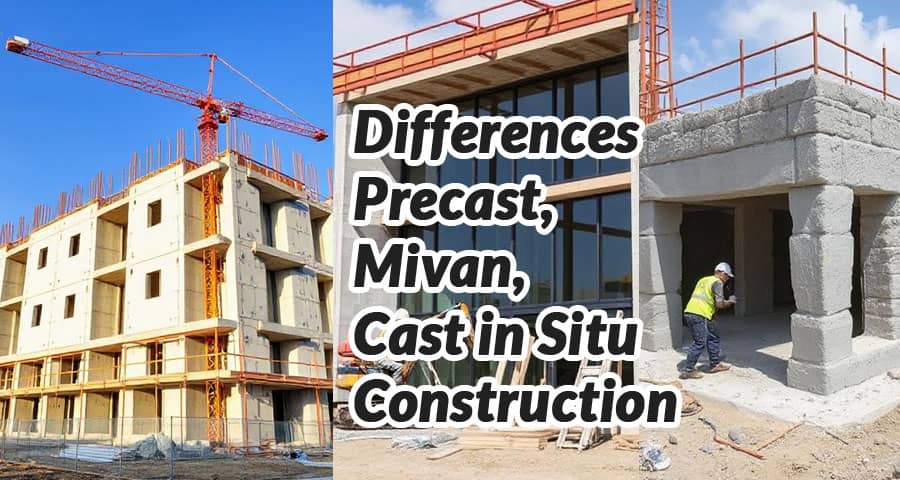
In modern civil engineering, the choice of construction technique greatly impacts the quality, speed, durability, and cost-efficiency of projects. Among the most widely adopted techniques are Precast Construction, Mivan Construction, and Cast in Situ Construction. Each method carries unique features, advantages, limitations, and suitable applications. Understanding the differences is essential for engineers, contractors, and clients seeking the right approach for residential, commercial, or infrastructure projects.
What is Precast Construction?
Precast construction refers to the method where structural components such as beams, columns, walls, and slabs are cast in a controlled factory environment and then transported to the site for assembly. This off-site production ensures high precision and quality.
Key Features of Precast Construction
- Controlled Environment: Casting in factories ensures reduced errors, better quality control, and uniformity.
- Speed of Erection: Since components are manufactured in advance, site work is limited to assembly, saving time.
- Durability: Enhanced curing conditions provide improved strength and durability.
- Flexibility: Suitable for repetitive structures such as apartment complexes, bridges, and industrial facilities.

Advantages of Precast Construction
- Faster construction timeline.
- Reduced labor requirements at the site.
- Enhanced quality due to mechanized production.
- Minimal wastage of raw materials.
Limitations of Precast Construction
- Requires heavy transportation and lifting equipment.
- Jointing of precast elements demands skilled supervision.
- Less flexibility for on-site modifications.
What is Mivan Construction?
Mivan construction is a formwork system made from aluminum developed by a European company, Mivan. It has gained immense popularity in high-rise housing and mass residential projects due to its speed and precision.
Key Features of Mivan Construction
- Aluminum Formwork: Highly durable and reusable, with the ability to withstand more than 200 repetitions.
- Monolithic Structure: Walls and slabs are cast in one go, providing seamless joints and higher stability.
- Uniform Finishes: Smooth concrete surfaces reduce the need for plastering.
- Time Efficiency: Highly suitable for large-scale projects with tight deadlines.

Advantages of Mivan Construction
- High speed of construction, ideal for mass housing projects.
- Reduced dependency on skilled labor compared to conventional methods.
- Strong and earthquake-resistant monolithic structure.
- Better carpet area utilization due to thinner walls.
Limitations of Mivan Construction
- Higher initial investment in formwork.
- Less flexibility for architectural changes once the formwork is set.
- Requires precise planning to avoid construction delays.
What is Cast in Situ Construction?
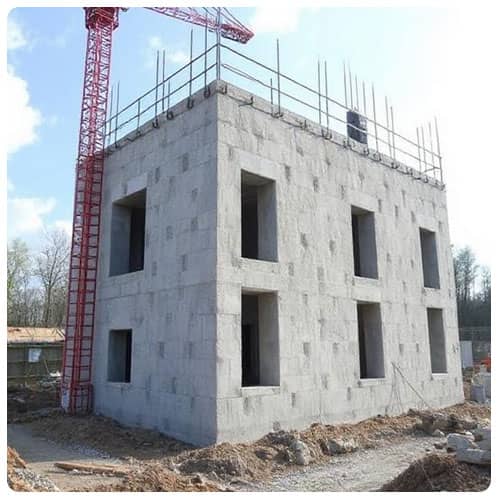
Cast in Situ construction refers to the traditional method where concrete is poured, cast, and cured directly on the construction site. It is the oldest and most widely used method for structural works.
Key Features of Cast in Situ Construction
- On-Site Casting: All structural elements are cast at the site itself.
- Flexibility in Design: Changes can be easily incorporated during construction.
- Variety of Formworks: Timber, steel, and plywood are commonly used.
- Versatility: Suitable for projects where unique shapes or customized designs are required.
Advantages of Cast in Situ Construction
- Highly flexible and adaptable to complex designs.
- No transportation of precast elements needed.
- Widely practiced and understood method by workers.
- Suitable for small to medium-scale projects.
Limitations of Cast in Situ Construction
- Slower compared to precast and Mivan techniques.
- Quality depends heavily on site conditions and workmanship.
- Labor-intensive and requires extensive supervision.
- More prone to wastage of materials.
Comparison Between Precast, Mivan, and Cast in Situ Construction
| Aspect | Precast Construction | Mivan Construction | Cast in Situ Construction |
|---|---|---|---|
| Production | Off-site (factory-made) | On-site with aluminum formwork | On-site casting with timber/plywood formwork |
| Speed | Very fast (assembly only) | Fast (monolithic casting) | Slow (step-by-step casting) |
| Labor Requirement | Low | Medium | High |
| Cost | Higher transportation & machinery cost | High initial cost for formwork | Relatively lower initial cost |
| Flexibility | Low | Low | High |
| Finish Quality | High | Very high (no plastering required) | Moderate (plastering usually needed) |
| Durability | High | High (earthquake resistant) | Depends on workmanship |
| Suitability | Mass housing, bridges, industrial structures | High-rise apartments, mass housing | Small to medium projects, complex designs |
When to Choose Precast, Mivan, or Cast in Situ Construction?
- Precast Construction is ideal for large infrastructure projects like bridges, flyovers, and industrial buildings where repetitive elements are required.
- Mivan Construction is best suited for high-rise residential projects and mass housing schemes where speed and uniformity are crucial.
- Cast in Situ Construction is recommended for custom-designed projects, smaller structures, or unique architectural designs where flexibility is essential.
Future of Construction with These Methods
The construction industry is rapidly evolving, and hybrid approaches are being adopted. For instance, precast elements combined with Mivan formwork can further speed up large-scale housing projects. Moreover, automation, robotics, and advanced curing technologies are enhancing the quality of precast and cast in situ methods.
Sustainability is also influencing these choices. Precast and Mivan systems reduce waste and improve resource efficiency, making them more eco-friendly compared to conventional cast in situ construction.
Conclusion
Understanding the difference between Precast, Mivan, and Cast in Situ construction helps in choosing the right method depending on project size, design requirements, budget, and timeline. While precast ensures speed and quality, Mivan delivers rapid monolithic structures, and cast in situ offers design flexibility. By carefully evaluating these methods, we can ensure cost-effective, durable, and sustainable construction.
Please view the following short video for Precast construction, Mivan Construction and Cast in Situ construction
Also Read:
 Latest Wall Decor Trends to Follow for 2023: Elevate Your Space with Style