
All About Transportation of Concrete | What Is Transportation of Concrete | Methods for Transportation of Concrete
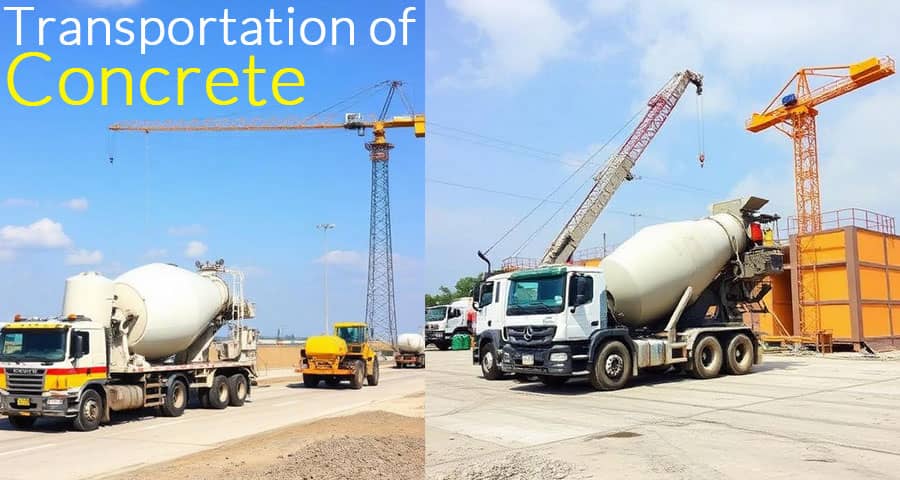
Introduction to Transportation of Concrete
Transportation of concrete is a critical operation in concrete construction that directly influences strength, durability, workability, and overall structural performance. We recognize that concrete, once mixed, begins to set immediately. Therefore, transporting it from the batching and mixing point to the place of placement must be executed efficiently, economically, and without segregation or loss of consistency. Proper transportation ensures that concrete reaches the formwork in its designed quality, maintaining the intended water - cement ratio and homogeneity.
In modern construction, with projects ranging from small residential works to massive infrastructure developments, selecting the right transportation method is essential for productivity and quality assurance.
What Is Transportation of Concrete
Transportation of concrete refers to the process of moving freshly mixed concrete from the mixer to the location where it will be placed, compacted, and finished. We ensure that during this process:
- No segregation of aggregates occurs
- No loss of cement paste takes place
- Workability remains within specified limits
- Setting time is not adversely affected
Transportation is not merely a logistical task; it is an integral part of concreting operations that directly impacts structural integrity.
Objectives of Concrete Transportation
We aim to achieve the following objectives during transportation of concrete:
- Preserve uniformity of mix
- Prevent bleeding and segregation
- Avoid contamination from dust, soil, or debris
- Maintain required slump and workability
- Ensure timely placement before initial setting
Meeting these objectives guarantees consistent concrete quality throughout the structure.
Factors Affecting Transportation of Concrete
Several factors influence the selection and efficiency of transportation methods:
- Distance between batching plant and site
- Type of construction (RCC, PCC, mass concrete)
- Quantity of concrete to be transported
- Workability and slump requirements
- Ambient temperature and weather conditions
- Availability of equipment and site accessibility
We carefully evaluate these parameters to adopt the most effective method.
General Principles of Transporting Concrete
To maintain concrete quality, we strictly adhere to these principles:
- Concrete must be transported quickly
- Handling should be minimum and gentle
- Conveyance should be leak-proof
- Re-tempering with water should be strictly avoided
- Concrete should be placed as close as possible to its final position
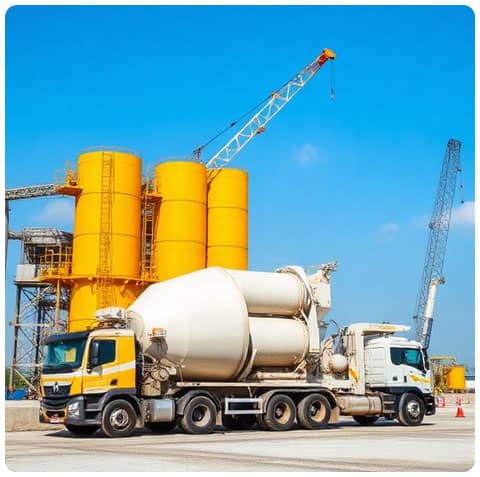
Methods for Transportation of Concrete
1. Transportation of Concrete by Mortar Pans
Mortar pans are shallow, open containers traditionally used for small-scale construction works. We find them suitable for short horizontal distances where mechanized equipment is unavailable.
Advantages
- Simple and economical
- Ideal for small volumes
- Easy handling
Limitations
- High risk of segregation
- Labor-intensive
- Not suitable for large projects
2. Transportation of Concrete by Wheelbarrows
Wheelbarrows are widely used for short-distance transport on level ground. We use them extensively in low-rise buildings and repair works.
Key Features
- Suitable for distances up to 50 - 60 meters
- Requires firm, even pathways
- Concrete should be stiff to reduce spillage
Disadvantages
- Slower operation
- Not suitable for large quantities
- Increased labor cost
3. Transportation of Concrete by Buckets and Hoists
Buckets and hoists are commonly used in multi-storey buildings. Concrete is lifted vertically using cranes or winches.
Advantages
- Effective for vertical transportation
- Controlled discharge
- Reduced segregation with proper design
Applications
- High-rise RCC structures
- Columns, beams, and slabs at higher levels
4. Transportation of Concrete by Chutes
Chutes are inclined channels made of steel, rubber, or wood, used when concrete is to be transported downward by gravity.
Important Guidelines
- Slope should be between 1 vertical to 2.5 horizontal
- Length should be limited to prevent segregation
- Chutes must be smooth and non-absorbent
Best Use
- Foundation works
- Sloped terrain concreting
5. Transportation of Concrete by Belt Conveyors
Belt conveyors provide continuous and rapid transportation of concrete over long horizontal distances.
Advantages
- High output rate
- Economical for large volumes
- Reduced labor requirement
Precautions
- Uniform feed required
- Covers recommended to prevent moisture loss
- Not ideal for very wet mixes
6. Transportation of Concrete by Skips
Skips are specially designed containers lifted by cranes. We frequently use them in medium to large construction projects.
Benefits
- Accurate placement
- Reduced spillage
- Suitable for controlled discharge
Limitations
- Requires crane availability
- Slower compared to pumps for high volumes
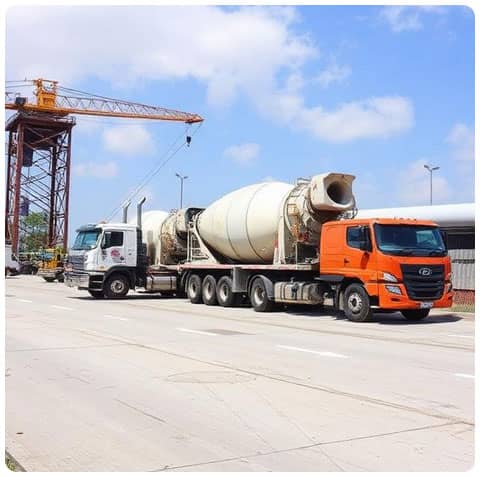
7. Transportation of Concrete by Transit Mixers
Transit mixers revolutionized concrete transportation for ready-mix concrete (RMC). Concrete is mixed or agitated during transit to maintain uniformity.
Key Advantages
- Long-distance transportation
- Maintains workability
- Ensures consistent quality
Applications
- Urban construction
- Infrastructure projects
- Large RCC works
8. Transportation of Concrete by Concrete Pumps
Concrete pumps are the most advanced and efficient method. We use them extensively in high-rise buildings, bridges, and large infrastructure projects.
Types of Concrete Pumps
- Line pumps
- Boom pumps
Advantages
- Rapid placement
- Minimal segregation
- Ideal for inaccessible locations
Performance
- Vertical pumping up to great heights
- Horizontal pumping over long distances
9. Transportation of Concrete by Dumpers and Trucks
For mass concrete works such as dams and pavements, dumpers and trucks are widely used.
Key Points
- Suitable for stiff concrete
- Short haul distances preferred
- Requires quick unloading to avoid setting
Comparison of Transportation Methods
| Method | Distance | Volume | Segregation Risk |
|---|---|---|---|
| Mortar Pan | Short | Low | High |
| Wheelbarrow | Short | Low | Moderate |
| Chute | Downward | Medium | Moderate |
| Conveyor | Long | High | Low |
| Transit Mixer | Long | High | Very Low |
| Concrete Pump | Long/Vertical | Very High | Minimal |
Common Problems During Transportation of Concrete
We address the following common issues proactively:
- Segregation due to vibration
- Loss of slump due to delay
- Bleeding from excessive water
- Contamination from unclean equipment
Strict supervision and proper planning eliminate these risks.
Best Practices for Efficient Concrete Transportation
- Plan logistics before batching
- Select method based on project scale
- Maintain clean equipment
- Avoid unnecessary handling
- Coordinate transportation with placement team
Conclusion
Transportation of concrete is a decisive stage in concreting operations that directly impacts structural strength, durability, and service life. By carefully selecting appropriate methods for transportation of concrete, maintaining proper handling procedures, and ensuring timely placement, we achieve superior construction quality. From traditional wheelbarrows to advanced concrete pumps, each method serves a specific purpose when applied correctly. Mastery of concrete transportation techniques is essential for delivering safe, durable, and high-performance structures.
Please view the following short video for Transportation of Concrete
Also Read:
 Construction Safety Innovations