
What Is a Canal? Comprehensive Guide to Canal Irrigation Systems

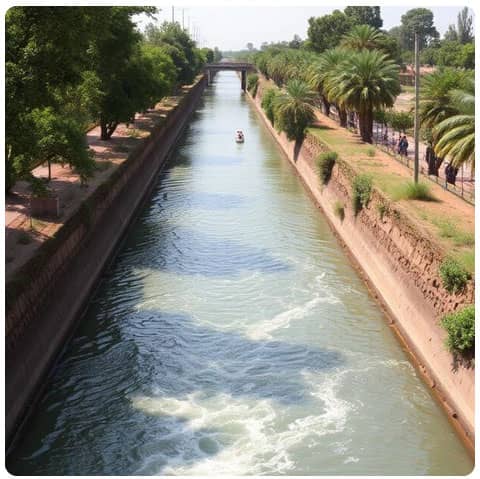
A canal is an artificial watercourse constructed to convey water from a natural source such as a river, reservoir, lake, or barrage to areas where water is required for irrigation, domestic use, navigation, or industrial supply. Canals play a vital role in agricultural economies by ensuring controlled and timely distribution of water across vast command areas.
In irrigation engineering, canals are designed with precise hydraulic parameters, including bed slope, cross-sectional area, lining material, and discharge capacity, to minimize losses and ensure equitable water delivery. Canal systems form the backbone of large-scale irrigation projects and contribute significantly to food security and rural development.
Objectives of Canal Irrigation
Canal irrigation systems are developed to achieve multiple technical and socio-economic objectives:
- Assured water supply to agricultural lands throughout the crop season
- Expansion of cultivable area in water-scarce regions
- Flood control by regulated diversion of river water
- Stabilization of agricultural yield
- Groundwater recharge through seepage
- Support to multiple cropping systems
Classification of Canals
Canals are classified based on different criteria such as source of supply, alignment, purpose, and duration of water flow. Each classification addresses specific engineering and operational requirements.
Classification of Canals Based on Source of Supply
1. Perennial Canals
Perennial canals are those that receive water throughout the year from a permanent source, such as a dam, barrage, or reservoir. These canals ensure continuous and regulated water supply irrespective of seasonal rainfall variations.
2. Non-Perennial Canals
Non-perennial canals draw water directly from rivers without storage structures. Water supply is available only during the monsoon season when river discharge is sufficient.
Classification of Canals Based on Alignment
1. Ridge Canals
Ridge canals are aligned along the watershed line. They irrigate land on both sides and are hydraulically efficient as they require minimal cross-drainage works.
2. Contour Canals
Contour canals follow the natural contour of the land. They are commonly used in undulating terrains where ridge alignment is not feasible.
3. Side Slope Canals
Side slope canals are constructed along the side slope of a valley. They irrigate land on one side only and require extensive protective works.
Classification of Canals Based on Purpose
1. Irrigation Canals
These canals are specifically designed to supply water to agricultural fields. Their discharge capacity is calculated based on crop water requirements and command area.
2. Navigation Canals
Navigation canals are designed to facilitate inland water transport. They have larger cross-sections and controlled flow velocities.
3. Power Canals
Power canals convey water to hydroelectric power stations. They are designed for high discharge and energy efficiency.
Classification of Canals Based on Discharge Capacity
1. Main Canal
The main canal carries water directly from the headworks and has the highest discharge in the canal network.
2. Branch Canal
Branch canals take off from the main canal and distribute water to sub-regions within the command area.
3. Distributaries
Distributaries deliver water from branch canals to smaller sections of agricultural land.
4. Minors and Watercourses
Minors and watercourses provide the final distribution of water directly to farmers' fields.
What Is a Perennial Canal?
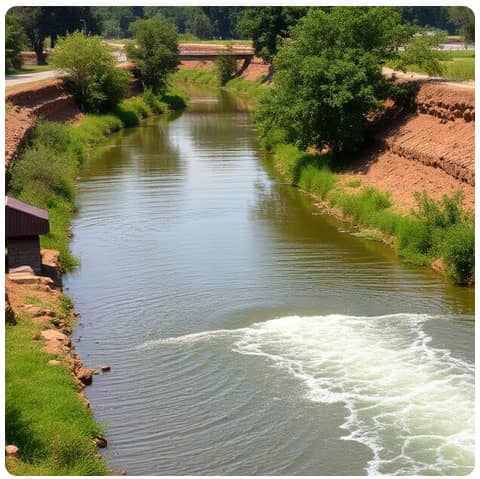
A perennial canal is a canal that supplies water continuously throughout the year from a regulated and dependable source such as a reservoir or barrage. The flow in a perennial canal is controlled by gates and regulators, ensuring precise water management for irrigation and other uses.
Perennial canals are essential for regions with irregular rainfall, as they allow farmers to plan cropping patterns without dependence on monsoon variability.
Key Characteristics of Perennial Canals
- Continuous water availability across seasons
- Regulated flow control through headworks
- High initial construction cost
- Long service life
- Suitable for intensive agriculture
- Supports multiple cropping
Advantages of Canal Irrigation
Canal irrigation offers numerous technical, agricultural, and economic advantages when properly designed and managed.
1. Assured and Controlled Water Supply
Canals provide a reliable source of water, reducing dependence on rainfall and ensuring timely irrigation.
2. Large Area Coverage
A single canal system can irrigate thousands of hectares, making it ideal for large agricultural commands.
3. Low Operational Cost
Once constructed, canals require minimal energy input compared to lift irrigation systems.
4. Groundwater Recharge
Seepage from canals contributes to natural groundwater replenishment, improving well yields in surrounding areas.
5. Increased Agricultural Productivity
Canal irrigation supports high-yield crop varieties, multiple cropping, and stable farm income.
6. Flood Moderation
Regulated diversion of river water helps in controlling floods downstream.
Disadvantages of Canal Irrigation
Despite its benefits, canal irrigation also has several limitations that must be addressed through proper planning and maintenance.
1. Waterlogging
Excessive seepage and over-irrigation may lead to waterlogging, adversely affecting crop growth.
2. Soil Salinity
Continuous canal irrigation in poorly drained soils can cause salt accumulation, reducing soil fertility.
3. High Initial Cost
Construction of canals, barrages, and distribution networks requires significant capital investment.
4. Seepage Losses
Unlined canals may suffer from high seepage losses, reducing water use efficiency.
5. Unequal Water Distribution
Tail-end areas may receive inadequate water due to poor regulation or illegal withdrawals.
6. Maintenance Challenges
Canals require regular desilting, weed control, and structural repairs to function efficiently.
Canal Irrigation in Agricultural Development
Canal irrigation has been instrumental in transforming arid and semi-arid regions into productive agricultural zones. It enables farmers to adopt modern farming practices, diversify crops, and achieve consistent yields. Large canal projects also generate employment opportunities and contribute to regional economic growth.
Conclusion
Canals are a cornerstone of modern irrigation engineering, providing a structured and reliable means of water distribution. Understanding the classification of canals, the concept of perennial canals, and the advantages and disadvantages of canal irrigation is essential for sustainable water resource management. When designed with sound engineering principles and supported by efficient operation and maintenance, canal irrigation systems deliver long-term agricultural and economic benefits.
Please watch the following short video for Comprehensive Guide to Canal
Also Read:
 Unlocking the Secrets of Flat Slab Construction
Sustainable Building Solutions: Pioneering Eco-Friendly Construction
Cost-Effective Construction Strategies: Maximizing Efficiency and Savings
Unveiling the Top Construction Technologies Revolutionizing the Industry
Unveiling Masterpieces: Exploring the Most Inspiring Architectural Designs