
Fresh Concrete and Its Properties: A Complete Guide
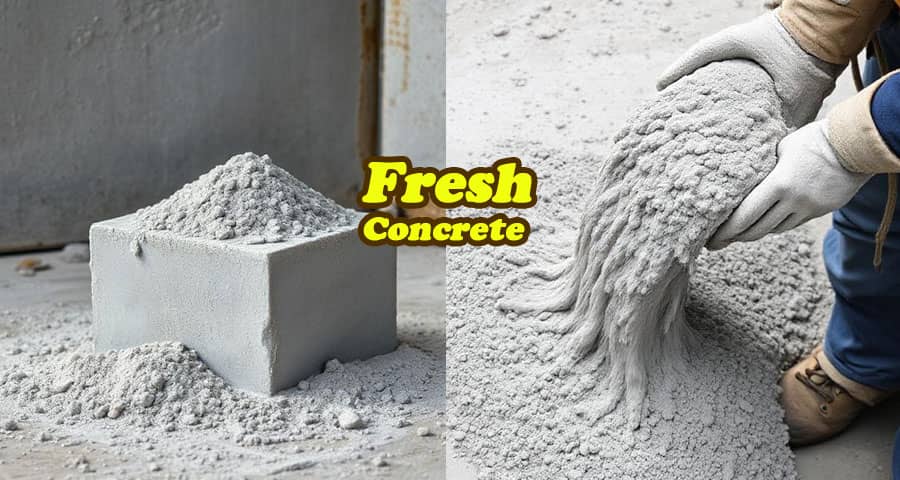
Fresh concrete is the lifeblood of modern construction, serving as the foundation of every durable structure. Understanding its behavior, composition, and properties is essential for achieving superior workability, strength, and finish.
What Is Fresh Concrete?
Fresh concrete refers to the newly mixed concrete that is still in its plastic and workable state before it sets and hardens. It is the stage in which the material can be molded, compacted, and placed easily into forms and molds. The quality of fresh concrete determines how well it can be handled, transported, and finished without segregation or bleeding.
At this stage, concrete exhibits workability, cohesiveness, and consistency, which are influenced by the water-cement ratio, mix proportions, and environmental conditions.
Main Properties of Fresh Concrete
The performance of fresh concrete depends on several interrelated properties that affect its handling and quality. The most important properties include:
1. Workability
Workability is the ease with which fresh concrete can be mixed, placed, compacted, and finished without segregation. It determines the degree of effort required to handle concrete on-site.
Workability depends on:
- Water-cement ratio
- Aggregate shape and size
- Mix proportions
- Temperature and humidity
Highly workable concrete is ideal for complex forms and congested reinforcement, while low-workability concrete suits mass concrete works where compaction equipment is available.
Common tests for workability include:
- Slump Test
- Compacting Factor Test
- Flow Table Test
2. Consistency
Consistency refers to the uniformity of the mix and its ability to flow under its own weight. A consistent mix ensures uniform distribution of materials, preventing segregation or bleeding.
Consistency can be adjusted by controlling the water content and using admixtures to enhance performance without compromising strength.
3. Cohesiveness
Cohesiveness describes the concrete's ability to remain uniform and resist segregation of aggregates from cement paste. A cohesive mix ensures even distribution of aggregates, minimizing the risk of honeycombing or surface defects.
Lack of cohesiveness results in bleeding, segregation, and poor surface finish, ultimately reducing durability.
4. Setting Time
Setting time is the duration required for concrete to change from a plastic state to a hardened state. It consists of:
- Initial Setting Time: When the concrete begins to stiffen.
- Final Setting Time: When the concrete completely loses its plasticity.
The setting time is influenced by factors such as:
- Cement type and fineness
- Water-cement ratio
- Ambient temperature
- Use of admixtures
Generally, the initial setting time should not be less than 30 minutes, and the final setting time should not exceed 10 hours, as per IS standards.
5. Segregation
Segregation is the separation of coarse aggregates from the cement paste or mortar. It occurs due to excessive vibration, improper handling, or high water content.
To prevent segregation:
- Maintain optimum water-cement ratio
- Use proper mixing and handling methods
- Employ well-graded aggregates
A segregated mix results in uneven strength distribution, porosity, and poor surface quality.
6. Bleeding
Bleeding refers to the upward movement of water to the surface of freshly placed concrete. It happens when water escapes from the mix, leaving behind voids and weak zones.
Excessive bleeding can cause:
- Surface laitance
- Reduced bond strength
- Cracking
To reduce bleeding:
- Use finer cement and adequate fines in aggregates
- Avoid excessive vibration
- Introduce air-entraining agents
7. Plastic Shrinkage
Plastic shrinkage occurs when water evaporates rapidly from the surface of fresh concrete before it sets. This leads to fine surface cracks that weaken the structure.
Preventive measures include:
- Moist curing immediately after placement
- Using curing compounds
- Avoiding concrete placement in hot, windy conditions
Factors Affecting Properties of Fresh Concrete
The characteristics of fresh concrete are highly sensitive to multiple factors. The most significant ones are:
1. Water-Cement Ratio
The water-cement ratio (w/c) is one of the most critical factors influencing both workability and strength. A higher ratio increases workability but reduces strength, while a lower ratio enhances strength but decreases workability.
2. Aggregate Properties
The shape, size, and texture of aggregates directly affect the flow and compaction of fresh concrete. Rounded aggregates improve workability, while angular aggregates provide higher interlocking strength.
3. Temperature and Humidity
High temperatures accelerate the setting and evaporation rate, leading to cracks and reduced strength. Conversely, low temperatures slow down hydration, extending the setting time.
4. Mixing Time and Method
Proper mixing ensures uniform distribution of materials, enhancing cohesiveness and consistency. Over-mixing or under-mixing can both adversely affect the quality of the fresh mix.
5. Use of Admixtures
Chemical admixtures like plasticizers, retarders, and accelerators modify concrete properties for better performance. They help control setting time, workability, and bleeding as required by site conditions.
Testing of Fresh Concrete
Testing ensures that the concrete meets the required quality and performance standards. The most common tests include:
- Slump Test: Determines workability and consistency.
- Compacting Factor Test: Measures the degree of compaction under standard conditions.
- Vee-Bee Consistometer Test: Evaluates the flowability of stiff concrete.
- Flow Table Test: Used for highly workable mixes.
Each test provides insight into different aspects of the mix's behavior and helps adjust proportions for optimal performance.
Importance of Understanding Fresh Concrete Properties
A thorough understanding of fresh concrete behavior allows engineers to:
- Ensure high-quality placement and finishing
- Reduce structural defects and maintenance costs
- Achieve uniform strength and durability
- Optimize resource usage and minimize wastage
Controlling the properties of fresh concrete ensures that once hardened, the structure achieves its designed strength, durability, and aesthetic appeal.
Conclusion
Fresh concrete is more than just a mixture of cement, water, and aggregates - it's a complex, living material that demands precise control for superior results. By understanding and managing its workability, cohesiveness, setting time, and consistency, we can create concrete structures that stand the test of time. Every stage, from mixing to placement, plays a pivotal role in the final quality of the concrete.
Proper testing, careful handling, and the right use of admixtures are the keys to ensuring that fresh concrete performs exactly as intended. When handled correctly, it transforms from a fluid mix into a strong, durable, and enduring structure.
Please watch the short video for Fresh Concrete and Its Properties
Also Read:
 Best Methods for Rainwater Harvesting