
Difference Between Formwork, Shuttering, Centering, Staging & Scaffolding

In the construction industry, understanding the difference between formwork, shuttering, centering, staging, and scaffolding is crucial, as each term refers to distinct temporary structures essential for building safe, accurate, and durable components. These systems support concrete works, help workers execute tasks at heights, and ensure structural integrity until concrete gains sufficient strength.
What Is Formwork? Complete Definition & Purpose
Formwork is a temporary or permanent mould into which fresh concrete is poured to obtain the desired structural shape. It must be strong enough to withstand lateral pressure of wet concrete, dead loads, and construction loads. Correct formwork design ensures dimensional accuracy, surface finish, and safety during construction.
Features of Formwork
- Provides required shape and size for concrete elements
- Ensures smooth surface finish
- Supports concrete until it gains full strength
- Prevents leakage of cement slurry
- Must be rigid, durable, and easy to remove
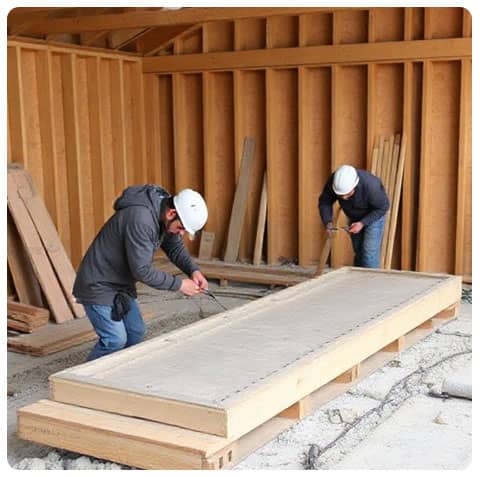
Types of Formwork
- Timber Formwork
- Steel Formwork
- Aluminium Formwork
- Plywood Formwork
- Plastic Formwork
- Fabric Formwork
Formwork, therefore, is the parent term, under which shuttering and centering fall as specific applications.
What Is Shuttering? (Vertical Formwork System)
Shuttering refers specifically to formwork used for vertical concrete elements such as columns, walls, and retaining structures. It is built from timber, steel, or other materials and must resist hydrostatic pressure from freshly placed concrete.
Applications of Shuttering
- Columns
- Shear walls
- Lift shafts
- Basement walls
- Footings
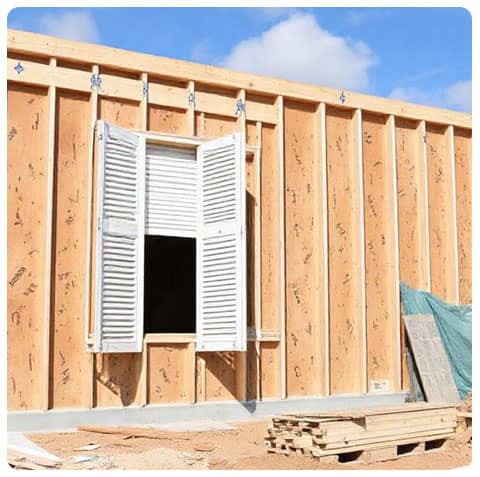
Characteristics of Shuttering
- Must be stiff and watertight
- Should maintain vertical alignment
- Must be easily removable after curing
In essence, shuttering is the vertical formwork required for upright concrete construction.
What Is Centering? (Horizontal Formwork System)
Centering is the formwork used for horizontal structural elements such as slabs, beams, lintels, floors, and roofs. It supports fresh concrete until it achieves sufficient strength to carry its own load.
Features of Centering
- Primarily used for horizontal concrete members
- Requires strong propping and bracing
- Must be capable of taking dead load and wet concrete load

Examples of Centering Work
- Beam formwork
- Roof slab supports
- Floor slab moulds
While shuttering provides vertical support, centering ensures stability for horizontal structures, making both integral parts of the formwork system.
What Is Staging? (Temporary Support System)
Staging refers to the temporary supports or props used beneath centering and shuttering to hold them in place. It does not directly mould concrete but ensures formwork stability at required heights.
Functions of Staging
- Provides height adjustment and elevation
- Supports centering and shuttering systems
- Transfers loads to the ground safely
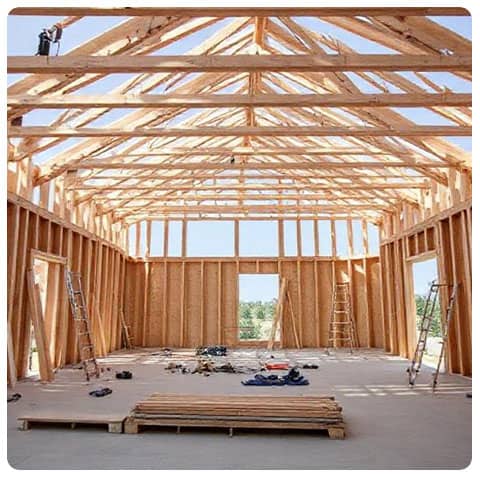
Materials Used in Staging
- Timber posts
- Steel props
- Adjustable jacks
Bamboo supports (in traditional works)
Staging is essentially the load-bearing framework that prevents the collapse of formwork during concreting.
What Is Scaffolding? (Working Platform for Labour Safety)
Scaffolding is a temporary structure erected around buildings to provide access and working platforms for labour during construction, maintenance, repair, plastering, and painting. Unlike formwork systems, scaffolding does not shape concrete; it ensures workers can move safely at heights.
Uses of Scaffolding
- Bricklaying at elevated heights
- Plastering and finishing works
- Painting and faç installations
- Repair and maintenance tasks
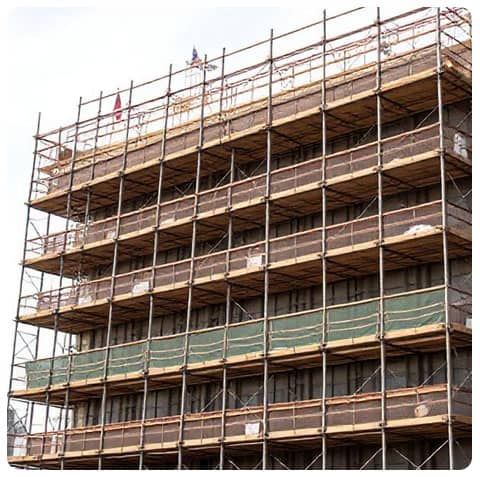
Types of Scaffolding
- Single (Bricklayer's) Scaffolding
- Double Scaffolding
- Steel Scaffolding
- Cantilever Scaffolding
- Suspended Scaffolding
- Trestle Scaffolding
Scaffolding ensures worker safety, material handling, and accessibility, making it separate from formwork elements used for concrete moulding.
Key Differences Explained
| Feature | Formwork | Shuttering | Centering | Staging | Scaffolding |
|---|---|---|---|---|---|
| Purpose | Moulds concrete | Vertical formwork | Horizontal formwork | Supporting shuttering & centering | Providing a working platform |
| Orientation | Horizontal & Vertical | Vertical | Horizontal | Vertical support | Vertical & Horizontal |
| Materials | Timber, steel, aluminium | Timber, steel | Timber, steel, plywood | Props, jacks | Steel pipes, bamboo, boards |
| Concrete Contact | Yes | Yes | Yes | No | No |
| Worker Support | No | No | No | No | Yes |
Why Understanding These Differences Matters
Each component plays a distinct role in construction. Correct selection ensures:
- Safety of workers and structures
- Quality concrete finish
- Reduced construction time
- Cost efficiency
- Compliance with engineering standards
Failing to differentiate between these systems may result in improper installation, structural defects, and costly rectification works.
Conclusion
The construction process heavily relies on formwork, shuttering, centering, staging, and scaffolding, each fulfilling a precise purpose. Formwork serves as the umbrella term for all moulding systems, shuttering handles vertical concrete works, centering supports horizontal elements, staging provides structural support to both, and scaffolding ensures worker accessibility and safety at heights. Together, they form the backbone of efficient, safe, and high-quality construction practices.
Please watch the following short video for Difference Between Formwork, Shuttering, Centering, Staging & Scaffolding
Also Read:
 The Timeless Allure of Parquet Flooring