
What Is Frost Wall | Types of Frost Wall | Requirements for Frost Wall Construction | Application of Frost Wall | Advantages of Frost Wall | Uses of Frost Wall
What Is a Frost Wall?
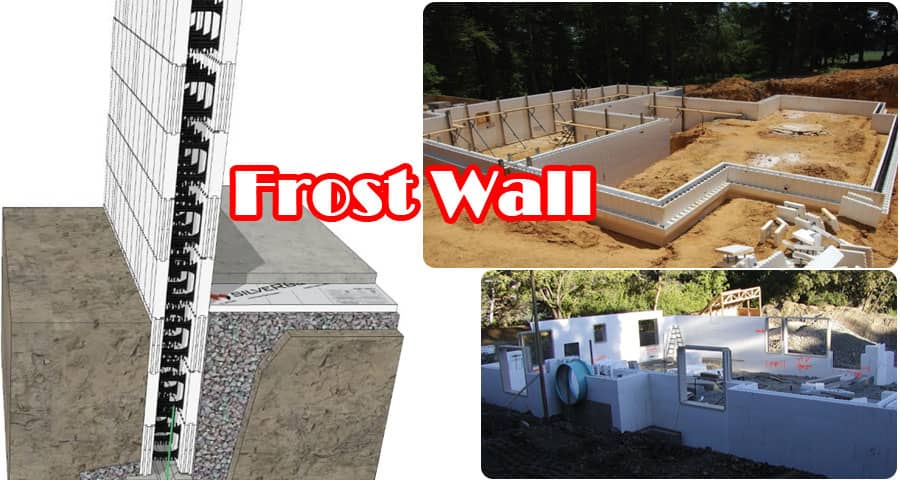
A frost wall is a permanent foundation wall constructed below ground level to protect structures from the damaging effects of frost heave. In cold climates, when soil moisture freezes, it expands and exerts upward pressure on foundations. This phenomenon can cause cracking, displacement, and structural instability. We construct frost walls to extend below the frost line, ensuring that the foundation remains unaffected by seasonal freeze - thaw cycles.
Unlike shallow foundations that are vulnerable to frost action, a frost wall acts as a structural barrier between the building and frost-susceptible soil. It supports the load of the building while preventing frost penetration beneath the footing. Frost walls are commonly built using reinforced concrete, concrete masonry units (CMU), or poured concrete, depending on design requirements and site conditions.
The primary objective of a frost wall is to maintain structural integrity, prevent differential settlement, and ensure long-term durability of buildings in regions where temperatures drop below freezing.
Types of Frost Wall
We classify frost walls based on construction method, material, and design configuration. Selecting the appropriate type depends on soil characteristics, climate severity, and structural load requirements.
1. Poured Concrete Frost Wall
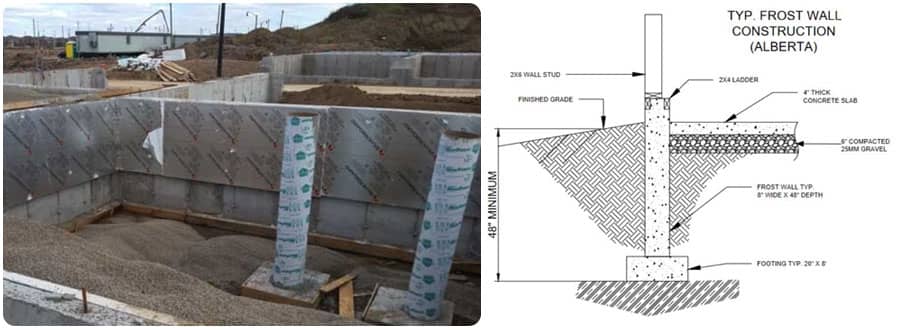
A poured concrete frost wall is the most widely used and durable option. It is constructed by pouring reinforced concrete into formwork placed below the frost line.
Key Features:
- High compressive strength
- Seamless construction
- Superior resistance to water infiltration
- Excellent durability in harsh climates
This type is ideal for residential houses, garages, and commercial buildings requiring substantial load-bearing capacity.
2. Concrete Block (CMU) Frost Wall
A concrete masonry unit (CMU) frost wall is constructed using concrete blocks reinforced with steel bars and filled with grout.
Advantages:
- Cost-effective solution
- Easier installation in smaller projects
- Flexibility in design modifications
However, proper reinforcement and waterproofing are essential to prevent moisture penetration and structural weaknesses.
3. Insulated Frost Wall
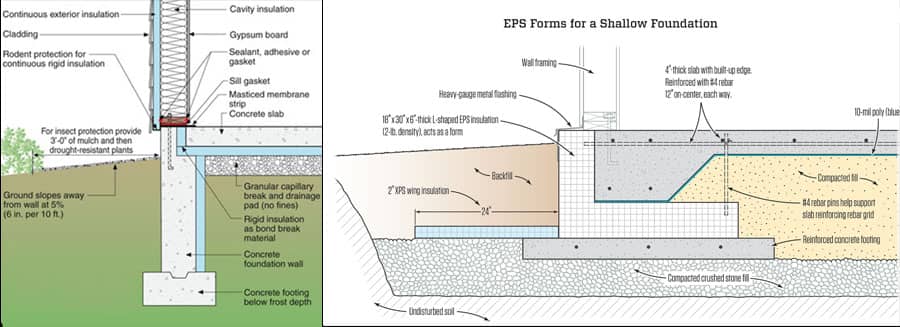
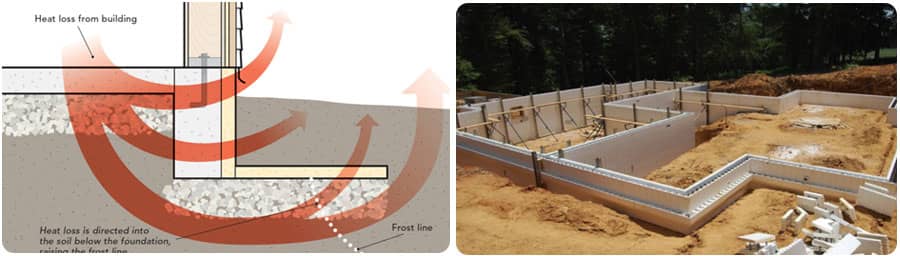
An insulated frost wall, often part of a frost-protected shallow foundation (FPSF) system, incorporates rigid insulation to minimize frost penetration. This type reduces excavation depth while maintaining frost protection.
Key Benefits:
- Energy efficiency
- Reduced excavation cost
- Thermal protection of foundation
Insulated frost walls are especially effective in energy-efficient building designs.
4. Stone or Rubble Frost Wall
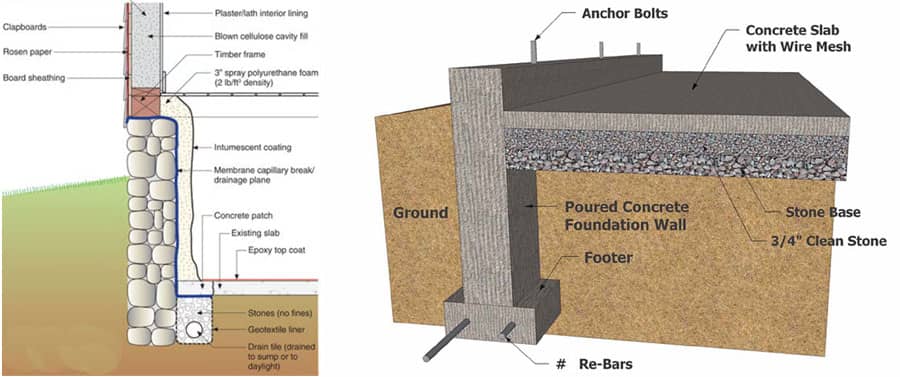
In traditional construction, particularly in rural or historic structures, stone frost walls are used. These rely on deep placement below the frost line and careful drainage systems.
Although durable, modern construction typically prefers reinforced concrete for enhanced structural reliability.
Requirements for Frost Wall Construction
To ensure maximum performance, we follow strict structural and environmental guidelines during frost wall construction.
1. Depth Below Frost Line
The bottom of the frost wall must extend below the local frost line, which varies depending on geographic location. This ensures that freezing soil does not reach the foundation base.
2. Proper Footing Design
A frost wall must rest on a reinforced concrete footing designed to distribute loads evenly. The footing width depends on soil bearing capacity and structural load.
3. Reinforcement
Steel reinforcement bars (rebar) are essential for:
- Resisting tensile stress
- Preventing cracking
- Enhancing load-bearing capacity
Proper spacing and placement of reinforcement ensure structural integrity.
4. Drainage System
Effective drainage is critical. We install:
- Perimeter drains (French drains)
- Gravel backfill
- Waterproof membranes
This prevents water accumulation around the foundation, reducing frost heave risk.
5. Waterproofing and Damp Proofing
Applying bituminous coatings or waterproof membranes protects the frost wall from moisture infiltration, thereby increasing durability.
6. Insulation (If Required)
In colder climates, adding rigid foam insulation along the exterior surface improves thermal efficiency and reduces frost penetration.
Application of Frost Wall
Frost walls are essential in regions with freezing temperatures and frost-susceptible soils. Their applications include:
1. Residential Construction
We use frost walls in:
- Detached houses
- Townhouses
- Basements
- Garages
They provide structural stability and prevent frost-related damage.
2. Commercial Buildings
Frost walls support:
- Retail outlets
- Office buildings
- Warehouses
These structures require durable foundations capable of handling significant loads.
3. Agricultural Structures
Barns, storage sheds, and farmhouses rely on frost walls to prevent seasonal ground movement that could damage structural frames.
4. Industrial Projects
Factories and industrial facilities require frost walls for heavy machinery support and long-term structural safety.
5. Decks and Porches
In cold regions, frost walls or frost-protected footings are used for decks and porches to prevent uplift during winter.
Advantages of Frost Wall
Installing a frost wall provides substantial structural and economic benefits.
1. Protection Against Frost Heave
The primary advantage is elimination of frost-induced movement, which prevents cracking and structural distortion.
2. Increased Structural Stability
Frost walls create a stable base that distributes building loads evenly, reducing differential settlement.
3. Long-Term Durability
Reinforced concrete frost walls can last decades with minimal maintenance.
4. Moisture Control
With proper drainage and waterproofing, frost walls reduce moisture infiltration into basements and crawl spaces.
5. Energy Efficiency
Insulated frost walls enhance thermal performance, reducing heating costs in cold climates.
6. Enhanced Property Value
A well-designed frost-protected foundation increases structural reliability and overall property worth.
Uses of Frost Wall
Frost walls serve multiple structural and protective purposes in construction.
- Supporting building loads below frost depth
- Separating heated interior spaces from freezing soil
- Preventing soil expansion from damaging foundations
- Providing a base for basement or crawl space walls
- Acting as a retaining structure for surrounding soil
In modern construction practices, frost walls are a standard requirement in cold regions to ensure compliance with building codes and structural safety standards.
Design Considerations for Frost Wall
When designing a frost wall, we consider:
- Soil type and bearing capacity
- Local frost depth requirements
- Groundwater level
- Building load calculations
- Seismic and wind loads
A properly engineered frost wall integrates structural design with environmental adaptation to guarantee optimal performance.
Frost Wall vs. Foundation Wall
While both serve structural purposes, a frost wall specifically addresses frost penetration issues. A general foundation wall may not extend below frost depth in warmer climates. In cold regions, frost walls become a critical component of the foundation system.
Construction Process of Frost Wall
- Site excavation below frost line
- Footing placement and reinforcement
- Formwork installation
- Concrete pouring or block laying
- Curing and finishing
- Waterproofing and insulation
- Backfilling with drainage materials
Each step must be executed precisely to prevent future structural complications.
Conclusion
A frost wall is an essential structural element in cold-climate construction. By extending below the frost line, it prevents frost heave, enhances durability, and ensures long-term building stability. From poured concrete systems to insulated shallow foundations, frost walls provide reliable protection against seasonal ground movement. Proper design, reinforcement, drainage, and waterproofing are critical to achieving maximum performance.
In residential, commercial, agricultural, and industrial applications, frost walls safeguard structures from environmental stress, making them a foundational necessity in freezing climates.
Please view the following short video for Frost Wall
Also Read:
 How to Calculate the Number of Bars in Footing