
Kerbs In Roads: types, shapes & Materials
Introduction to Kerbs in Roads
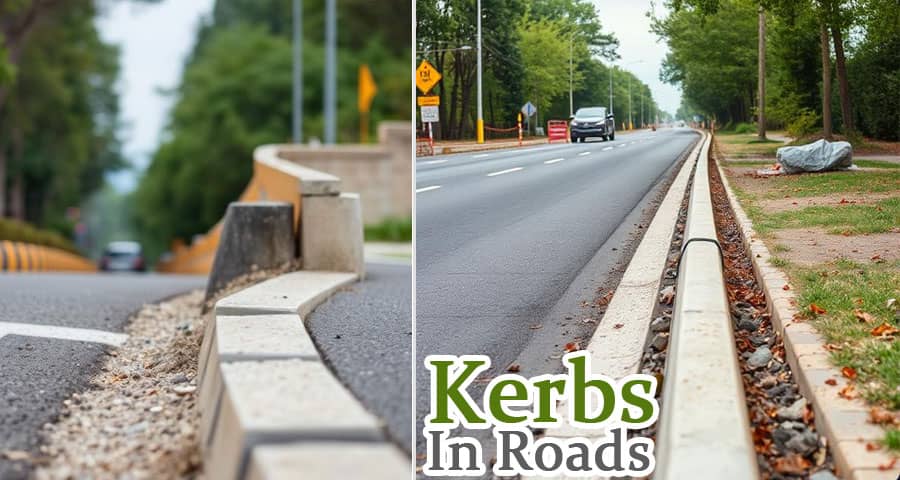
In road construction and highway engineering, kerbs in roads play a crucial role in pavement structure, traffic management, drainage control, and pedestrian safety. We use kerbs to define the edge of the carriageway, separate footpaths from roads, and guide surface water into drainage systems. Proper road kerb design improves road durability, safety, and aesthetics.
Kerbs are generally constructed along the edges of roads, medians, footpaths, and traffic islands. They act as a barrier and structural support for the pavement edge and also prevent vehicles from leaving the roadway unintentionally.
What Is Kerb in Road Construction
A kerb is a raised concrete, stone, or asphalt structure constructed at the edge of a road or pavement to separate the roadway from the shoulder, footpath, or median. Kerbs serve both structural and functional purposes in road engineering.
Functions of Kerbs
We use kerbs in roads for the following functions:
- Edge restraint for pavement
- Drainage control
- Separation of pedestrian and vehicle traffic
- Improved road appearance
- Prevent vehicles from leaving the road
- Support for footpath pavement
- Channelizing traffic movement
Kerbs are an essential component in urban road design and highway construction.
4 Different Types of Kerbs in Roads
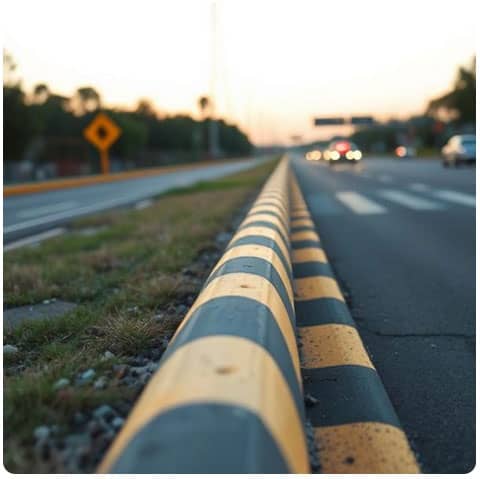
Based on shape and function, kerbs are classified into four main types.
1. Mountable Kerbs
Mountable kerbs are designed so that vehicles can easily mount or cross them. These kerbs are provided where vehicles may need to cross the pavement edge, such as at driveways, parking areas, and emergency lanes.
Features of Mountable Kerbs
- Low height
- Sloped face
- Vehicles can easily climb
- Used in residential streets
- Used in parking areas
2. Semi-Barrier Kerbs
Semi-barrier kerbs are slightly higher than mountable kerbs and provide partial restriction to vehicles. Vehicles can cross them only at slow speed.
Uses of Semi-Barrier Kerbs
- Urban roads
- Streets with moderate traffic
- Road edges with footpaths
- Traffic islands
3. Barrier Kerbs
Barrier kerbs are designed to prevent vehicles from leaving the roadway. These kerbs are high and steep, making it difficult for vehicles to cross them.
Uses of Barrier Kerbs
- Bridges
- High embankment roads
- Roads with footpaths
- Roads with drainage channels
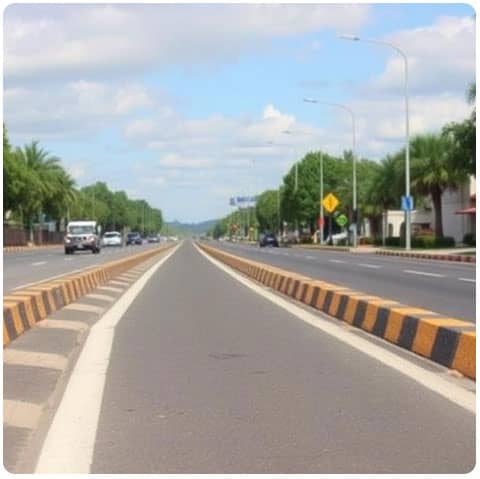
- Medians and traffic separators
Barrier kerbs improve road safety and traffic control.
4. Submerged Kerbs
Submerged kerbs are constructed at the same level as the road surface or slightly below the road surface. These kerbs are used where separation is required but vehicle movement should not be restricted.
Uses of Submerged Kerbs
- Road shoulders
- Pavement edges
- Parking areas
- Rural roads
Shape of Kerbs in Roads
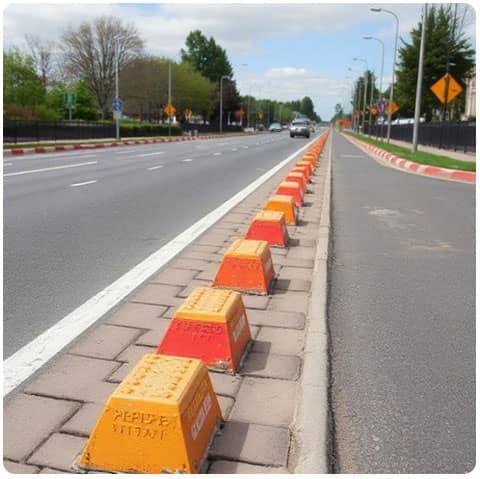
The shape of kerbs is very important because it determines whether vehicles can cross the kerb and how water flows along the road edge.
Common Kerb Shapes
We commonly use the following kerb shapes:
- Vertical face kerb
- Battered face kerb
- Splayed kerb
- Rounded kerb
- Sloped kerb
Vertical Face Kerb
Used where vehicles should not cross, such as footpaths and medians.
Battered Face Kerb
Has a sloped face and allows vehicles to cross slowly.
Rounded Kerb
Used in urban streets and footpaths for safety and aesthetics.
Sloped Kerb
Used in parking areas and driveways.
Materials of Kerbs in Roads
Different materials of kerbs in roads are used depending on road type, traffic load, and cost.
Common Kerb Materials
We use the following materials for kerb construction:
- Stone kerbs
- Cement concrete kerbs
- Precast concrete kerbs
- Brick kerbs
- Asphalt kerbs
- Steel kerbs
Stone Kerbs
Stone kerbs are very strong and durable. These are commonly used in highways and important roads.
Cement Concrete Kerbs
These are the most commonly used kerbs in modern road construction due to high strength and durability.
Precast Concrete Kerbs
Precast kerbs are manufactured in factories and installed on site. They provide uniform shape and faster construction.
Brick Kerbs
Brick kerbs are used in low-cost roads and rural areas.
Asphalt Kerbs
These kerbs are constructed using bituminous materials and used in flexible pavements.
Kerb Height in Road Construction
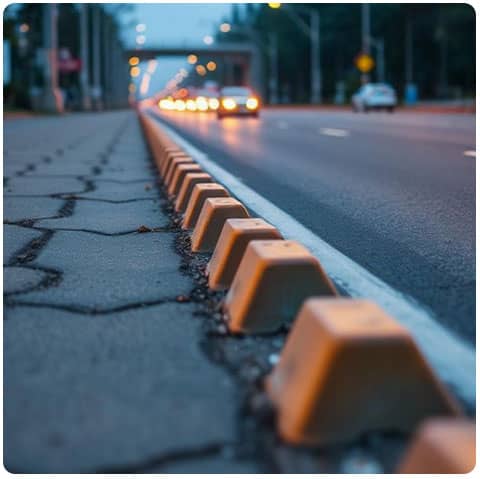
Kerb height is an important design parameter in highway engineering. The height of kerbs depends on the type of road and function of the kerb.
Standard Kerb Height
Typical kerb heights are:
| Type of Kerb | Height |
|---|---|
| Mountable Kerb | 75 mm |
| Semi Barrier Kerb | 100 mm |
| Barrier Kerb | 150 mm |
| Submerged Kerb | 50 mm |
Proper kerb height design ensures safety, drainage, and pavement protection.
What Is Kerb Stone
A kerb stone is a rectangular stone block used for constructing kerbs along the edge of roads, pavements, and footpaths. Kerb stones are usually made from granite, concrete, or sandstone.
Functions of Kerb Stone
Kerb stones are used for:
- Road edge protection
- Drainage channel formation
- Footpath separation
- Pavement edge support
- Traffic control
- Road alignment marking
Kerb stones improve road durability and appearance.
Materials of Kerb Stone
Different materials of kerb stone are used depending on strength and durability requirements.
Types of Kerb Stone Materials
- Granite kerb stone
- Concrete kerb stone
- Sandstone kerb stone
- Limestone kerb stone
- Precast concrete kerb stone
Granite Kerb Stone
Very strong and durable, used in high traffic roads.
Concrete Kerb Stone
Most commonly used due to low cost and easy installation.
Sandstone Kerb Stone
Used in light traffic roads and decorative pavements.
Precast Kerb Stone
Factory-made and widely used in modern urban road construction.
Road Kerb Details
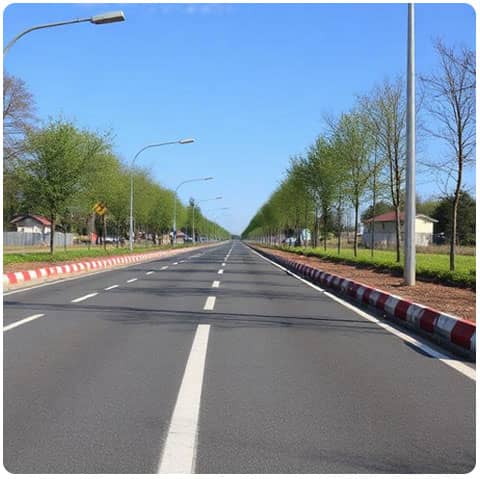
Typical Road Kerb Construction Details
Road kerb construction includes the following components:
- Kerb block
- Concrete bed
- Haunching concrete
- Drainage channel
- Pavement edge
- Footpath
Kerb Construction Procedure
- Excavation along road edge
- Preparation of foundation
- Laying concrete bed
- Placing kerb stones
- Providing haunching concrete
- Joint filling with mortar
- Finishing and curing
Proper road kerb construction ensures long service life and pavement stability.
Advantages of Kerbs in Roads
The main advantages of kerbs in roads include:
- Improves road safety
- Provides drainage control
- Protects pavement edges
- Separates pedestrians from vehicles
- Improves road appearance
- Helps in traffic control
- Supports footpath pavement
- Prevents soil erosion at road edges
Conclusion
Kerbs are an essential part of road construction and highway engineering. They provide structural support, drainage control, traffic separation, and safety. Different types of kerbs, kerb shapes, kerb materials, kerb height, and kerb stones are selected based on road type, traffic conditions, and design requirements. Proper road kerb design and construction improves pavement life, road safety, and overall road performance.
Please watch the following short video for Kerbs In Roads
Also Read:
 Soil Hydrometer: How Does It Work, How to Read, How to Measure, Advantages, Disadvantages & Uses of Hydrometer