
What Is Turbidity of Water in Civil Engineering
Introduction to Turbidity in Water Quality Engineering
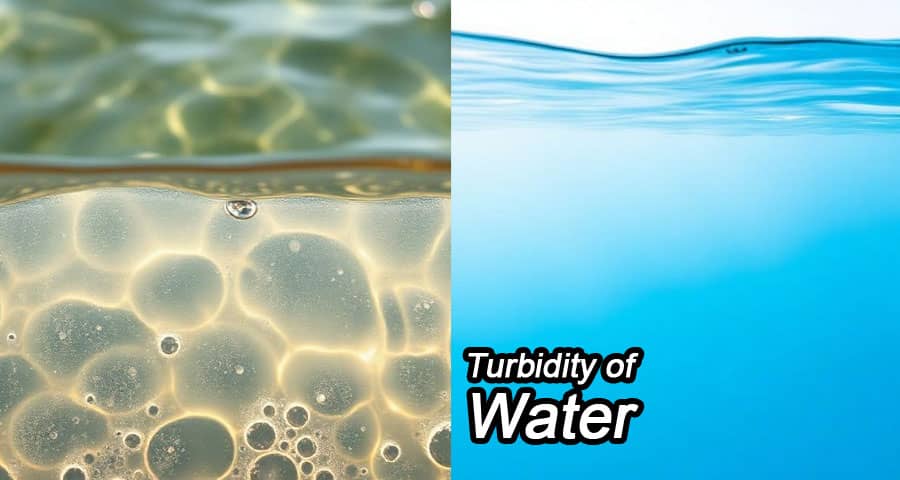
In civil engineering, the concept of turbidity of water plays a decisive role in the design, operation, and maintenance of water supply systems, wastewater treatment facilities, irrigation networks, and environmental protection projects. Turbidity refers to the cloudiness or haziness of water caused by the presence of suspended particles such as clay, silt, organic matter, plankton, microorganisms, and finely divided inorganic materials. These particles scatter and absorb light, reducing water clarity and altering its physical, chemical, and biological behavior.
We consider turbidity not merely as a visual characteristic but as a critical indicator of water quality, treatment efficiency, and public health safety. High turbidity can shield harmful microorganisms from disinfection processes, interfere with filtration systems, and degrade the aesthetic and functional value of water resources. Therefore, accurate measurement and effective control of turbidity are essential components of modern civil engineering practice.
Definition and Technical Meaning of Turbidity
Turbidity is defined as the optical property of water that causes light to be scattered rather than transmitted in straight lines. It is a measure of the concentration and size distribution of suspended particles within a water sample. Unlike color, which results from dissolved substances, turbidity originates from undissolved particulate matter.
In technical terms, turbidity is expressed in Nephelometric Turbidity Units (NTU) or Formazin Nephelometric Units (FNU), depending on the measurement method and calibration standards. Lower NTU values indicate clearer water, while higher values signify greater particle concentration and reduced transparency.
We evaluate turbidity as a physical parameter that indirectly influences chemical reactions, microbial activity, sediment transport, and hydraulic performance in water systems.
Sources of Turbidity in Natural and Engineered Water Systems
Natural Sources of Turbidity
Natural turbidity arises from environmental processes that introduce particulate matter into water bodies. Common sources include:
- Soil erosion and surface runoff carrying fine sediments into rivers and reservoirs
- Algal growth and plankton blooms in stagnant or nutrient-rich waters
- Decaying vegetation and organic debris in wetlands and forested catchments
- Wind-driven sediment resuspension in shallow lakes and storage tanks
- Glacial flour and mineral particles in mountainous regions
These natural contributors can cause seasonal and climatic fluctuations in turbidity levels.
Anthropogenic and Engineering-Related Sources
Human activities significantly influence turbidity in water systems:
- Construction activities causing soil disturbance and sediment discharge
- Mining and quarry operations releasing fine particles
- Industrial effluents and wastewater discharges
- Agricultural runoff carrying fertilizers, pesticides, and soil particles
- Pipeline corrosion and distribution system disturbances
In civil engineering projects, improper site management can rapidly elevate turbidity, impacting downstream infrastructure and ecosystems.
Importance of Turbidity in Civil Engineering Applications
Water Treatment and Public Health Protection
Turbidity directly affects the performance of coagulation, sedimentation, filtration, and disinfection processes in water treatment plants. Suspended particles can:
- Shield pathogens from ultraviolet and chlorine disinfection
- Increase chemical dosage requirements
- Reduce filter run time and increase backwashing frequency
- Decrease treated water clarity and consumer confidence
We aim to maintain turbidity levels within regulatory limits to ensure safe potable water supply and compliance with drinking water standards.
Hydraulic Structures and Sediment Management
In canals, pipelines, reservoirs, and spillways, elevated turbidity often indicates high sediment load, which can lead to:
- Abrasion and erosion of hydraulic surfaces
- Reduced storage capacity due to sediment deposition
- Clogging of intake screens and pumps
- Altered flow characteristics and energy losses
Civil engineers integrate turbidity monitoring into sediment control strategies and maintenance planning.
Environmental Engineering and Ecosystem Protection
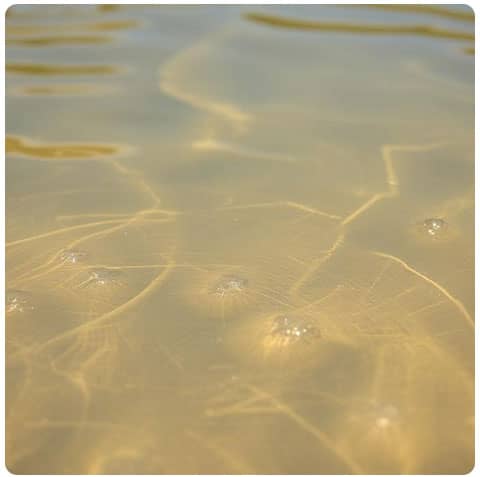
High turbidity reduces light penetration, affecting photosynthesis, aquatic habitat quality, and oxygen balance. It can smother benthic organisms and disrupt food chains. Environmental impact assessments routinely incorporate turbidity analysis to evaluate project sustainability and regulatory compliance.
Units and Standards for Measuring Turbidity
Turbidity measurement relies on the scattering of light by suspended particles. The most widely accepted units include:
- NTU (Nephelometric Turbidity Unit) - based on 90-degree light scattering measurement
- FNU (Formazin Nephelometric Unit) - standardized using formazin polymer suspension
- JTU (Jackson Turbidity Unit) - older visual comparison method
Typical guideline values for drinking water range between 0.3 NTU to 5 NTU, depending on national standards. For treated water leaving filtration units, turbidity is often maintained below 1 NTU to ensure effective pathogen removal.
Methods of Turbidity Measurement in Practice
Nephelometric Method
The nephelometer measures light scattered at a fixed angle when a beam passes through the water sample. This method provides high sensitivity and accuracy for low turbidity ranges, making it suitable for potable water analysis.
Turbidimeter Method
A turbidimeter measures the intensity of transmitted and scattered light simultaneously. It is commonly used in treatment plants and field monitoring stations for continuous data acquisition.
Visual Comparison Method
The Jackson candle turbidimeter compares water clarity against a standardized light source. While historically significant, it is now largely obsolete due to lower precision.
Online and Sensor-Based Monitoring
Modern civil infrastructure integrates real-time turbidity sensors linked to supervisory control and data acquisition (SCADA) systems. These systems enable rapid response to process disturbances and contamination events.
Factors Influencing Turbidity Levels
Several physical and operational parameters affect turbidity behavior:
- Particle size and shape - finer particles cause higher light scattering
- Particle concentration and density
- Water velocity and turbulence
- Temperature and viscosity of water
- Chemical composition and pH
- Biological activity and organic matter content
We evaluate these factors during system design and operational optimization to maintain stable water quality.
Turbidity Removal Processes in Water Treatment
Coagulation and Flocculation
Chemical coagulants such as aluminum sulfate, ferric chloride, and polymer coagulants destabilize suspended particles, forming larger flocs that can settle or be filtered efficiently.
Sedimentation and Clarification
Gravity-based sedimentation tanks allow flocs to settle, reducing turbidity significantly before filtration.
Filtration Systems
Rapid sand filters, dual-media filters, membrane filtration, and pressure filters provide final polishing by physically removing remaining particles.
Advanced Treatment Technologies
Ultrafiltration, dissolved air flotation, and electrocoagulation offer enhanced turbidity control in high-demand or contaminated water sources.
Relationship Between Turbidity and Other Water Quality Parameters
Turbidity correlates with multiple quality indicators:
- Microbial contamination - higher turbidity increases pathogen survival
- Color and taste issues - suspended organic matter affects aesthetics
- Chemical oxygen demand (COD) - particulate organic load contributes to oxygen depletion
- Total suspended solids (TSS) - turbidity reflects fine particle fraction
- Disinfection by-product formation - organic turbidity influences reaction pathways
Integrated monitoring ensures balanced water quality management.
Design Considerations for Turbidity Control in Civil Engineering Projects
During planning and design phases, we incorporate turbidity management through:
- Proper catchment protection and erosion control measures
- Adequate detention and sedimentation basin sizing
- Optimized hydraulic retention time in treatment units
- Redundant filtration capacity for peak turbidity events
- Automated monitoring and alarm systems
- Emergency response protocols for contamination incidents
These measures enhance reliability, regulatory compliance, and public trust.
Operational Challenges and Maintenance Implications
High turbidity increases operational complexity and lifecycle costs by:
- Increasing chemical consumption
- Accelerating filter media fouling
- Requiring frequent backwashing and sludge handling
- Causing sensor fouling and calibration drift
- Increasing wear on mechanical components
Preventive maintenance and adaptive process control strategies mitigate these challenges effectively.
Advantages of Continuous Turbidity Monitoring
Continuous monitoring delivers measurable benefits:
- Early detection of contamination and process failure
- Optimized chemical dosing and energy efficiency
- Improved regulatory reporting accuracy
- Enhanced asset protection and predictive maintenance
- Consistent water quality assurance for consumers
Smart infrastructure integration further strengthens system resilience.
Conclusion
The turbidity of water in civil engineering represents a fundamental indicator of water quality, system performance, and environmental integrity. By understanding its sources, measurement techniques, influencing factors, and removal processes, we ensure efficient design, safe operation, and sustainable management of water infrastructure. Precise turbidity control protects public health, extends asset lifespan, improves operational efficiency, and safeguards natural ecosystems. Continuous innovation in monitoring technology and treatment methodologies continues to elevate the reliability and effectiveness of turbidity management across civil engineering applications.
Please watch the following short video for Turbidity of Water in Civil Engineering
Also Read:
 Comprehensive Guide to Construction Cost Estimating