
All About M-Sand And River Sand: Complete Guide for Construction Professionals
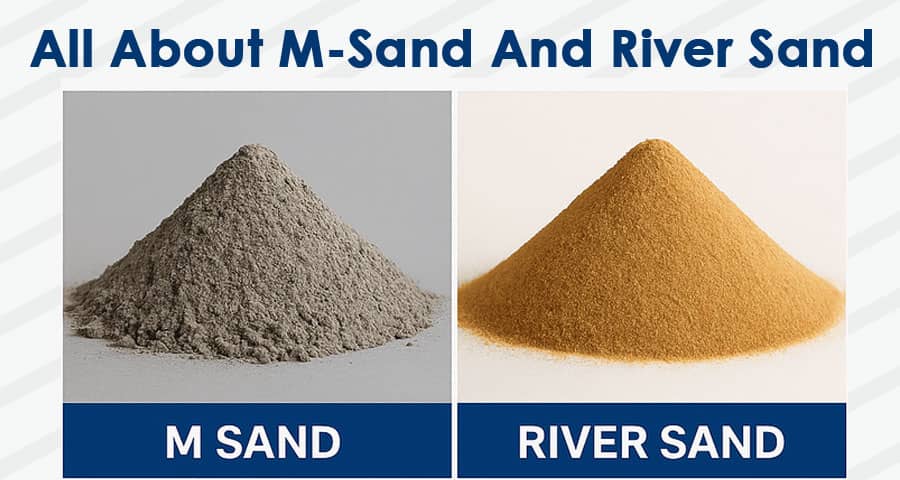
Introduction to M-Sand and River Sand in Modern Construction
In the construction industry, sand plays a fundamental role in producing durable concrete, mortar, plaster, and other structural materials. Among the various types available, Manufactured Sand (M-Sand) and River Sand are the two most widely used aggregates in construction projects. Selecting the right type of sand directly impacts strength, durability, cost efficiency, and sustainability of a building.
As construction demand increases globally, the comparison between M-Sand vs River Sand has become an essential topic for builders, contractors, civil engineers, and homeowners.
What is M-Sand (Manufactured Sand)?
Manufactured Sand (M-Sand) is an artificial sand produced by crushing hard stones such as granite, basalt, or limestone in specialized crushing machines. The resulting material is processed and graded to match the particle size and texture of natural sand.
Unlike natural sand, M-Sand undergoes controlled manufacturing processes, ensuring consistent particle size distribution and improved quality.
How M-Sand is Produced
The manufacturing process of M-Sand typically includes:
- Extraction of Hard Rock
- Primary Crushing
- Secondary Crushing
- Screening and Grading
- Washing and Removal of Impurities
This process produces sand with angular particles and rough texture, which improves bonding in cement mixtures.
Key Characteristics of M-Sand
- Particle Size: Typically less than 4.75 mm
- Shape: Angular and cubical
- Surface Texture: Rough
- Purity: Free from clay, silt, and organic impurities
- Quality Control:Consistent due to industrial processing
These properties make M-Sand highly suitable for concrete production, plastering, and masonry work.
What is River Sand?
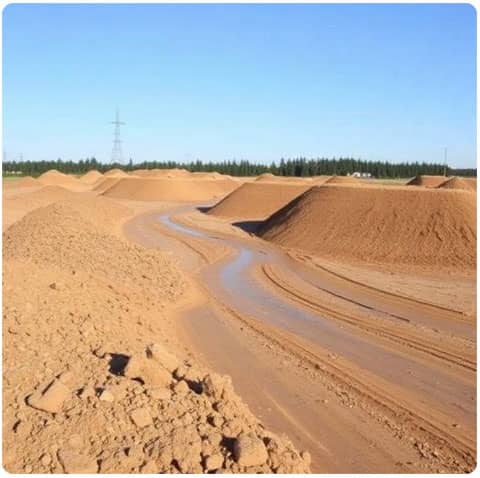
River Sand is a naturally occurring sand collected from river beds, riverbanks, and floodplains. Over thousands of years, flowing water erodes rocks and minerals, gradually forming smooth and fine sand particles.
Because of its natural formation process, river sand is widely used in construction due to its smooth texture and excellent workability.
Characteristics of River Sand
- Particle Shape: Rounded and smooth
- Color:Usually brownish or yellowish
- Texture: Fine and soft
- Natural Composition: Contains silica and other minerals
- Water Absorption:Lower than artificial sand
River sand has been traditionally used in masonry mortar, plastering, concrete mixing, and flooring work.
M-Sand vs River Sand: Detailed Comparison
Understanding the differences between these two materials helps builders choose the most suitable option for their projects.
1. Source of Material
M-Sand
- Produced in manufacturing plants
- Derived from crushed hard rocks
- Controlled production environment
River Sand
- Naturally formed
- Extracted from river beds
- Availability depends on natural deposits
2. Particle Shape and Texture
M-Sand
- Angular particles
- Rough surface
- Strong bonding with cement
River Sand
- Rounded particles
- Smooth surface
- Excellent workability
3. Strength and Durability
Concrete made with M-Sand often demonstrates higher compressive strength because the angular particles interlock effectively with cement paste.
River sand provides good strength but bonding is comparatively lower due to smoother particle surfaces.
4. Quality Consistency
M-Sand offers uniform quality because it is manufactured under controlled conditions.
River Sand quality varies depending on the source location and may contain impurities such as:
- Clay
- Silt
- Organic matter
- Fine dust particles
5. Environmental Impact
River Sand Environmental Concerns
Excessive river sand mining has led to serious ecological problems:
- Riverbank erosion
- Lower groundwater levels
- Damage to aquatic ecosystems
- Increased flood risks
Because of these environmental challenges, many governments have restricted river sand mining.
M-Sand Sustainability
Manufactured sand provides a sustainable alternative to natural sand by:
- Reducing river mining
- Utilizing abundant rock resources
- Supporting environmentally responsible construction
Advantages of M-Sand in Construction
1. Consistent Quality
Since M-Sand is produced in factories, it offers uniform particle size and composition, ensuring predictable performance in construction projects.
2. Higher Strength in Concrete
The angular shape of M-Sand particles improves bonding with cement, increasing compressive strength and durability.
3. Reduced Impurities
Manufacturing processes remove unwanted materials like silt, clay, and organic contaminants, producing cleaner sand.
4. Availability
Unlike river sand, which depends on natural sources, M-Sand can be produced anywhere, ensuring a stable supply for large construction projects.
5. Eco-Friendly Alternative
Using manufactured sand reduces pressure on river ecosystems and supports sustainable construction practices.
Advantages of River Sand
1. Smooth Texture
River sand has naturally smooth particles, making it easy to mix and work with in mortar and plastering applications.
2. Proven Traditional Material
For centuries, builders have relied on river sand for brick masonry, plastering, and concrete work, making it a trusted material in construction.
3. Better Workability
Rounded grains improve flowability and workability, which is beneficial during plastering and finishing.
Disadvantages of M-Sand
Despite its advantages, M-Sand has some limitations:
- Higher water requirement due to angular particles
- Improper manufacturing may produce excess fines
- Requires proper grading and washing
However, modern processing technologies significantly reduce these issues.
Disadvantages of River Sand
River sand also presents several challenges:
- Environmental damage from mining
- Irregular supply
- High transportation cost
- Possible contamination with clay or silt
- Increasing market price
These factors have encouraged builders to shift toward manufactured sand alternatives.
Applications of M-Sand in Construction
M-Sand is widely used in:
Concrete Production
Used in RCC structures, beams, columns, and slabs due to strong bonding characteristics.
Brick and Block Masonry
Provides excellent adhesion between bricks and mortar.
Road Construction
Suitable for pavement layers and asphalt mixtures.
Plastering Work
Special grades of M-Sand are produced for plastering applications.
Precast Concrete Products
Used in pavers, tiles, hollow blocks, and precast elements.
Applications of River Sand
River sand is commonly used for:
- Plastering
- Masonry mortar
- Concrete mixing
- Flooring
- Foundation work
Due to its smooth texture, it remains preferred for fine finishing applications.
Cost Comparison: M-Sand vs River Sand
Cost plays an important role in construction material selection.
M-Sand Cost
- Generally more affordable
- Stable pricing due to local production
- Lower transportation cost
River Sand Cost
- Often more expensive
- Price fluctuates depending on availability
- Transportation from river sources increases overall cost
In many regions, M-Sand can reduce construction costs significantly.
Which Sand is Better for Construction?
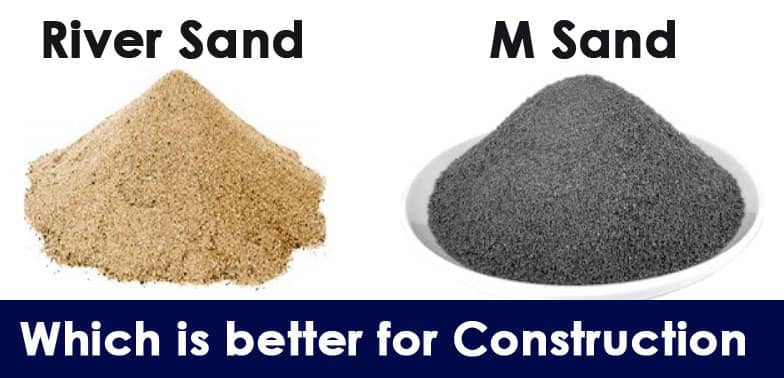
The choice between M-Sand and River Sand depends on project requirements.
M-Sand is ideal for:
- Structural concrete
- Large construction projects
- Sustainable building practices
- Cost-effective construction
River Sand is suitable for:
- Plastering
- Decorative finishes
- Small residential projects
However, due to environmental regulations and growing demand, many engineers now prefer M-Sand as the primary construction material.
Future of Sand in the Construction Industry
With rapid urbanization and infrastructure development, the demand for sand continues to rise. Natural sand resources are declining, making manufactured sand a critical component of future construction.
Advanced crushing technologies and quality control systems are improving the performance and reliability of M-Sand, making it a preferred alternative worldwide.
As governments implement stricter regulations on river mining, the construction industry is steadily transitioning toward sustainable materials such as manufactured sand.
Conclusion
Both M-Sand and River Sand play significant roles in construction, but modern building practices increasingly favor manufactured sand due to its consistent quality, environmental benefits, and cost efficiency. While river sand remains useful for specific applications, M-Sand provides a reliable and sustainable solution for large-scale infrastructure and residential projects.
Understanding the differences between these materials allows engineers, contractors, and homeowners to make informed decisions that enhance structural performance, reduce costs, and support sustainable construction practices.
Please view the following short video for M-Sand And River Sand
Also Read:
 What is Admixture and Its Types, Pros and Cons