
Outrigger System | Different Types of Outrigger System in High-Rise Buildings
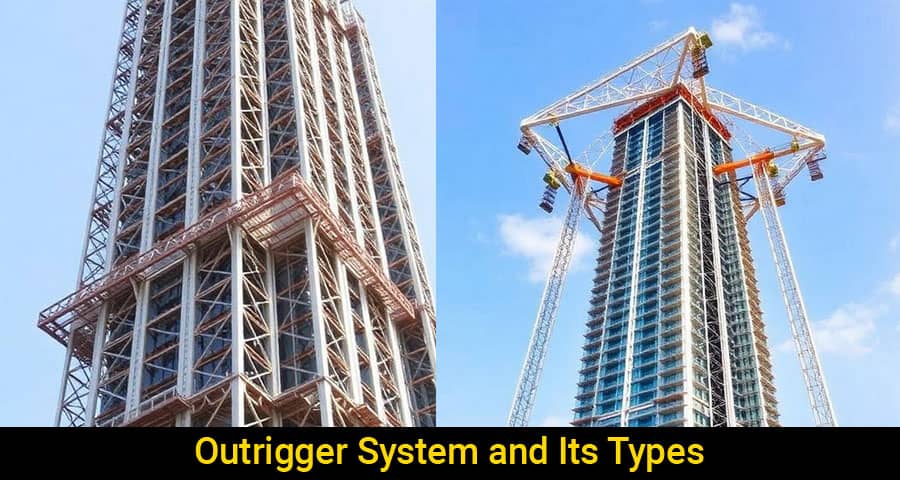
Introduction to Outrigger Systems in High-Rise Structures
In modern structural engineering, high-rise buildings demand advanced lateral load-resisting systems to ensure stability, safety, and efficiency. Among these, the outrigger system stands out as one of the most effective structural solutions. We utilize this system to control building sway, enhance stiffness, and improve overall structural performance against wind and seismic forces.
An outrigger system connects the central core of a building to its perimeter columns, transforming the entire structure into a unified system that resists overturning forces. This integration significantly reduces lateral displacement and optimizes material usage, making it highly suitable for skyscrapers and tall commercial towers.
What is an Outrigger System?
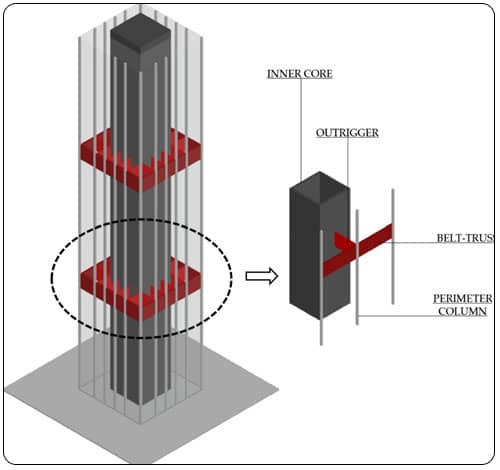
An outrigger system is a structural framework consisting of horizontal stiff members (outriggers) that connect a building's central core to exterior columns. These outriggers act like arms extending from the core, engaging perimeter columns to resist lateral loads.
Key Components of an Outrigger System
- Central Core: The primary vertical structure, usually made of reinforced concrete or steel, housing elevators and services
- Outrigger Beams or Trusses: Horizontal elements connecting the core to outer columns
- Perimeter Columns: External vertical members that participate in load resistance
- Belt Truss (Optional): A ring-like structure tying exterior columns together
This system converts overturning moments into axial tension and compression forces in the exterior columns, thereby enhancing structural efficiency.
Working Principle of Outrigger Systems
The effectiveness of an outrigger system lies in its ability to reduce overturning moment in the core. When lateral forces such as wind or earthquakes act on the building:
- The core tends to bend and rotate
- The outriggers engage perimeter columns
- Exterior columns develop tension and compression forces
- The overall building stiffness increases significantly
This mechanism reduces lateral drift and inter-story displacement, ensuring occupant comfort and structural integrity.
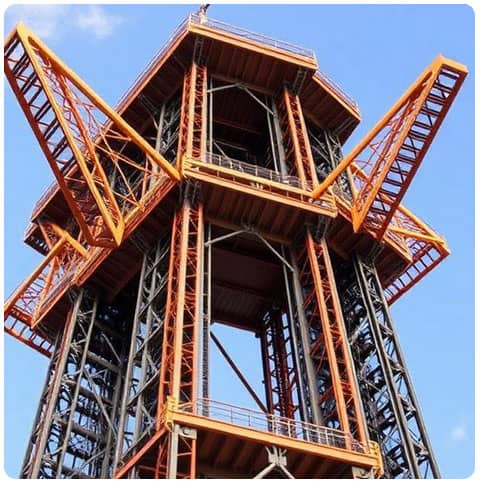
Advantages of Outrigger Systems in High-Rise Buildings
1. Enhanced Structural Stiffness
Outrigger systems greatly increase the lateral stiffness of tall buildings, reducing sway and vibration.
2. Efficient Material Utilization
We achieve cost-effective construction by reducing the need for excessive core thickness or additional bracing systems.
3. Improved Load Distribution
Loads are distributed across both the core and perimeter columns, optimizing structural performance.
4. Reduced Building Drift
Minimizing lateral displacement ensures better serviceability and occupant comfort.
5. Architectural Flexibility
Outrigger systems allow for more open floor plans, as fewer internal columns are required.
Different Types of Outrigger Systems in High-Rise Buildings
1. Conventional Outrigger System
The conventional outrigger system uses horizontal beams or trusses extending from the core to exterior columns.
Key Features
- Direct connection between core and perimeter columns
- Typically located at mechanical or service floors
- Uses steel trusses or deep concrete beams
Applications
- Commercial skyscrapers
- Office towers
This is the most widely used system due to its simplicity and effectiveness.
2. Virtual Outrigger System
The virtual outrigger system eliminates physical outriggers by using belt trusses and floor diaphragms to transfer forces.
Key Features
- No direct beam between core and columns
- Load transfer occurs through floor slabs and belt trusses
- Reduced obstruction within interior spaces
Advantages
- Improved architectural flexibility
- Easier construction and integration
This system is ideal where open interior layouts are required without large structural members.
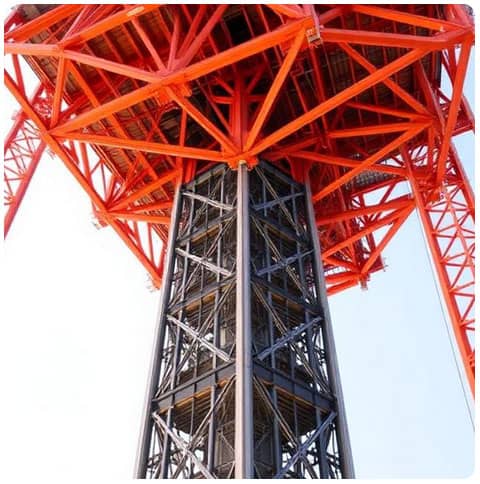
3. Belt Truss Outrigger System
In this system, a belt truss encircles the building perimeter, connecting all exterior columns.
Key Features
- Works in conjunction with outriggers
- Distributes forces evenly among columns
- Enhances torsional resistance
Benefits
- Increased structural redundancy
- Better performance under dynamic loads
This system is commonly used in super-tall buildings to improve overall stability.
4. Steel Outrigger System
The steel outrigger system utilizes steel trusses or girders for connecting the core to perimeter columns.
Key Features
- Lightweight yet strong
- Prefabrication possibilities
- Faster construction
Advantages
- High strength-to-weight ratio
- Reduced construction time
Steel outriggers are widely used in modern skyscrapers where speed and efficiency are crucial.
5. Concrete Outrigger System
The concrete outrigger system uses reinforced concrete beams or walls as outriggers.
Key Features
- High rigidity and durability
- Integrated with the building core
- Suitable for heavy loads
Applications
- Residential high-rise buildings
- Mixed-use developments
Concrete outriggers provide excellent stiffness and fire resistance.
6. Hybrid Outrigger System
The hybrid system combines steel and concrete elements to achieve optimal performance.
Key Features
- Steel trusses with concrete core
- Combines flexibility and strength
- Cost-effective solution
Advantages
- Balanced structural efficiency
- Adaptable to various building designs
This system is increasingly preferred in modern high-rise construction.
7. Damped Outrigger System
A damped outrigger system integrates energy dissipation devices such as dampers into the outriggers.
Key Features
- Reduces dynamic response
- Controls vibration and sway
- Improves occupant comfort
Benefits
- Enhanced performance during earthquakes
- Reduced structural stress
This system is ideal for tall buildings in seismic zones.
Design Considerations for Outrigger Systems
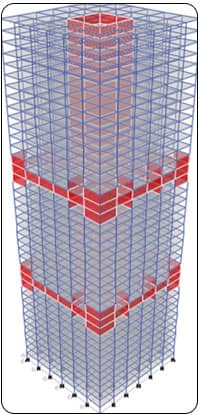
1. Location of Outriggers
Outriggers are typically placed at:
- Mid-height of the building
- Mechanical floors
- Multiple levels for better performance
2. Structural Analysis
We conduct detailed analysis to evaluate:
- Lateral load effects
- Drift control
- Force distribution
3. Material Selection
Choosing between steel, concrete, or hybrid systems depends on:
- Building height
- Load requirements
- Construction timeline
4. Integration with Architecture
Outriggers must be carefully integrated to avoid:
- Interference with usable space
- Visual disruption
Applications of Outrigger Systems
Outrigger systems are widely used in:
- Skyscrapers and super-tall buildings
- Commercial office towers
- Residential high-rise apartments
- Mixed-use developments
They are particularly effective in buildings exceeding 40 - 50 stories, where lateral forces dominate structural design.
Conclusion
The outrigger system remains one of the most efficient structural solutions for high-rise buildings. By connecting the core to perimeter columns, we significantly enhance stability, stiffness, and load distribution. With various types such as conventional, virtual, belt truss, steel, concrete, hybrid, and damped systems, engineers can tailor designs to meet specific structural and architectural requirements.
As urban skylines continue to rise, the importance of advanced systems like outriggers will only increase, ensuring that buildings are not only taller but also safer, stronger, and more efficient.
Please watch the following short video for Outrigger System
Also Read:
 Falsework: Types, Functions, and Causes in Construction Engineering