
Flight of Stairs: Definition, Types, Design Principles, and Construction Guide
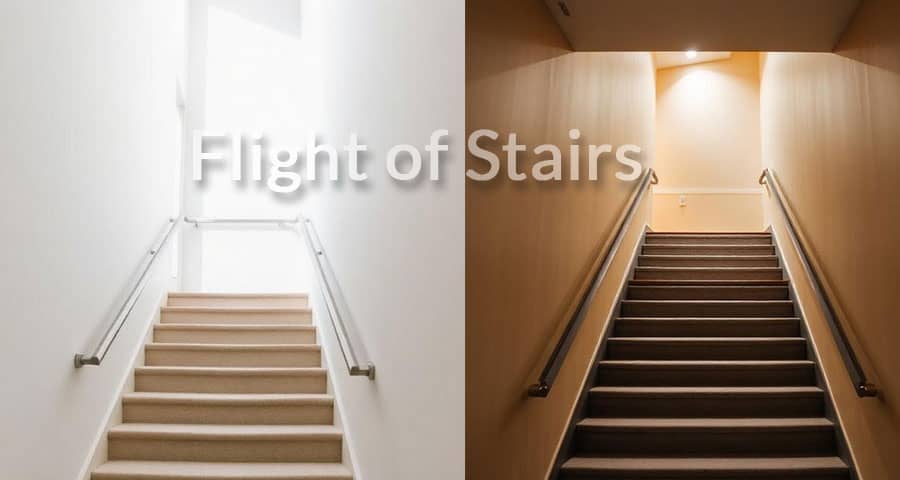
Introduction to Flight of Stairs
A flight of stairs is one of the most fundamental components in architectural design and building construction. It refers to a continuous series of steps without any break or landing, designed to connect different levels of a structure efficiently. Whether in residential buildings, commercial complexes, or industrial facilities, the proper design and execution of stair flights ensure safety, functionality, and aesthetic appeal.
We recognize that a well-designed staircase is not merely a structural necessity but also a critical architectural feature that influences the usability and visual identity of a building.
What is a Flight of Stairs?
A flight of stairs is defined as a sequence of steps between two landings. It can be:
- Straight or curved
- Single or multiple flights
- Connected through intermediate landings
The primary purpose is to provide safe vertical circulation within a building while maintaining ergonomic comfort.
Key Characteristics of a Stair Flight
- Continuous steps without interruption
- Uniform rise and tread dimensions
- Supported by stringers, walls, or beams
- Designed according to building codes
Components of a Flight of Stairs
To fully understand stair flights, we must examine their essential components:
1. Tread
The horizontal surface on which the foot is placed. Proper tread width ensures comfort and reduces fatigue.
2. Riser
The vertical portion between two consecutive treads. Uniform riser height is crucial for safety.
3. Stringer
The structural support running along the sides of the staircase, holding the treads and risers in position.
4. Landing
A flat platform provided at the end or between flights for rest and directional change.
5. Handrail and Balustrade
These provide support and protection, enhancing user safety.
Types of Flight of Stairs
Different building requirements demand various configurations of stair flights. Below are the most commonly used types:
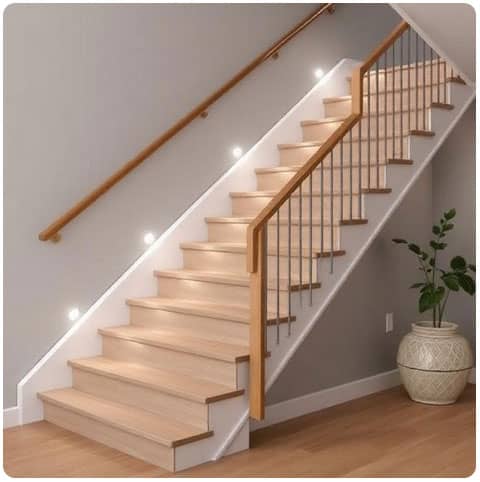
1. Straight Flight Stairs
A single continuous flight without any change in direction. This is the simplest and most economical design.
Advantages:
- Easy construction
- Efficient use of space in linear layouts
- Simple navigation
2. Quarter Turn (L-Shaped) Stairs
This type includes a 90-degree turn with a landing between flights.
Benefits:
- Improved privacy
- Better space utilization
- Enhanced safety due to landing
3. Half Turn (U-Shaped) Stairs
Consists of two flights running in opposite directions with a landing in between.
Key Features:
- Compact design
- Ideal for residential and commercial buildings
- Offers resting points
4. Spiral Stairs
A compact stair flight arranged around a central vertical axis.
Advantages:
- Saves space
- Visually appealing
- Suitable for limited areas
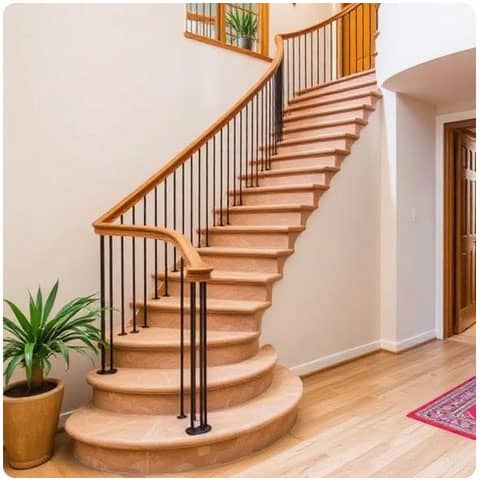
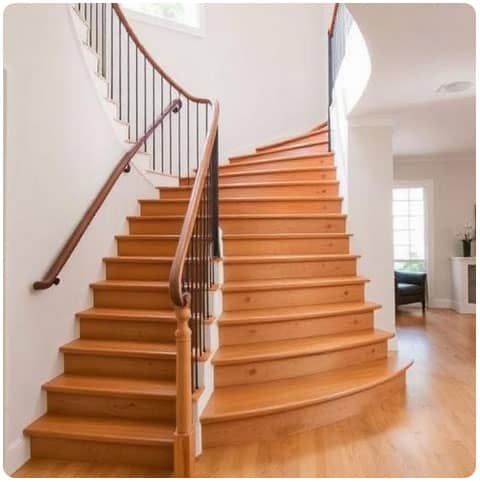
5. Curved Stairs
These follow a smooth curved path without sharp angles, often used in luxury architecture.
Highlights:
- Elegant design
- High aesthetic value
- Requires precise construction
Standard Dimensions of a Flight of Stairs
For optimal safety and comfort, stair flights must adhere to standard proportions:
1. Riser Height
- Typically between 150 mm to 180 mm
2. Tread Depth
- Generally between 250 mm to 300 mm
3. Width of Staircase
- Residential: 900 mm to 1200 mm
- Commercial: 1200 mm to 1800 mm
4. Number of Steps per Flight
- Usually limited to 10 to 12 steps for safety and convenience
5. Pitch (Angle)
- Recommended between 25° to 40°
These dimensions ensure a comfortable walking rhythm and minimize the risk of accidents.
Design Principles for Flight of Stairs
We emphasize precision in stair design to achieve maximum efficiency and safety. The following principles are essential:
1. Uniformity
All steps in a flight must have equal riser heights and tread depths.
2. Proportion Rule
A widely accepted formula is:
2 x Riser + Tread = 600 mm to 650 mm
This ensures a natural walking stride.
3. Adequate Lighting
Proper illumination enhances visibility and prevents mishaps.
4. Ventilation
Especially important in enclosed staircases to maintain air quality.
5. Structural Stability
The flight must be designed to withstand live loads and dynamic forces.
Materials Used in Stair Flights
The choice of materials directly impacts durability, aesthetics, and cost.
1. Concrete
- Most commonly used
- High strength and durability
- Suitable for all building types
2. Steel
- Lightweight and strong
- Ideal for modern designs
- Used in industrial structures
3. Wood
- Warm and aesthetic appeal
- Common in residential interiors
4. Glass
- Contemporary look
- Used in combination with steel or concrete
5. Stone
- Premium finish
- Long-lasting and robust
Construction Process of a Flight of Stairs
The construction of a stair flight involves careful planning and execution:
Step 1: Layout Planning
Determine dimensions, number of steps, and overall configuration.
Step 2: Formwork Preparation
For concrete stairs, formwork is set to shape the steps.
Step 3: Reinforcement Placement
Steel bars are arranged to provide structural strength.
Step 4: Concrete Pouring
Concrete is poured and compacted to eliminate air gaps.
Step 5: Finishing
Surface finishing ensures smooth treads and edges.
Step 6: Curing
Proper curing enhances strength and durability.
Safety Considerations in Stair Flight Design
Safety remains a top priority in stair construction. We implement the following measures:
- Non-slip surfaces to prevent falls
- Proper handrail height (usually 900 mm)
- Adequate headroom (minimum 2.1 meters)
- Consistent step dimensions
- Clear visibility and lighting
Applications of Flight of Stairs
Flights of stairs are used across various sectors:
1. Residential Buildings
- Connecting floors within homes
- Enhancing interior design
2. Commercial Spaces
- Offices, malls, and hotels
- Designed for high traffic
3. Industrial Facilities
- Access to machinery and platforms
- Built for heavy-duty use
4. Public Infrastructure
- Railway stations, airports, and metro systems
- Focus on durability and safety
Advantages of Properly Designed Stair Flights
A well-designed stair flight offers multiple benefits:
- Efficient vertical movement
- Improved safety and comfort
- Enhanced building aesthetics
- Long-term durability
- Compliance with building standards
Common Mistakes to Avoid
To ensure optimal performance, we avoid the following errors:
- Uneven riser heights
- Insufficient tread depth
- Lack of handrails
- Poor lighting
- Excessive slope
Conclusion
A flight of stairs is far more than a simple structural element - it is a vital component of architectural functionality and design excellence. Through careful planning, adherence to standards, and precise execution, we can create stair flights that deliver maximum safety, comfort, and visual appeal.
By integrating the right materials, dimensions, and design principles, staircases can transform from basic connectors into defining features of modern construction.
Please watch the following short video for Flight of Stairs
Also Read:
 Epoxy Flooring: Types, Uses, Application Process, Advantages & Disadvantages
Difference Between Coarse Aggregate and Fine Aggregate
Soil Compaction: Causes, Effects, and Types
Fresh Concrete and Its Properties: A Complete Guide
What Is Rolling Margin and Its Procedure - Complete Guide for Engineers and Contractors