
Well Point System: Types, Dewatering, PVC, Installation & shallow well
A well point system is one of the most effective and widely used groundwater control methods for excavation, trenching, basement construction, pipeline work, utility installation, and foundation projects. Where the water table stands above the desired excavation level, construction becomes unsafe, unstable, and inefficient. Soil loses strength, slopes soften, trench walls collapse, and concrete placement quality declines. To overcome these conditions, we use a well point dewatering system to temporarily lower groundwater and create dry, workable soil.
In practical construction and civil engineering, the well point system remains a preferred choice because it is adaptable, economical for shallow to medium-depth groundwater control, and suitable for a wide range of soils, especially sandy soils, silty sands, fine gravels, and permeable strata. A correctly designed and installed well point arrangement improves productivity, protects nearby structures, reduces uplift pressure, and supports safe excavation practices.
What Is a Well Point System?
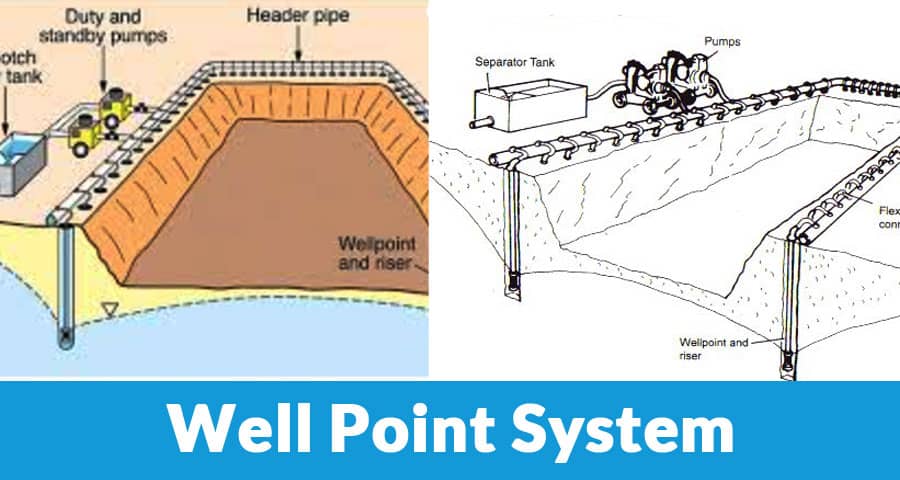
A well point system is a groundwater lowering arrangement consisting of a series of small-diameter wells, called well points, installed at regular intervals around or along an excavation. These well points are connected to a header pipe that leads to a vacuum pump or dewatering pump. The pump creates suction and draws groundwater through the screened ends of the well points, thereby lowering the local groundwater table.
Each well point typically includes:
- A screened intake section
- A riser pipe
- A connection to the header main
- A pumping unit with vacuum capability
The system works continuously during excavation and structural work. Once the excavation or underground structure is completed and backfilled, the well points are removed or abandoned depending on site conditions and project requirements.
Why a Well Point Dewatering System Is Used
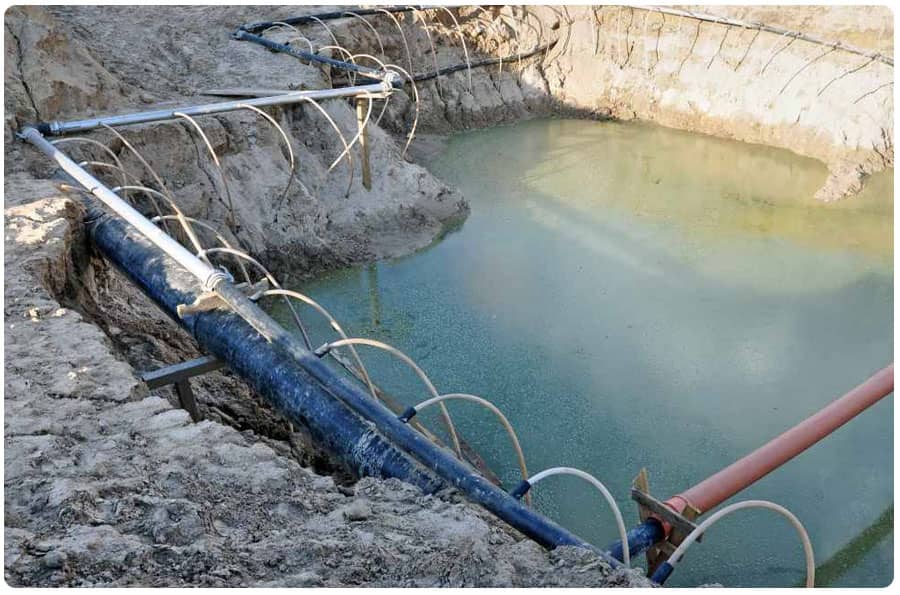
Groundwater control is essential wherever excavation extends below the natural water table. Without dewatering, many construction operations become difficult or impossible. We use a well point dewatering system for several critical purposes.
Lowering the Water Table
The main function is to reduce groundwater to a level safely below the bottom of excavation. This allows soil to remain firm and workable.
Increasing Soil Stability
Saturated soil loses shear strength. By reducing pore water pressure, the well point system improves bearing capacity and sidewall stability.
Preventing Base Heave and Boiling
In silty or sandy soil, upward seepage pressure can cause boiling, piping, or bottom instability. Dewatering helps prevent these failures.
Improving Construction Quality
Dry conditions are necessary for:
- Lean concrete placement
- Footing construction
- Pipe laying
- Waterproofing work
- Reinforcement fixing
- Formwork stability
Reducing Delays
When groundwater is controlled, equipment movement, labor productivity, and excavation speed improve significantly.
How a Well Point System Works
The operating principle of a well point system is straightforward but technically important. We install a number of closely spaced well points around the excavation. Each point penetrates below the intended drawdown level. The screened lower portion permits groundwater entry while excluding excessive soil particles.
All riser pipes connect to a common header pipe, and the header connects to a pump unit. The vacuum pump removes air and water from the system, producing negative pressure. This suction induces groundwater flow from the surrounding soil toward the well points. As pumping continues, the local phreatic surface drops, creating a depression in the water table.
The amount of drawdown depends on:
- Soil permeability
- Spacing of well points
- Depth of well points
- Pump capacity
- Airtightness of the system
- Duration of pumping
- External recharge from rain, canals, rivers, or adjacent groundwater sources
In many sites, the water level reduction forms an overlapping cone of depression around each well point, producing an effective overall groundwater lowering zone.
Main Components of a Well Point Dewatering System
A successful well point dewatering system depends on proper selection of each component.
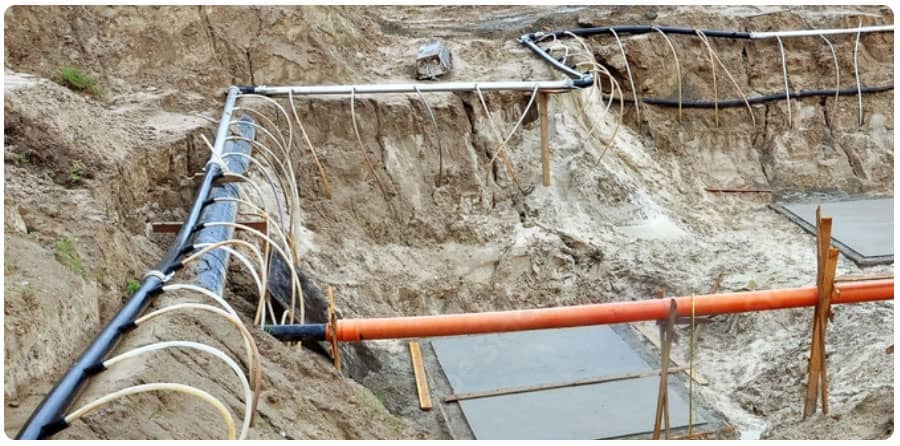
1. Well Points
These are slender intake units installed vertically into the ground. The lower end is screened to admit water. The screen may be made of metal or PVC, depending on design and soil condition.
2. Riser Pipes
These connect the well point screen to the header pipe. They convey water and air from the well point to the pump.
3. Header Main
The header pipe runs along the excavation perimeter and links all the well points to the pump. It is usually fitted with valves so individual well points can be isolated for adjustment or maintenance.
4. Pumping Unit
The pumping arrangement usually includes:
- Vacuum pump
- Centrifugal pump
- Separator tank, in some systems
- Priming mechanism
The pump must maintain vacuum and remove the inflowing groundwater continuously.
5. Discharge Line
Pumped water is conveyed away from the excavation through discharge pipes to drains, sumps, settling tanks, or approved disposal points.
6. Filters and Gravel Pack
In some installations, filter material may be placed around the screen to improve inflow and reduce soil migration.
Types of Well Point Systems
There are several types of well point systems, and the selection depends on excavation depth, groundwater conditions, soil permeability, and project geometry.
1. Single Stage Well Point System
A single stage well point system is the most common arrangement for relatively shallow excavations. One row or ring of well points is installed, and the water table is lowered in one stage of pumping.
Typical Use
- Shallow foundations
- Utility trenches
- Basement excavation
- Road drainage works
- Pipe laying in permeable soils
Usual Depth Range
A single stage system is generally effective for drawdown up to around 4 to 6 meters, depending on suction limitations and site conditions.
Advantages
- Simple layout
- Fast installation
- Lower cost
- Easy maintenance
- Suitable for many routine construction projects
2. Multi-Stage Well Point System
Where deeper excavation is required, a multi-stage well point system is used. In this method, the first stage lowers groundwater to an intermediate level. Then excavation proceeds further, and a second or third stage of well points is installed at a lower bench.
Typical Use
- Deep basements
- Pump houses
- Lift stations
- Deep utility crossings
- Retaining wall excavation
Advantages
- Achieves greater drawdown than a single stage
- Better control for deep excavations
- More adaptable for phased construction
Limitations
- Requires careful sequencing
- Higher installation and operating cost
- More site management and monitoring
3. Ring Well Point System
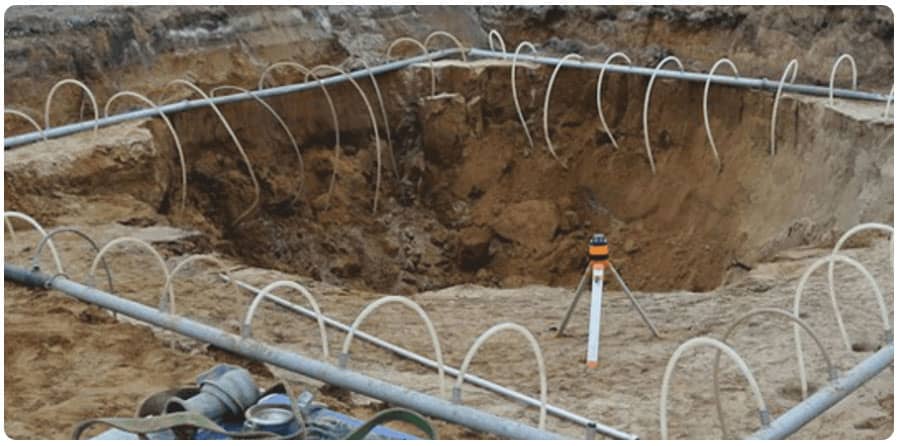
A ring well point system is arranged around an isolated excavation or pit. The well points form a closed loop to provide uniform dewatering.
Applications
- Shaft excavation
- Circular foundations
- Bridge pier works
- Isolated structure pits
This arrangement is highly effective where inflow comes from all directions.
4. Linear Well Point System
A linear well point system is installed along one or both sides of a trench or elongated excavation.
Applications
- Sewer lines
- Water pipelines
- Cable trenches
- Drainage channels
This is one of the most practical forms for long corridor-type construction.
Shallow Well and Well Point System: Key Difference
The term shallow well dewatering is often used alongside well point systems, but the two are not always identical. A shallow well system typically uses somewhat larger diameter wells than standard well points and may employ submersible pumps rather than vacuum-assisted suction alone.
Well Point System
- Small diameter intake points
- Closely spaced
- Usually vacuum-assisted
- Best for shallow to medium drawdown
- Suitable for fine sand and similar soils
Shallow Well System
- Larger diameter wells
- Wider spacing
- Often uses individual pumps
- Suitable where more water yield is needed
- Common in granular soils and medium excavation depths
In many field discussions, however, shallow groundwater lowering with closely spaced intake points is loosely referred to as shallow well dewatering, even when the actual method is a classic well point system.
PVC Well Point System
A PVC well point system has become increasingly common because PVC components offer practical advantages in many dewatering applications. PVC is used for screens, risers, connectors, and in some cases portions of the header or fittings.
Advantages of PVC Well Points
Corrosion Resistance
PVC does not rust like steel in wet and chemically aggressive conditions. This is especially useful where groundwater contains salts or corrosive substances.
Light Weight
PVC components are easy to transport, handle, install, and remove. This reduces labor effort and speeds site work.
Smooth Internal Surface
A smoother internal bore helps reduce friction losses and supports efficient water flow.
Cost Effectiveness
PVC well point components are often economical for temporary projects.
Ease of Fabrication
PVC screens and risers can be manufactured in different lengths, slot sizes, and diameters to suit the soil profile.
Where PVC Well Points Are Used
- Building foundations
- Trench dewatering
- Landscaping drainage projects
- Irrigation drainage control
- Temporary civil works
- Shallow excavation in corrosive groundwater zones
Limitations of PVC
Although PVC is highly useful, it must be selected properly for:
- Impact resistance
- Pressure requirements
- Temperature conditions
- UV exposure during storage
- Joint strength and sealing reliability
Poor-quality PVC or improper jointing can allow air leakage, which reduces vacuum performance and lowers system efficiency.
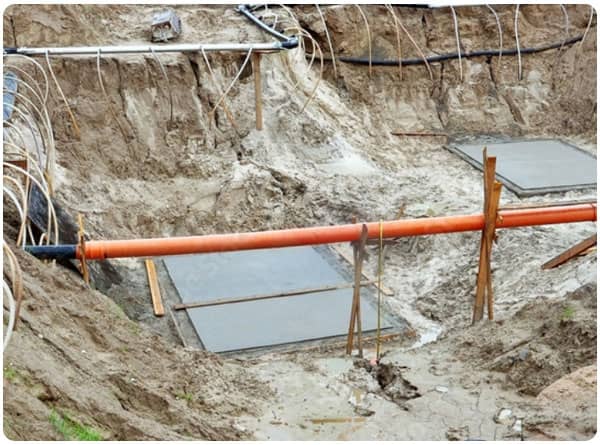
Well Point System Installation Method
Correct well point installation determines whether the dewatering system performs effectively. The most common installation method is jetting, though drilling and augering are also used depending on soil type.
Step 1: Site Investigation
Before installation, we study:
- Soil profile
- Groundwater level
- Permeability
- Excavation depth
- Nearby structures
- Recharge sources
- Disposal location for discharge water
Accurate subsurface information is essential for spacing, depth, and pump selection.
Step 2: Layout and Spacing
The well points are marked around the excavation perimeter or along the trench alignment. Spacing commonly ranges from 0.75 m to 1.5 m, though actual spacing depends on soil permeability and inflow conditions.
Closer spacing is required in lower permeability soils or where stronger drawdown control is needed.
Step 3: Installation of Well Points
In sandy soils, a water jet is often used to advance the well point into the ground. The jetting action loosens the soil and allows the point to sink to the required depth. In other soils, predrilling may be necessary.
The screened section must be positioned in the water-bearing layer for proper intake.
Step 4: Placement of Filter Material
Where needed, a filter sand or gravel envelope is provided around the screen to improve hydraulic connection and prevent fine soil movement.
Step 5: Header Pipe Connection
Each riser is connected to the header main using flexible swing joints or valves. Airtight joints are essential because even minor leakage reduces vacuum efficiency.
Step 6: Pump Setup and Priming
The pump is connected to the header and discharge line. The system is primed, checked for leaks, and brought into continuous operation.
Step 7: Monitoring and Adjustment
During operation, we monitor:
- Groundwater level
- Pump discharge
- Vacuum pressure
- Sand content in discharge
- Settlement near adjacent structures
- Performance of individual well points
Any clogged, leaking, or underperforming point must be corrected quickly.
Best Soil Conditions for Well Point Dewatering
A well point dewatering system performs best in permeable soils. Ideal conditions include:
- Fine to medium sand
- Silty sand
- Sandy gravel
- Stratified pervious soils
Performance becomes more difficult in:
- Very stiff clay
- Highly plastic clay
- Dense silt with low permeability
In low-permeability soils, drainage is slow and vacuum transfer is less effective. In such conditions, alternative dewatering methods such as eductor systems, deep wells, or cut-off walls may be more suitable.
Advantages of a Well Point System
The well point system remains popular because of several strong field advantages.
Flexible Layout
It can be arranged in straight lines, rings, rectangles, or irregular patterns.
Fast Installation
For many sites, installation is quicker than large-diameter well systems.
Effective for Shallow Excavations
It provides reliable control for common construction depths.
Portable and Reusable
Equipment can be dismantled and moved to another site.
Good Control in Sandy Soils
Where inflow is moderate to high in pervious soils, well points provide highly efficient dewatering.
Improved Safety
Dry excavation reduces collapse risk, equipment sinking, and unsafe working conditions.
Limitations of a Well Point System
Even though the method is effective, it has practical limitations.
Suction Depth Limitation
Vacuum-assisted suction has a practical depth limit, which is why deeper excavations may need multiple stages or other systems.
Not Ideal for Very Low Permeability Soil
Clay-rich soils do not release water quickly enough for efficient well point operation.
Continuous Operation Required
If pumping stops unexpectedly, groundwater may rebound quickly and flood the excavation.
Maintenance Sensitive
Air leaks, clogged screens, or poor header sealing can significantly reduce system efficiency.
Applications of Well Point and Shallow Well Dewatering
We use well point systems and shallow well dewatering in a broad range of projects:
- Building foundation excavation
- Basement construction
- Bridge abutments
- Retaining walls
- Pump stations
- Sewer and water pipelines
- Utility trenches
- Underground tanks
- Road underpasses
- Canal and drainage structures
- Industrial plant foundations
In urban construction, well point dewatering is especially valuable because it allows controlled excavation in congested areas with limited working space.
Design Considerations for Effective Well Point Installation
For reliable performance, design should address the following:
Excavation Geometry
The length, width, and depth determine the number and arrangement of well points.
Required Drawdown
The system should lower groundwater sufficiently below formation level, often by at least 0.5 to 1.0 meter for safe working conditions.
Soil Stratification
Different layers may alter inflow and drainage behavior. A permeable lens can strongly influence performance.
Recharge Conditions
Nearby rivers, ponds, leaking services, rainfall infiltration, and tidal effects may increase pumping demand.
Environmental Control
Discharged water may require sediment removal before release. Site drainage must prevent erosion or nuisance flooding.
Protection of Adjacent Structures
Excessive drawdown may cause settlement in surrounding soils. Monitoring is essential where neighboring buildings or utilities are sensitive.
Maintenance of a PVC Well Point Dewatering System
Proper maintenance keeps the PVC well point system efficient throughout the dewatering period.
Routine Checks
- Inspect joints for air leakage
- Check vacuum gauge readings
- Clean clogged screens or lines
- Verify discharge flow
- Monitor pump performance
- Ensure valves operate correctly
Common Problems
- Loss of vacuum due to poor joints
- Sand pumping from damaged screen
- Reduced yield from clogging
- Header leakage
- Pump cavitation
- Blocked discharge line
Prompt correction prevents system failure and work interruption.
Conclusion
A well point system is a highly practical and proven method for groundwater lowering in excavation and foundation work. It is especially effective in shallow to moderate-depth dewatering, where soil is sufficiently permeable and controlled drawdown is required. From single stage and multi-stage well point systems to PVC well point installations and shallow well dewatering arrangements, the method offers flexibility, speed, and dependable field performance.
Where the excavation lies below groundwater level, proper design, correct spacing, airtight connections, and continuous monitoring are essential. A well-executed well point dewatering system creates dry working conditions, improves soil stability, supports structural quality, and allows construction to proceed safely and efficiently. For trench works, basements, foundations, and utility installations, the well point system remains one of the most important and practical dewatering solutions in civil engineering.
Please watch the following short video for Well Point System
Also Read:
 New Civil Engineering Technology 2025: Transforming Infrastructure and Construction