
5 Best Innovations That Will Change Construction As We Know It
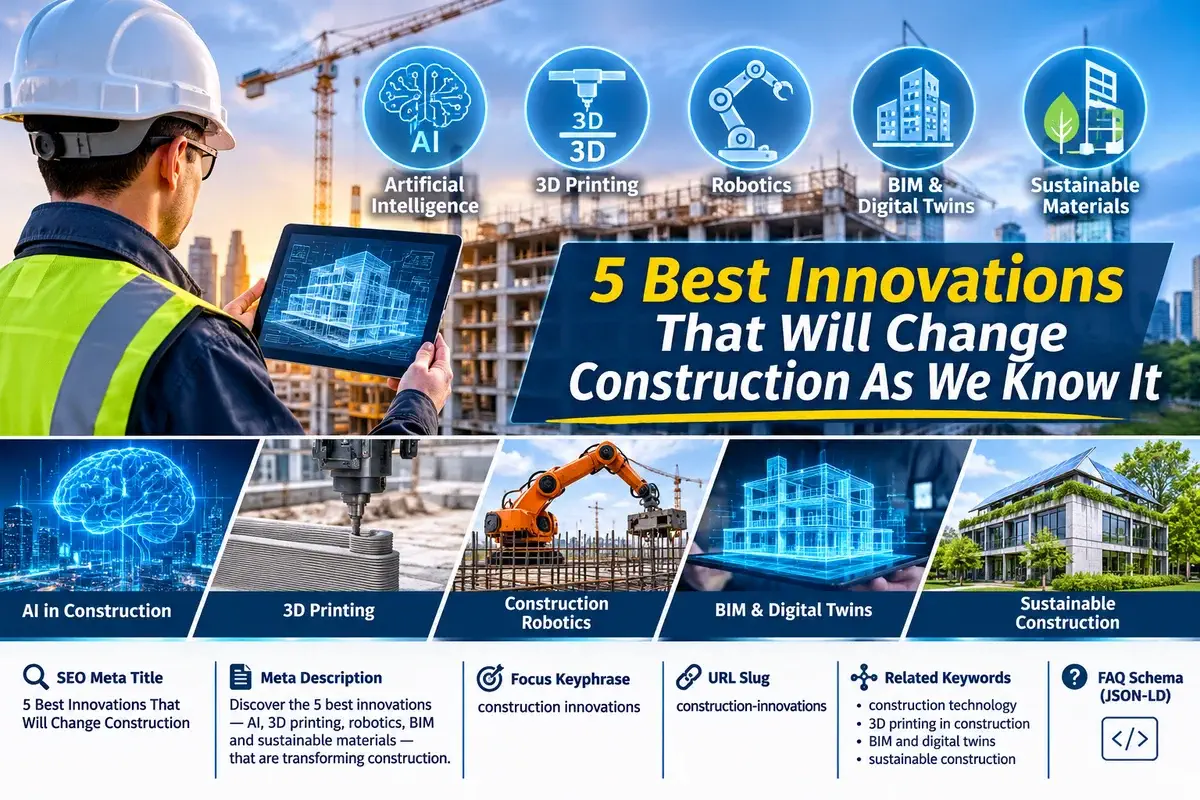
The construction industry is experiencing a major transformation driven by technological advancements, digital engineering, automation, and sustainable building practices. Traditional construction methods are gradually evolving as companies adopt innovative solutions to improve productivity, reduce costs, and deliver better-quality projects.
From artificial intelligence and 3D printing to robotics, Building Information Modeling (BIM), digital twins, and sustainable materials, modern innovations are changing how buildings and infrastructure are designed, planned, and constructed.
In this article, we explore five important innovations that are transforming the construction industry and examine how they may shape the future of construction.
1. Artificial Intelligence in Construction
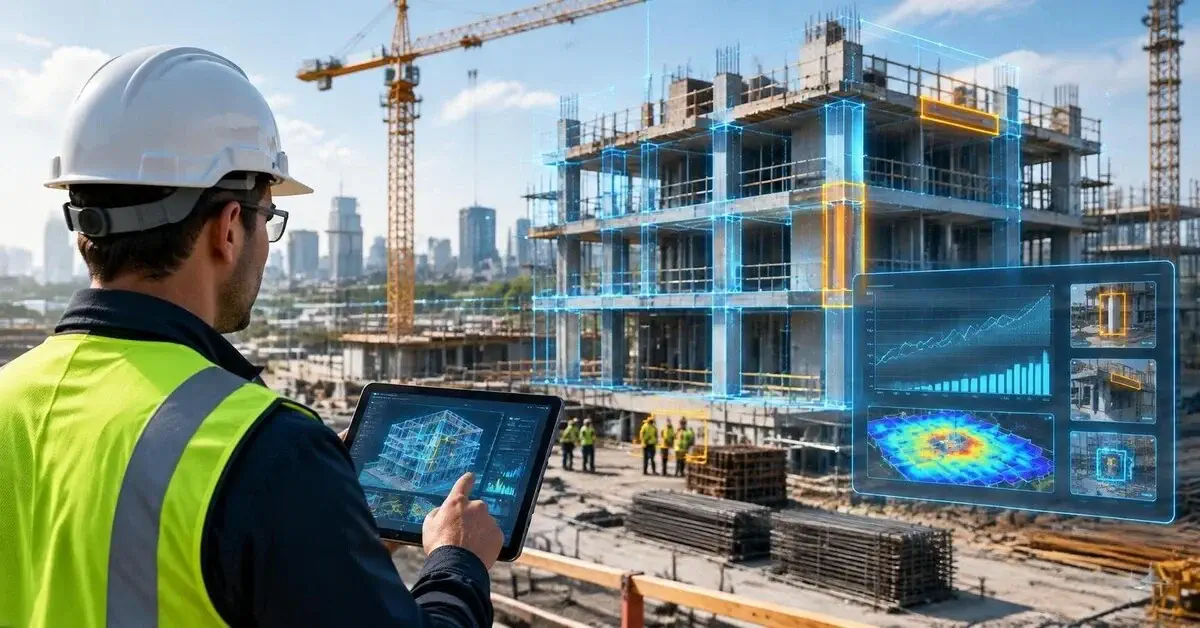
Artificial Intelligence (AI) is becoming one of the most influential technologies in the construction industry. AI-powered systems can analyse large amounts of project data, identify patterns, predict potential risks, and support better decision-making.
Construction projects involve several complex activities, including scheduling, budgeting, resource allocation, design coordination, and quality control. AI can help automate selected tasks and provide valuable insights to project teams.
How AI Is Transforming Construction
- Predictive project management: AI analyses project schedules and historical information to identify potential delays and cost overruns.
- Design optimisation: AI-assisted design tools help architects and engineers evaluate different design alternatives.
- Safety monitoring: Computer vision systems can help identify unsafe conditions and potential hazards on construction sites.
- Cost estimation: AI can analyse quantities, material prices, and historical project data to support cost planning.
- Equipment maintenance: Predictive maintenance systems can identify warning signs before equipment failures occur.
Benefits of AI in Construction
AI can improve project planning, support faster decisions, reduce repetitive administrative work, and help construction companies manage risks. However, its effectiveness depends on accurate data, suitable software, and appropriate human supervision.
2. 3D Printing in Construction
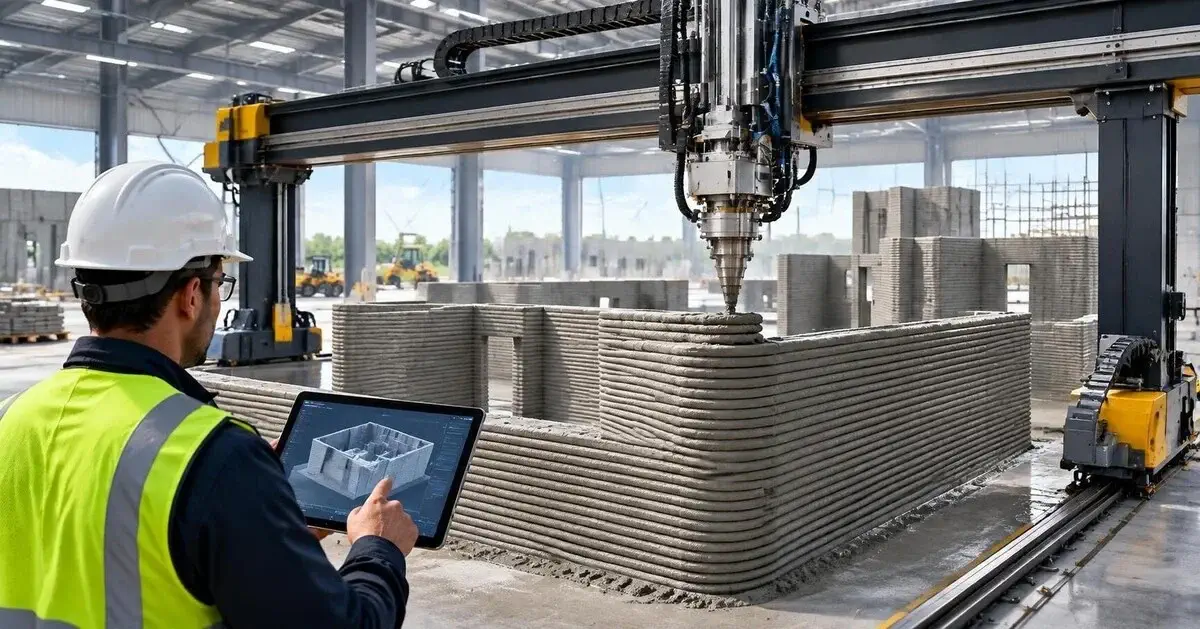
3D printing, also known as additive construction, is an emerging technology that creates building components by depositing material layer by layer according to a digital design.
Unlike traditional construction methods that often involve extensive formwork, cutting, and manual assembly, 3D printing uses computer- controlled equipment to produce selected structural and architectural components.
Applications of 3D Printing in Construction
- Residential construction: Printing selected wall systems and building components.
- Architectural elements: Creating complex shapes and customised design features.
- Infrastructure: Producing selected components for specialised construction applications.
- Prefabrication: Manufacturing components in controlled environments before installation.
Advantages of 3D Printing
- Potential reduction in material waste.
- Greater flexibility for complex geometries.
- Reduced dependence on some repetitive manual activities.
- Potentially faster production for suitable components.
- Better integration between digital design and manufacturing.
Despite its potential, 3D printing still faces challenges involving material performance, structural certification, equipment costs, transportation, and compliance with local building regulations.
3. Robotics and Automation in Construction
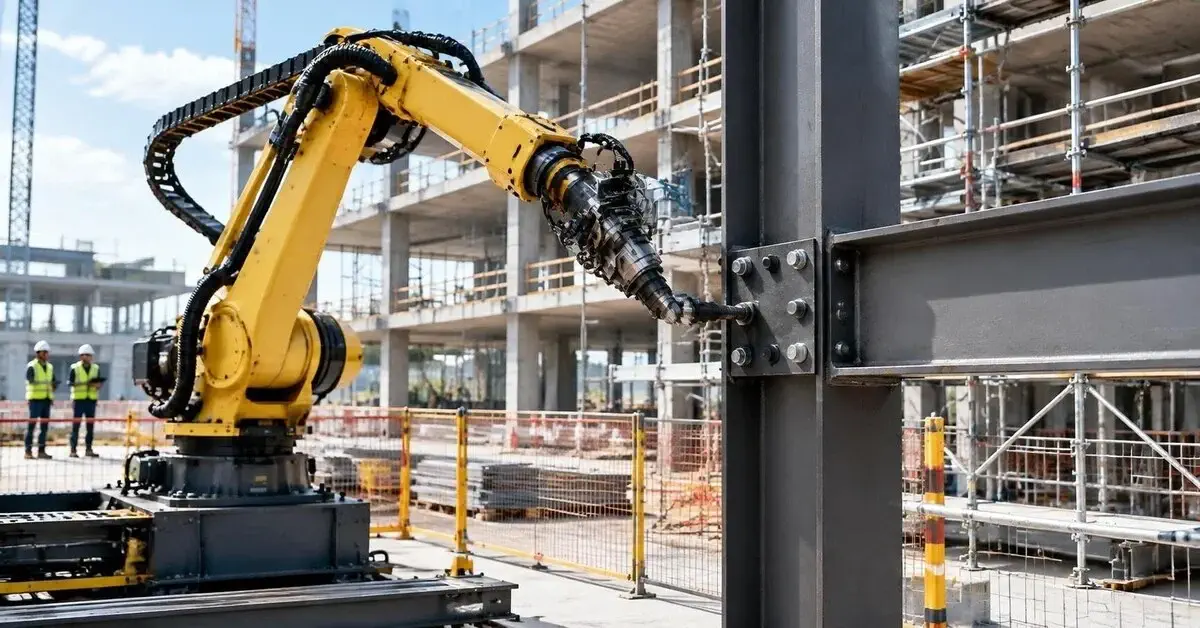
Robotics and automation are changing how construction activities are performed. Advanced machines and robotic systems can assist workers with repetitive, physically demanding, and precision-based tasks.
Construction sites often involve challenging working conditions. Robotics can help improve consistency and reduce the need for workers to perform certain hazardous or repetitive activities manually.
Important Applications of Construction Robotics
- Bricklaying robots: Automated systems that assist with laying bricks and masonry units.
- Demolition robots: Remotely operated machines used in selected demolition activities.
- Autonomous equipment: Machines that use sensors and navigation systems to perform selected site operations.
- Surveying robots: Robotic systems and drones that collect site measurements and progress information.
- Material handling: Automated equipment that helps move and position construction materials.
Why Robotics Matter
Robotics can improve precision, productivity, and operational safety when properly selected and supervised. These systems are particularly useful for repetitive tasks where consistent execution is important.
Nevertheless, construction robotics requires investment, skilled operators, maintenance, and careful coordination with conventional construction processes.
4. BIM and Digital Twin Technology
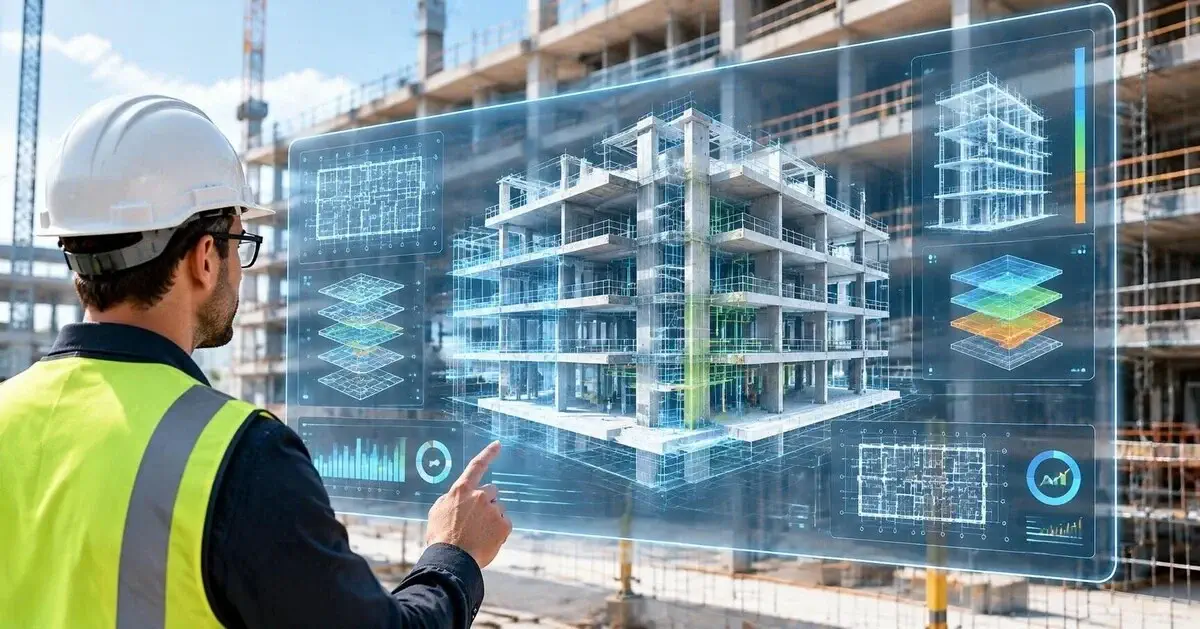
Building Information Modeling (BIM) has become an important part of modern construction. It enables project teams to create and manage digital representations of buildings and infrastructure throughout different stages of a project.
BIM models contain more than three-dimensional geometry. Depending on the project and implementation, they can include information about materials, quantities, specifications, systems, schedules, and costs.
How BIM Improves Construction Projects
- 3D visualisation: Helps stakeholders understand building designs before construction begins.
- Clash detection: Identifies potential conflicts between architectural, structural, and MEP systems.
- Quantity estimation: Supports material take-offs and cost planning.
- Project coordination: Improves information sharing between different engineering disciplines.
- Construction planning: BIM models can be linked with schedules and cost information.
What Is Digital Twin Technology?
A digital twin is a digital representation of a physical asset, system, or process. When connected to suitable operational data, sensors, and monitoring systems, it can help teams understand real-world performance and evaluate different scenarios.
In construction and building operations, digital twins can support facility management, equipment monitoring, energy analysis, and maintenance planning.
Key difference: BIM primarily supports the creation and management of structured project information, while a digital twin can connect a digital representation with ongoing real-world operational data. BIM information may contribute to a digital twin, but the two technologies are not interchangeable.
5. Sustainable Construction Materials and Green Technologies

Sustainability is becoming a major priority in the construction industry. Buildings and infrastructure require significant amounts of materials, energy, water, and transportation resources. As a result, construction companies are increasingly exploring methods to reduce environmental impact.
Sustainable construction combines environmentally responsible materials, efficient design, renewable energy, waste reduction, and improved building performance.
Innovative Sustainable Construction Materials
- Low-carbon concrete: Concrete solutions designed to reduce embodied carbon through alternative binders and material optimisation.
- Recycled construction materials: Reusing suitable concrete, steel, timber, and other materials.
- Engineered timber: Products such as cross-laminated timber used in suitable building applications.
- Recycled steel: Steel produced with recycled content to support more resource-efficient manufacturing.
- Self-healing concrete: Specially developed concrete that can repair certain types of cracks under suitable conditions.
Green Building Technologies
- Solar photovoltaic systems.
- Energy-efficient heating, ventilation, and air-conditioning systems.
- Smart lighting and building management systems.
- Rainwater harvesting and water-efficient fixtures.
- Green roofs and energy-efficient building envelopes.
- Improved insulation and natural ventilation strategies.
Sustainable construction can help reduce energy consumption, material waste, and environmental impact. The actual benefits depend on material selection, building design, local climate, construction practices, and the building's entire lifecycle.
Major Benefits of Construction Innovations
The adoption of modern construction technologies can improve several aspects of project delivery. Although the benefits vary depending on the technology and project requirements, the following improvements are particularly important.
| Innovation | Key Benefits | Potential Applications |
|---|---|---|
| Artificial Intelligence | Better predictions, planning, and decision support | Scheduling, estimating, safety monitoring |
| 3D Printing | Design flexibility and potential material savings | Building components, walls, architectural elements |
| Robotics | Precision, automation, and reduced repetitive work | Masonry, demolition, material handling |
| BIM and Digital Twins | Better coordination and lifecycle information | Design, construction, facility management |
| Sustainable Technologies | Resource efficiency and lower environmental impact | Green buildings, energy-efficient infrastructure |
How Construction Companies Can Prepare for These Innovations
Adopting new technologies requires more than purchasing advanced equipment or software. Construction companies must develop a clear strategy that connects technology investments with project requirements, workforce capabilities, and long-term business goals.
1. Invest in Digital Skills and Workforce Training
Engineers, architects, project managers, and site supervisors need appropriate training to work with AI-powered software, BIM platforms, automated equipment, and digital project management tools.
2. Start with Small Technology Pilot Projects
Instead of implementing several technologies simultaneously, companies can begin with pilot projects. This approach helps evaluate implementation costs, productivity improvements, training needs, and technical limitations.
3. Improve Collaboration Between Project Teams
Digital collaboration platforms can help architects, structural engineers, MEP consultants, contractors, and suppliers share information and coordinate project activities more effectively.
4. Focus on Long-Term Return on Investment
Technology investments should be evaluated based on measurable outcomes, including project duration, labour productivity, material waste, rework, safety performance, and operational costs.
Challenges in Adopting New Construction Technologies
Although technological innovations offer significant advantages, their adoption also presents challenges. Understanding these barriers can help construction companies develop realistic implementation strategies.
| Challenge | Potential Impact | Possible Solution |
|---|---|---|
| High initial investment | Increased project and operational costs | Start with pilot projects and phased investment |
| Skills shortages | Difficulty operating advanced systems | Provide technical training and recruitment |
| Resistance to change | Slow adoption across teams | Demonstrate benefits and involve employees |
| Data security concerns | Risk of unauthorised access to project information | Implement cybersecurity policies and access controls |
| Integration difficulties | Problems connecting different software platforms | Select compatible systems and establish data standards |
| Regulatory requirements | Delays in approving new construction methods | Follow local building codes and obtain necessary approvals |
What Does the Future of Construction Look Like?
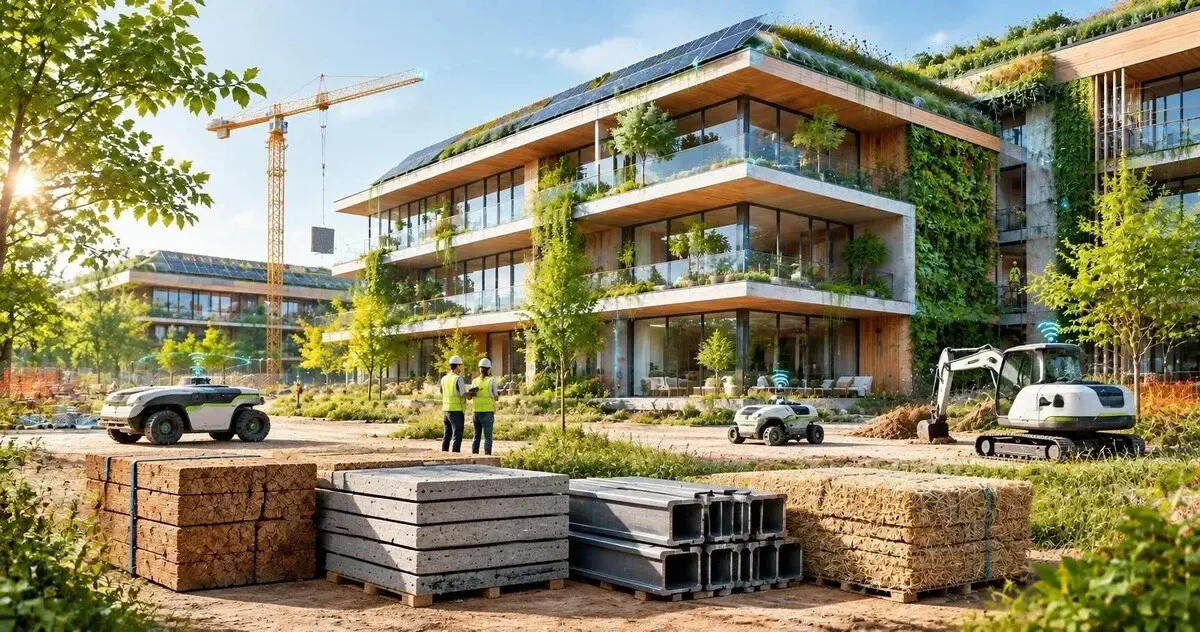
The future of construction will be shaped by the integration of artificial intelligence, automation, advanced materials, digital engineering, and sustainable building practices.
Some important developments expected to influence the industry include:
- Autonomous construction equipment: Machines capable of performing selected site activities with limited human intervention.
- AI-powered project management: Intelligent systems that analyse project information and help identify potential delays and cost overruns.
- Smart buildings: Structures equipped with connected sensors and automated systems to monitor energy consumption and equipment performance.
- Advanced construction materials: High-performance concrete, recycled materials, and innovative building products.
- Integrated digital twins: Digital representations that connect design information with construction progress and building operations.
- Low-carbon construction: Greater use of renewable energy, sustainable materials, and energy-efficient construction methods.
These developments will not eliminate the need for skilled construction professionals. Instead, they will change how engineers, architects, contractors, and project managers perform their work.
Conclusion
The construction industry is entering a new era driven by technological innovation. Artificial intelligence, 3D printing, robotics, Building Information Modeling, digital twins, and sustainable construction materials are changing how buildings and infrastructure are designed, planned, and delivered.
These five innovations offer opportunities to improve productivity, reduce construction costs, minimise material waste, enhance workplace safety, and support environmentally responsible development.
However, successful adoption will depend on more than technology alone. Construction companies must invest in employee training, digital infrastructure, effective project coordination, and long-term planning.
Companies that embrace these developments and adapt their working methods will be better positioned to meet the changing demands of the construction industry.
The future of construction will not simply be about building faster. It will be about building smarter, safer, more efficiently, and more sustainably.
Frequently Asked Questions (FAQs)
1. What are the five best innovations changing the construction industry?
Five important innovations are artificial intelligence, 3D printing, robotics and automation, BIM and digital twin technology, and sustainable construction materials and green building technologies.
2. How is artificial intelligence used in construction?
AI is used for predictive project planning, cost estimation, design optimisation, safety monitoring, equipment maintenance, and analysis of construction project data.
3. What is 3D printing in construction?
3D printing in construction is an additive manufacturing process that uses computer-controlled equipment to deposit construction materials layer by layer to create building components or structures.
4. How are robots used in construction?
Construction robots can assist with masonry, demolition, surveying, material handling, and other repetitive or precision-based tasks. Their applications depend on site conditions and equipment capabilities.
5. What is the difference between BIM and digital twin technology?
BIM provides structured digital information about a building or infrastructure project. A digital twin connects a digital representation with real-world data to help monitor and analyse the performance of a physical asset.
6. What are sustainable construction materials?
Sustainable construction materials are products selected or developed to reduce environmental impact over their lifecycle. Examples include recycled steel, low-carbon concrete, engineered timber, and recycled building materials.
7. What is the future of the construction industry?
The construction industry is expected to become increasingly digital, automated, data-driven, and sustainable through the adoption of AI, robotics, BIM, digital twins, advanced materials, and smart building technologies.