
Best Concrete Mix for Driveway Repair: The Ultimate Expert Guide
A damaged driveway not only affects curb appeal but can also compromise the safety and longevity of your property's entryway. Choosing the best concrete mix for driveway repair is crucial to achieving a durable, long-lasting, and professional-grade finish.
Why Choosing the Right Concrete Mix Matters for Driveways
A driveway endures constant vehicle loads, temperature fluctuations, moisture exposure, freeze - thaw cycles, and abrasive forces. The wrong concrete mix can result in premature cracking, spalling, scaling, and potholes. The right mix provides:
- High compressive strength
- Superior bonding capability
- Fast-setting performance
- Resistance to freeze - thaw damage
- Long-term durability under heavy loads
Understanding the Types of Concrete Mixes for Driveway Repairs
1. High-Strength Concrete Mix
A high-strength mix typically offers 5,000 PSI or more, making it an excellent choice for heavy-load driveways. These mixes provide exceptional durability and are recommended for:
- Deep crack repairs
- Large patching areas
- Full-section replacements
High-strength mixes contain superior cement-to-aggregate ratios, producing dense, long-lasting concrete.
2. Fast-Setting Concrete Mix
For homeowners needing quick repairs with minimal downtime, fast-setting concrete is ideal. These mixes cure in as little as 20 - 40 minutes, allowing same-day use of the driveway.
Benefits include:
- Quick setting time
- Enhanced adhesion
- Reduced downtime
- Suitable for small-to-medium repair areas
Fast-setting mixes are perfect for potholes, edge repairs, and surface defects.
3. Polymer-Modified Concrete Mix
Polymer-modified concrete mixes incorporate latex or acrylic additives, creating a more flexible and superior bonding material.
These mixes offer:
- Enhanced tensile and flexural strength
- Stronger adhesion to existing concrete
- Improved resistance to cracking
- Better performance in freeze - thaw environments
Perfect for thin overlays, surface leveling, and patch repair.
4. Crack-Resistant Concrete Mix
Designed for areas with high thermal movement, crack-resistant mixes contain fibers that enhance structural stability.
Advantages:
- Reinforced with synthetic fibers
- Better shrinkage control
- Long-lasting performance under varying temperatures
This mix excels in hairline crack repairs and resurfacing.
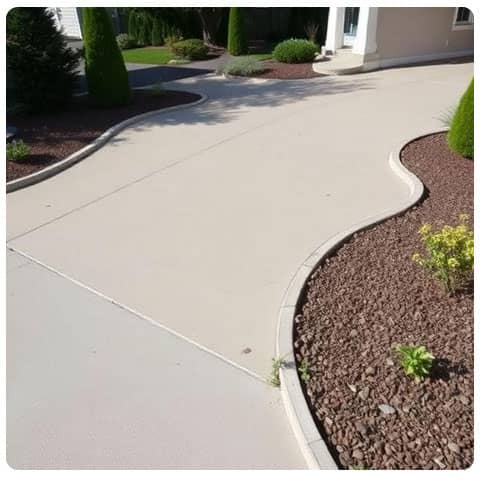
Top Recommended Concrete Mixes for Driveway Repair
1. High-Performance Ready Mix (5000 PSI)
Ideal for structural repairs, this mix ensures that the repaired sections can handle significant pressure and vehicle traffic. The higher PSI ensures longevity and reduces the risk of future deterioration.
2. Fast Set Repair Mortar
This is a specialized product formulated for rapid repairs where time is limited. It provides exceptional bonding and strength, making it perfect for patching, slab edge fixes, and potholes.
3. Polymeric Bonded Patching Mix
Polymer additives significantly improve adhesion, making this mix ideal for repairs over:
- Old concrete
- Worn surfaces
- Lightweight driveways
It is also highly workable and provides a smooth finish.
4. Fiber-Reinforced Concrete Patch Mix
This mix is specially engineered for crack prevention, which is essential in climate zones with substantial temperature changes. Synthetic fibers enhance durability and prevent future microcracks.
Best Concrete Mix for Specific Driveway Repair Needs
Best Mix for Pothole Repair
Use a Fast-Setting High-Strength Mix (4000 - 5000 PSI).
It ensures quick curing and long-term durability, and it withstands vehicle load immediately.
Best Mix for Crack Filling
For cracks up to 1 inch, a Polymer-Modified Concrete Mix or Vinyl Concrete Patcher provides unmatched bonding and flexibility.
Best Mix for Surface Resurfacing
A Polymer-Modified Resurfacer offers a smooth, new-like finish. This is ideal for driveways with:
- Scaling
- Minor surface wear
- Aged appearance
These thin overlays rejuvenate the concrete while retaining strength.
Best Mix for Deep Structural Repairs
For repairs deeper than 2 inches, use High-Strength 5000 PSI Concrete.
Its durability ensures structural integrity across the repaired area.
Essential Additives That Improve Driveway Repair Mixes
1. Concrete Bonding Agent
Applying a bonding agent ensures the new concrete adheres properly to old surfaces. It minimizes delamination and increases lifespan.
2. Fiber Reinforcement
Fibers prevent microcracking during the curing process. They greatly improve:
- Stability
- Impact resistance
- Load-bearing performance
3. Acrylic Additives
These additives boost flexibility and water resistance, preventing freeze - thaw-induced cracking.
4. Air-Entraining Agents
Air-entrained concrete performs exceptionally well in cold climates by allowing water to expand safely inside the mix.
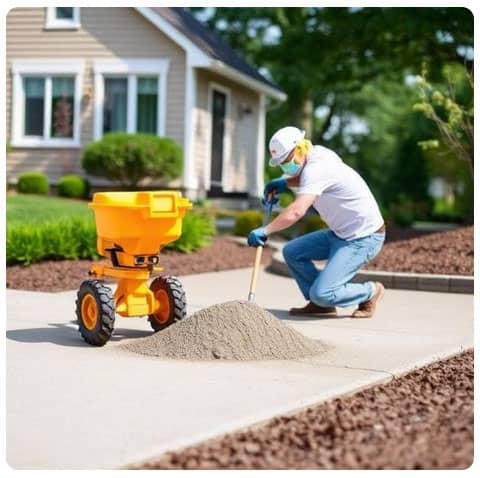
How to Choose the Best Concrete Mix for Your Driveway Repair
To select the right mix, consider:
1. Type of Damage
- Shallow cracks: Polymer-modified patch
- Deep cracks: High-strength repair mix
- Surface damage: Resurfacer
2. Climate Conditions
- Freeze - thaw regions: Fiber-reinforced or polymer-modified
- Hot climates: Crack-resistant mix
3. Load Requirements
- Heavy traffic: 5000 PSI
- Residential traffic: 4000 PSI
4. Repair Depth
- < 1 inch: Patch mix
- ≥ 2 inches: High-strength mix
Step-by-Step Guide to Repairing a Concrete Driveway Properly
Step 1: Clean and Prepare the Surface
Remove debris, dirt, oil stains, and loose concrete. A clean surface improves bonding.
Step 2: Apply a Bonding Agent
Essential for ensuring that the new concrete adheres to old surfaces.
Step 3: Mix the Concrete Properly
Follow manufacturer instructions for water ratios to ensure optimal strength.
Step 4: Place the Concrete
Apply the mix evenly and compact thoroughly to eliminate air pockets.
Step 5: Finish and Smooth the Surface
Use a trowel to smooth the surface. Apply a broom finish for traction.
Step 6: Allow Proper Curing
Curing is crucial for achieving maximum strength. Keep the surface moist and shielded from direct sunlight.
How to Maintain a Repaired Concrete Driveway
- Seal the surface annually to prevent water intrusion.
- Clean stains promptly to avoid discoloration.
- Fill small cracks early to avoid structural damage.
- Avoid heavy loads during early curing (first 48 hours).
Conclusion
Choosing the best concrete mix for driveway repair ensures your investment lasts for decades. With high-quality materials, proper preparation, and strategic use of additives, your driveway will remain durable, visually appealing, and resistant to environmental stress.
Please watch the following short video for Best Concrete Mix for Driveway Repair
Also Read:
 Revolutionary Construction Techniques: Pioneering the Future of Building
Revolutionizing Construction with Pre-engineered/Precast Flat Panel Systems
Augmented Reality: Revolutionizing the Building Industry
Maximizing Efficiency and Flexibility with Raised Access Flooring
Mastering Insulating Concrete Formwork (ICF) Technique for Superior Construction