
The AI Boom's New Building Ground: How Artificial Intelligence Is Transforming Construction, Infrastructure, and the Built Environment
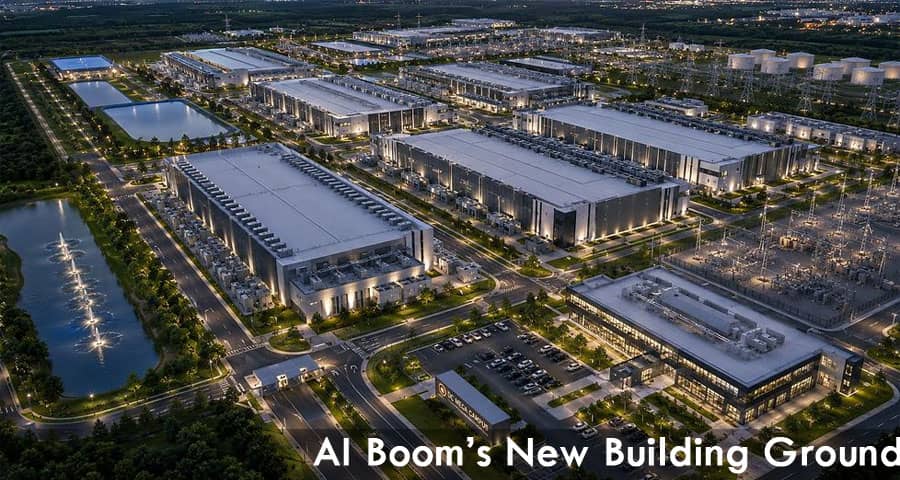
Introduction: The AI Revolution Is Creating a New Era of Construction
Artificial intelligence (AI) is transforming industries worldwide, and its rapid expansion is creating an unprecedented demand for physical infrastructure. Behind every AI chatbot, intelligent application, automated business process, and advanced machine learning system is a vast network of computing infrastructure that requires buildings, electricity, cooling systems, connectivity, and highly specialised engineering.
As AI adoption accelerates, data centres are becoming the new building ground of the digital economy. Technology companies, cloud service providers, and infrastructure developers are investing heavily in facilities capable of supporting increasingly powerful AI workloads. These developments are changing the way we approach architecture, structural engineering, mechanical and electrical systems, construction management, and infrastructure planning.
The AI boom is therefore not simply a technology story. It is also a major construction and infrastructure story. From hyperscale data centres and semiconductor manufacturing facilities to renewable energy projects and advanced cooling infrastructure, artificial intelligence is creating new opportunities for the global construction industry.
We are entering a period in which the physical foundations of artificial intelligence will influence the future of the built environment.
1. AI Data Centres: The New Infrastructure Powerhouses
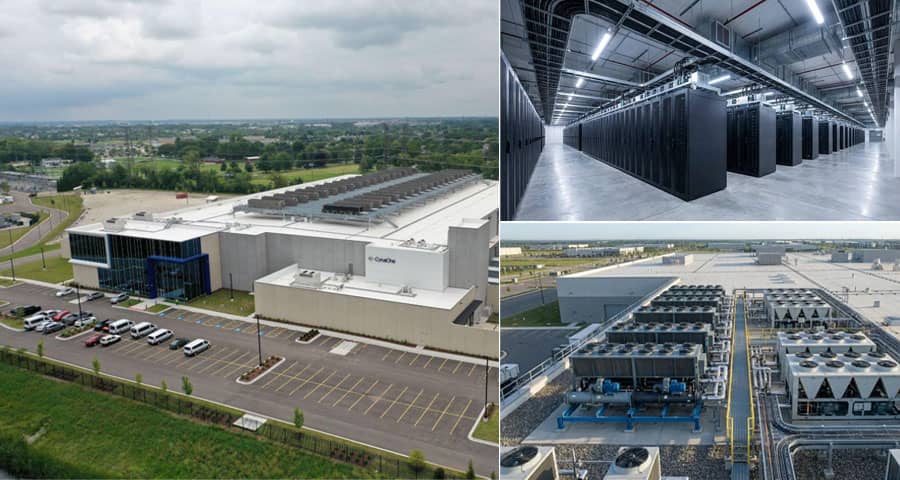
Data centres are the backbone of artificial intelligence. They provide the computing power required to train large language models, process enormous datasets, operate cloud platforms, and deliver AI-powered services.
Traditional data centres were primarily designed to support enterprise applications, web hosting, cloud storage, and conventional computing operations. However, modern AI workloads require significantly different infrastructure.
AI training and inference systems depend on high-performance GPUs, specialised processors, high-speed networking equipment, and advanced storage technologies. These systems generate substantial heat and require reliable power supplies and sophisticated cooling infrastructure.
Consequently, AI data centre construction requires a different approach to building design and engineering.
Key construction considerations include:
- High-density structural design: Floors and equipment platforms must accommodate heavy computing equipment and associated infrastructure.
- Advanced electrical infrastructure: Facilities require reliable power distribution, backup generators, transformers, and uninterrupted power supplies.
- Specialised cooling systems: Liquid cooling, direct-to-chip cooling, and advanced HVAC technologies help manage increasing thermal loads.
- Fire protection: Specialised fire detection and suppression systems protect sensitive equipment and building infrastructure.
- Network infrastructure: High-speed fibre connectivity and robust telecommunications systems ensure efficient data transmission.
- Operational resilience: Redundant systems help maintain continuous operations during equipment failures or power interruptions.
As AI computing requirements increase, we can expect data centre buildings to become larger, more sophisticated, and more technically demanding.
2. The Growing Demand for AI-Ready Buildings
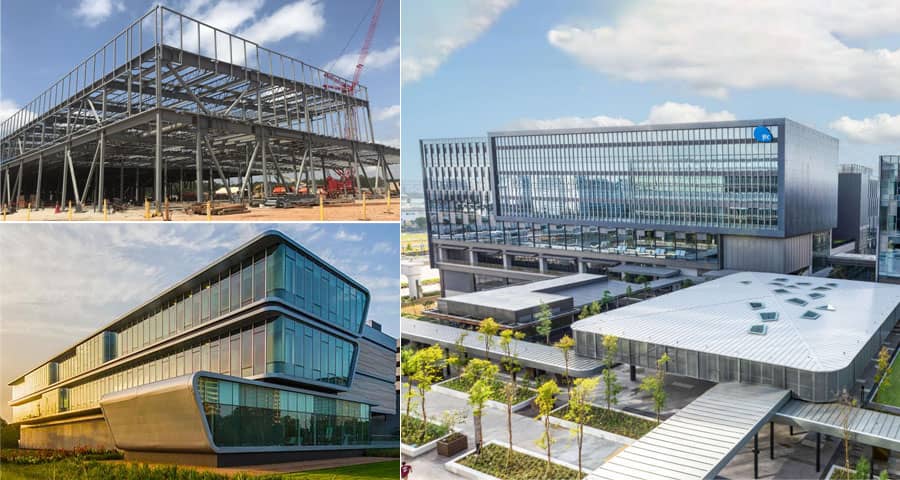
The next generation of buildings will increasingly need to accommodate AI-driven operations. This includes not only dedicated data centres but also research facilities, advanced manufacturing plants, smart factories, and technology campuses.
An AI-ready building is designed to support advanced digital infrastructure through integrated electrical, mechanical, communication, security, and automation systems.
Intelligent Building Management Systems
Building Management Systems (BMS) integrate different building services into a centralised platform. AI-powered systems can analyse operational data, identify unusual performance patterns, and help optimise energy consumption.
For example, intelligent building management can automatically adjust ventilation, lighting, and cooling according to occupancy, equipment performance, and environmental conditions.
Flexible Infrastructure Design
Technology requirements change rapidly. Therefore, buildings must accommodate future equipment upgrades, additional computing capacity, and evolving operational requirements.
Flexible floor layouts, modular electrical systems, accessible service corridors, and adaptable mechanical infrastructure can improve long-term building performance.
Advanced Energy Management
AI facilities consume substantial amounts of electricity. Efficient energy management is therefore essential for controlling operational costs and maintaining sustainability.
Integrating renewable energy, battery storage, smart electrical distribution, and intelligent monitoring can improve energy performance.
Integrated Digital Connectivity
AI-ready buildings require reliable connectivity between computing systems, sensors, security infrastructure, and building automation platforms.
3. Why AI Infrastructure Requires Advanced Structural Engineering
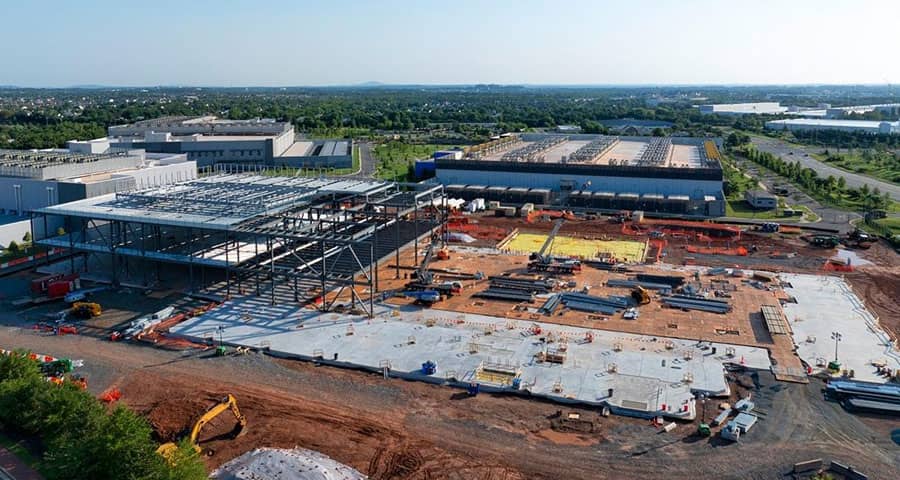
Structural engineering plays a critical role in the development of modern AI infrastructure.
Unlike conventional commercial buildings, AI data centres may contain extremely heavy server racks, power distribution equipment, cooling machinery, and backup systems. These components introduce specialised structural requirements that must be addressed during the design stage.
Floor Loading and Equipment Support
High-density computing equipment can impose significant concentrated loads on building floors. Engineers must evaluate dead loads, live loads, equipment loads, vibration, and maintenance requirements.
Vibration Control
Sensitive computing equipment can be affected by excessive vibration. Mechanical equipment, generators, cooling systems, and nearby industrial activities may introduce vibrations that require careful evaluation.
Structural Steel and Reinforced Concrete
Both structural steel and reinforced concrete have important applications in data centre construction.
Steel structures can support large industrial spans, accommodate heavy mechanical equipment, and provide flexibility during construction. Reinforced concrete provides durability, structural mass, and fire-resistance benefits when appropriately designed.
Foundation Design and Geotechnical Investigation
Large data centre developments require comprehensive geotechnical investigations. Soil conditions, groundwater levels, settlement characteristics, bearing capacity, and seismic considerations influence foundation selection.
Accurate structural analysis and coordinated engineering design are essential for ensuring the long-term reliability of AI infrastructure.
4. AI Is Increasing Demand for Mechanical, Electrical, and Plumbing Engineering
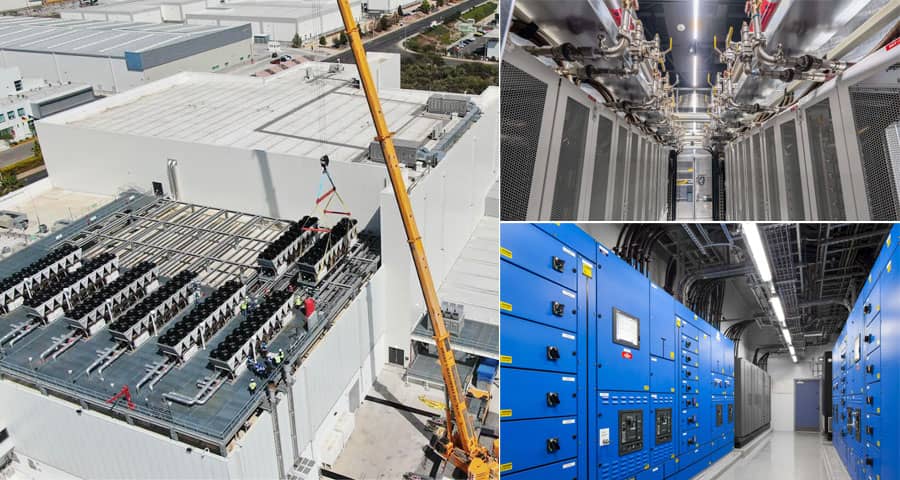
Mechanical, Electrical, and Plumbing (MEP) engineering is one of the most important components of AI data centre development.
Mechanical Engineering and Cooling Systems
AI processors generate significant heat during operation. Maintaining appropriate operating temperatures is essential for protecting equipment and ensuring reliable performance.
- Direct-to-chip liquid cooling.
- Immersion cooling.
- Chilled-water cooling systems.
- Computer Room Air Conditioning (CRAC).
- Computer Room Air Handler (CRAH) systems.
- Advanced heat exchangers.
- Hot-aisle and cold-aisle containment.
Electrical Engineering and Power Distribution
AI data centres require dependable electricity to support computing equipment and building services.
- High-voltage substations.
- Transformers and switchgear.
- Uninterruptible Power Supply (UPS) systems.
- Backup diesel or alternative-fuel generators.
- Power Distribution Units (PDUs).
- Battery energy storage.
- Intelligent electrical monitoring.
Plumbing and Water Management
Water management is another important consideration, particularly for facilities using water-based cooling technologies. Engineers must design appropriate piping networks, water treatment systems, drainage infrastructure, leak detection, and water management strategies.
5. The Role of Artificial Intelligence in Construction Project Planning
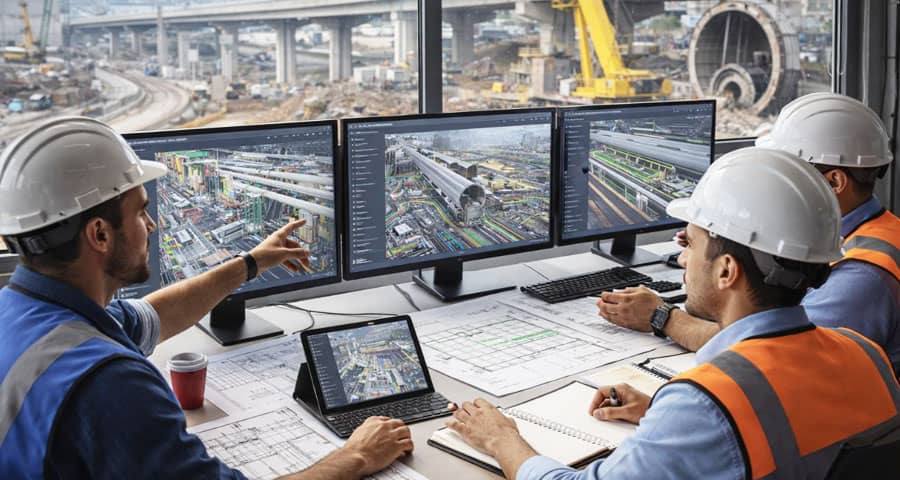
While AI is creating demand for new buildings, it is also changing how those buildings are planned and constructed.
Construction companies are increasingly exploring artificial intelligence to improve project coordination, reduce errors, optimise resources, and enhance construction productivity.
- Project scheduling: Machine learning algorithms can analyse project schedules, identify potential delays, and help evaluate alternative timelines.
- Cost estimation: AI tools can analyse historical project data, quantities, labour rates, and material prices to support cost forecasting.
- Risk management: Predictive analytics can identify potential construction risks associated with delays, resource shortages, and safety incidents.
- Resource optimisation: AI can help project teams plan labour, equipment, materials, and construction activities.
- Quality control: Computer vision can analyse construction site images and identify visible deviations from approved designs.
6. Building Information Modelling (BIM) and AI: A Powerful Combination
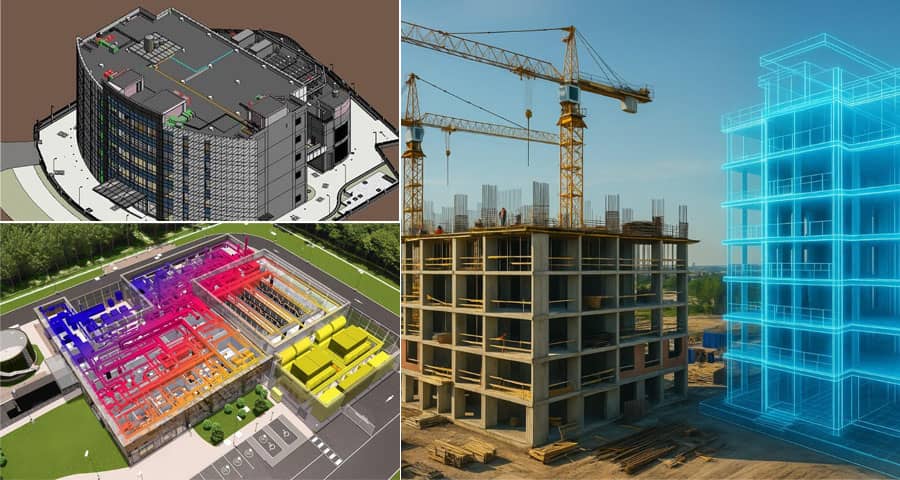
Building Information Modelling (BIM) is becoming an essential technology for planning and delivering complex infrastructure projects. When combined with artificial intelligence, BIM can help construction professionals improve design coordination, identify potential conflicts, and manage project information more effectively.
Automated Clash Detection
Large data centre projects involve extensive coordination between structural, architectural, mechanical, electrical, and plumbing systems.
AI-assisted coordination can help identify HVAC ducts conflicting with structural beams, electrical cable trays interfering with plumbing systems, cooling pipes crossing equipment access routes, and insufficient maintenance clearances around mechanical equipment.
Generative Design and Design Optimisation
Generative design uses computational methods to explore multiple design alternatives based on specified requirements and constraints. AI can help engineers evaluate different building layouts, equipment arrangements, structural configurations, and service routes.
Digital Twins and Real-Time Monitoring
A digital twin is a digital representation of a physical asset or system that can be updated using operational information.
In an AI data centre, digital twins can integrate information from sensors, building management systems, electrical monitoring, and mechanical equipment.
- Energy consumption.
- Cooling performance.
- Equipment temperatures.
- Electrical system performance.
- Maintenance requirements.
- Building operational conditions.
7. AI Infrastructure Is Driving Demand for Sustainable Construction
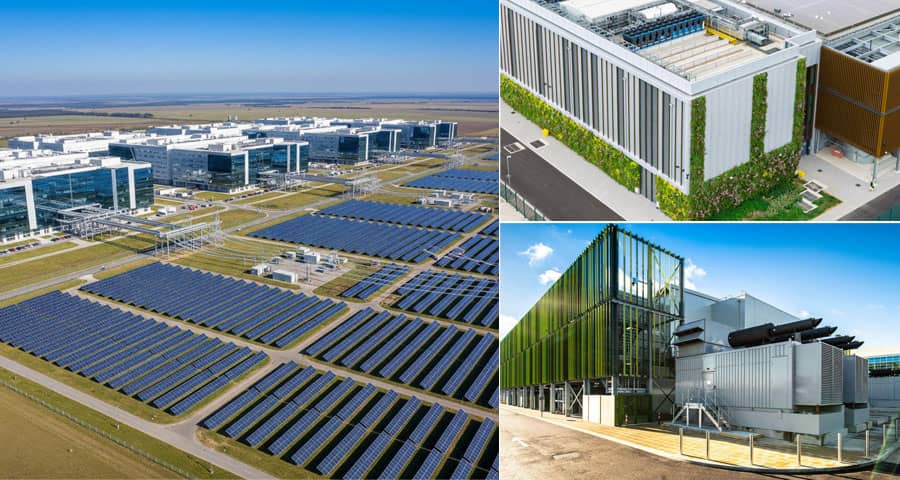
The rapid expansion of AI infrastructure creates an important sustainability challenge. Data centres require significant electricity, and their cooling systems can introduce additional energy and water demands.
According to the International Energy Agency (IEA), global data centre electricity consumption increased by 17% in 2025, while electricity consumption from AI-focused data centres increased by 50%. The IEA projects that total data centre electricity consumption could reach approximately 950 TWh by 2030.
Renewable Energy Integration
Data centre developers are exploring renewable energy sources to reduce dependence on conventional electricity generation. Solar power, wind energy, hydropower, and other low-carbon energy sources can contribute to digital infrastructure requirements.
Energy-Efficient Building Design
Energy efficiency should be considered from the earliest stages of project planning. Architectural orientation, insulation, building envelope performance, equipment layouts, lighting systems, and cooling infrastructure can all influence energy consumption.
Water-Efficient Cooling Technologies
Developers can explore water-efficient cooling systems, closed-loop solutions, wastewater reuse, and advanced monitoring to improve water management.
Sustainable Construction Materials
The environmental impact of data centre construction extends beyond operational energy consumption. We can reduce environmental impacts by evaluating lower-carbon materials, optimising structural quantities, reducing construction waste, and improving material procurement practices.
Sustainable AI infrastructure must balance computing performance, energy efficiency, water management, and environmental responsibility.
8. The AI Boom Is Creating New Opportunities in Construction and Engineering
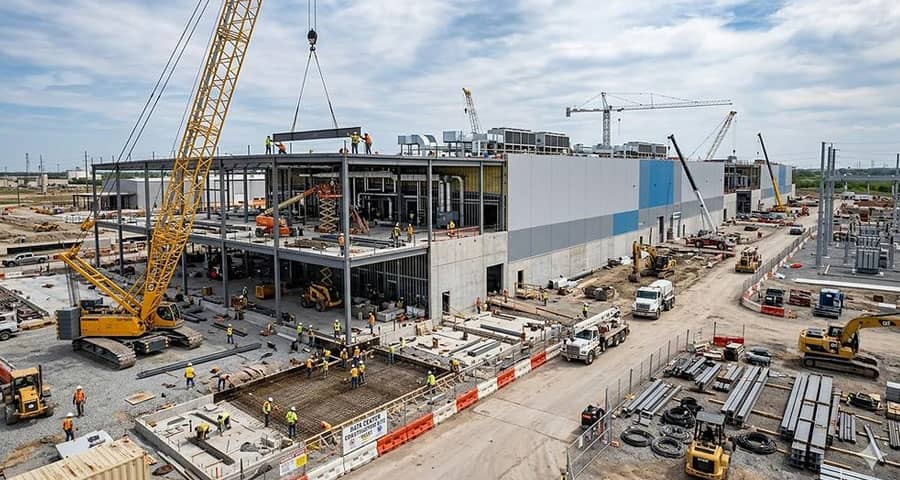
The expansion of AI infrastructure is creating opportunities across multiple construction and engineering disciplines.
Architectural Design and Engineering Consultancy
Data centre projects require specialised architectural and engineering expertise. Consultants can provide feasibility studies, concept design, detailed engineering, construction documentation, and technical coordination.
Structural Engineering Services
Structural engineers are responsible for designing foundations, structural frames, equipment platforms, and other load-bearing components.
MEP Design and Coordination
Mechanical and electrical engineering services are particularly important because of the high power density and cooling requirements of AI infrastructure.
BIM Modelling and Documentation
BIM service providers can support data centre projects through:
- Architectural BIM modelling.
- Structural BIM modelling.
- MEP BIM modelling.
- Revit family creation.
- BIM coordination.
- Clash detection.
- Shop drawings.
- Construction documentation.
- Scan-to-BIM services.
- As-built BIM modelling.
Quantity Surveying and Cost Estimation
Data centre projects involve specialised equipment, high-value electrical systems, mechanical infrastructure, and complex construction packages. Quantity surveyors can support material take-offs, BOQs, cost planning, tender documentation, and project cost control.
Construction Management and Project Delivery
Construction management teams play an important role in maintaining project schedules, managing procurement, monitoring quality, and coordinating site activities.
9. India's Growing Role in the AI Data Centre Construction Market
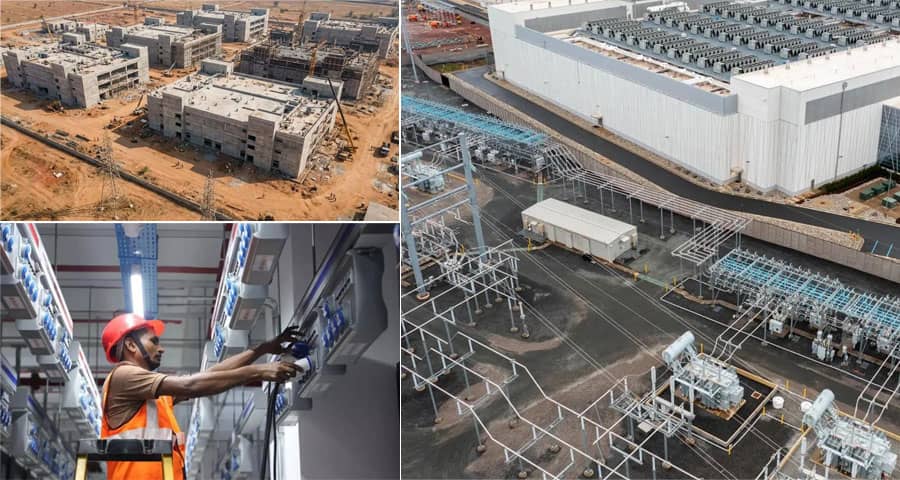
India is emerging as an important destination for digital infrastructure investment.
The country's expanding digital economy, growing cloud adoption, technology workforce, and increasing demand for AI services are supporting the development of new data centre facilities.
According to JLL's August 2026 India data centre market report, India's data centre capacity is projected to increase from approximately 1.6 GW in mid-2026 to 6 GW by 2029.
Major Data Centre Development Locations
Mumbai: Mumbai benefits from its established telecommunications infrastructure, submarine cable connectivity, financial services ecosystem, and access to major commercial markets.
Chennai: Chennai is an important connectivity and technology hub, supported by submarine cable infrastructure and industrial development.
Hyderabad: Hyderabad offers a growing technology ecosystem, established IT infrastructure, and opportunities for large-scale digital infrastructure development.
Pune: Pune's technology, manufacturing, and engineering ecosystem makes it an attractive location for digital infrastructure investment.
Delhi-NCR: The National Capital Region provides access to a large enterprise market, telecommunications infrastructure, and a growing technology ecosystem.
Construction Opportunities in India
- Industrial building construction.
- Structural steel fabrication and detailing.
- Reinforced concrete detailing.
- MEP engineering and coordination.
- BIM modelling and documentation.
- Electrical infrastructure development.
- HVAC and cooling system installation.
- Fire protection engineering.
- Quantity surveying and estimation.
- Construction project management.
10. Challenges in Building the Next Generation of AI Infrastructure
Although AI infrastructure development offers significant opportunities, it also presents complex challenges. Successful projects require coordination between technology requirements, building design, energy availability, construction logistics, and long-term operational planning.
Power Availability and Grid Connectivity
Reliable electricity is one of the most important requirements for AI data centres. Developers must assess grid connectivity, substation capacity, power procurement, backup generation, and future electricity requirements.
Rising Construction Costs
AI data centres require specialised electrical equipment, high-performance cooling systems, advanced fire protection, and robust structural infrastructure. Accurate cost estimation and procurement planning are essential.
Supply Chain Limitations
Transformers, switchgear, generators, cooling equipment, advanced processors, and high-speed networking components are critical to project delivery. Limited manufacturing capacity and extended equipment lead times can affect construction schedules.
Skilled Workforce Availability
AI infrastructure projects require professionals with specialised expertise in electrical engineering, mechanical engineering, structural design, BIM coordination, data centre operations, and construction management.
Regulatory and Environmental Approvals
Data centre development requires compliance with applicable building regulations, fire safety requirements, environmental approvals, electrical standards, and local planning conditions.
11. The Future of AI-Powered Construction and Smart Infrastructure

The relationship between artificial intelligence and construction will continue to evolve. As AI capabilities improve, the construction industry will increasingly use intelligent technologies to manage complex projects, automate repetitive tasks, and improve engineering decisions.
Autonomous Construction Equipment
AI-powered construction equipment can support automated excavation, material handling, surveying, and selected repetitive construction activities.
AI-Powered Site Monitoring
Computer vision systems can analyse images and videos captured from construction sites to help identify safety risks, monitor construction progress, track equipment movement, and compare actual site conditions with planned activities.
Predictive Maintenance
AI algorithms can analyse equipment performance data to identify unusual operating conditions before they result in equipment failures.
Intelligent Energy Management
Future buildings will increasingly use AI to optimise electricity consumption based on occupancy, equipment loads, weather conditions, and operational requirements.
Integrated Digital Construction Ecosystems
The combination of BIM, AI, digital twins, cloud computing, and Internet of Things (IoT) technologies will support more connected construction workflows.
12. How Engineering and Construction Companies Can Prepare for the AI Infrastructure Boom
The rapid growth of AI infrastructure presents an opportunity for engineering and construction companies to expand their services and develop new technical capabilities.
To participate in this emerging market, companies should focus on specialised engineering services, digital technologies, and international project requirements.
- Invest in BIM capabilities: Develop expertise in Revit, Navisworks, AutoCAD, and other digital engineering platforms.
- Strengthen MEP expertise: Build technical capabilities in data centre cooling, electrical distribution, and mechanical system coordination.
- Develop structural engineering services: Focus on industrial structures, equipment platforms, foundations, and structural steel detailing.
- Adopt AI-powered workflows: Introduce AI tools for design analysis, documentation, project coordination, and quality control.
- Improve sustainability knowledge: Understand energy-efficient design, renewable energy integration, and sustainable building practices.
- Build international partnerships: Collaborate with global consultants, contractors, developers, and technology infrastructure companies.
- Train engineering professionals: Develop specialised skills to meet the technical requirements of advanced infrastructure projects.
Conclusion: AI Is Building More Than a Digital Future
The AI boom is creating a new foundation for global infrastructure development. Behind every advanced AI application is a physical environment that requires specialised buildings, electrical systems, cooling infrastructure, structural engineering, and reliable connectivity.
AI data centres are becoming one of the most important construction opportunities of the digital era. Their development is driving demand for architectural design, structural engineering, MEP services, BIM modelling, construction management, and sustainable infrastructure solutions.
At the same time, artificial intelligence is transforming construction methodologies through predictive analytics, generative design, digital twins, automated quality control, and intelligent project management.
For the construction and engineering industry, this transformation represents more than an emerging technology trend. It represents a fundamental shift in the type of infrastructure the world needs and the expertise required to deliver it.
As AI adoption continues to expand, we will see increasing collaboration between technology companies, infrastructure developers, engineering consultants, and construction professionals.
The future of artificial intelligence will not be built entirely in the digital world. It will depend on the physical buildings, power systems, engineering innovations, and construction expertise that make intelligent technologies possible.
Frequently Asked Questions (FAQs)
1. What is the AI boom's new building ground?
The AI boom's new building ground refers to the growing physical infrastructure required to support artificial intelligence. This includes hyperscale data centres, computing facilities, power infrastructure, cooling systems, semiconductor manufacturing facilities, and advanced technology campuses.
2. Why are AI data centres important for the construction industry?
AI data centres require specialised buildings with high electrical capacity, advanced cooling systems, strong structural foundations, fire protection, and reliable connectivity. Their development creates opportunities for architects, structural engineers, MEP consultants, BIM professionals, and construction companies.
3. How is artificial intelligence changing the construction industry?
AI is transforming construction through automated design analysis, predictive maintenance, cost estimation, project scheduling, computer vision, safety monitoring, and construction progress tracking.
4. What is the role of BIM in AI data centre construction?
BIM helps coordinate architectural, structural, and MEP systems within a shared digital building model. It supports clash detection, design visualisation, quantity estimation, construction documentation, and digital twin development.
5. Why do AI data centres require advanced cooling systems?
AI processors and high-performance computing equipment generate substantial heat. Advanced cooling technologies, including liquid cooling, direct-to-chip cooling, and chilled-water systems, help maintain suitable operating temperatures.
6. What engineering services are required for data centre construction?
Major services include architectural design, structural engineering, electrical engineering, HVAC design, plumbing, fire protection, BIM modelling, structural detailing, MEP coordination, quantity surveying, and construction management.
7. Is India becoming a major AI data centre construction market?
Yes. India is attracting investment in digital infrastructure because of increasing cloud adoption, AI demand, digital services, and technology-sector expansion. Mumbai, Chennai, Hyderabad, Pune, and Delhi-NCR are among the important data centre development markets.
8. What are the major challenges in AI data centre construction?
The major challenges include electricity availability, grid connectivity, high construction costs, specialised equipment shortages, cooling requirements, water management, regulatory approvals, and the availability of skilled engineering professionals.
9. What is the future of AI in construction engineering?
AI is expected to play an increasing role in generative design, BIM automation, structural analysis support, construction robotics, predictive maintenance, digital twins, energy management, and intelligent project monitoring.
10. How can construction companies benefit from the AI infrastructure boom?
Construction companies can benefit by developing specialised data centre construction capabilities, investing in BIM and MEP engineering, offering structural detailing services, adopting AI-powered design workflows, and collaborating with international infrastructure developers.
References and Further Reading
- International Energy Agency (IEA) - Data centre energy consumption and AI energy demand.
- JLL - Global data centre market research and industry outlook.
- Gartner - Data Centre Electricity Consumption Forecast for 2026.