
Structural Engineering in Renewable Energy Projects: Design, Innovation, Challenges, and Sustainable Solutions
Introduction
The global transition towards clean and sustainable energy has increased the demand for advanced infrastructure capable of supporting renewable energy generation. Structural engineering in renewable energy projects plays a fundamental role in designing, analysing, and constructing safe, durable, and efficient structures for solar power plants, wind farms, hydroelectric facilities, and other renewable energy installations.
As countries focus on reducing carbon emissions and achieving net-zero targets, renewable energy infrastructure continues to expand. These projects require specialised structural engineering solutions that can withstand environmental forces, optimise material consumption, improve operational efficiency, and deliver long-term performance.
Structural engineers contribute throughout the entire project lifecycle, from feasibility studies and conceptual design to detailed structural analysis, construction supervision, and maintenance planning. By integrating advanced engineering principles, innovative construction materials, and digital technologies, we can develop renewable energy infrastructure that meets demanding safety and sustainability requirements.
1. Understanding the Role of Structural Engineering in Renewable Energy
Structural engineering involves analysing and designing load-bearing systems to ensure stability, strength, serviceability, and durability. In renewable energy projects, these responsibilities become particularly important because structures are frequently exposed to challenging environmental conditions.
Unlike conventional buildings, renewable energy installations often operate in remote locations, offshore environments, mountainous regions, deserts, and areas exposed to extreme weather conditions.
We must consider several engineering requirements, including:
- Structural stability: Ensuring that foundations, supporting frames, towers, and other structural components remain stable under different loading conditions.
- Wind resistance: Designing structures to withstand wind pressure, uplift forces, turbulence, and extreme wind events.
- Seismic performance: Evaluating earthquake forces and designing structures that can withstand ground movement.
- Material durability: Selecting materials that resist corrosion, moisture, temperature variations, and environmental degradation.
- Foundation engineering: Developing suitable foundation systems based on soil conditions, groundwater levels, and structural loads.
- Long-term performance: Minimising maintenance requirements and extending the operational lifespan of renewable energy infrastructure.
By addressing these requirements during the design stage, we can improve project reliability while reducing construction risks and lifecycle costs.
2. Structural Engineering in Solar Power Projects
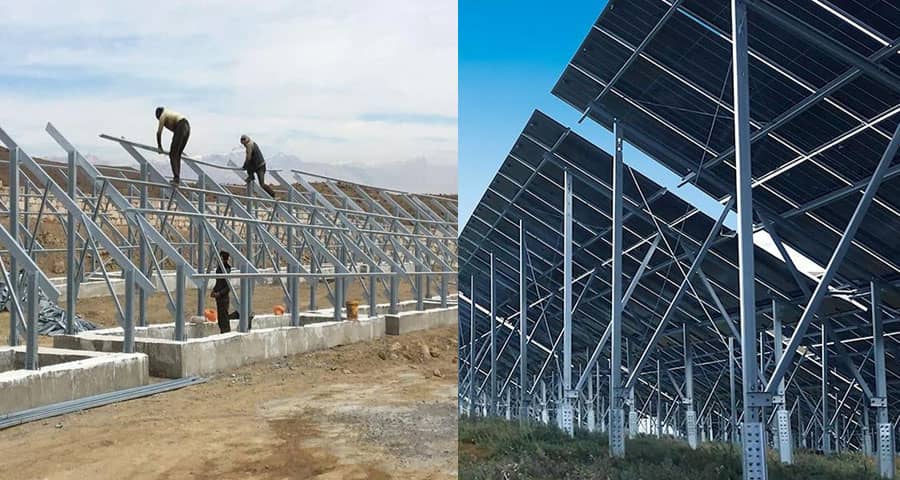
Solar energy is one of the fastest-growing renewable energy technologies. Solar photovoltaic (PV) installations convert sunlight into electricity using solar panels mounted on specially designed supporting structures.
Structural engineering is essential for ensuring that solar panels remain correctly positioned and securely supported throughout their operational life.
2.1 Solar Panel Mounting Structures
Solar mounting structures provide the necessary support for photovoltaic modules. Depending on project requirements, we commonly use:
- Fixed-tilt mounting structures: Support solar panels at a predetermined angle to maximise solar exposure.
- Single-axis tracking systems: Rotate panels along one axis to follow the sun's movement.
- Dual-axis tracking systems: Adjust panel orientation along two axes for improved solar exposure.
- Rooftop mounting structures: Transfer solar panel loads safely to existing building structures.
- Floating solar structures: Support photovoltaic panels on floating platforms installed on reservoirs and water bodies.
Each system requires detailed structural calculations to determine the appropriate member sizes, connection details, foundation requirements, and resistance to environmental loads.
2.2 Foundation Design for Solar Installations
Foundation design is a critical component of ground-mounted solar power projects. Engineers evaluate soil bearing capacity, settlement characteristics, groundwater conditions, and site topography before selecting a suitable foundation system.
Common foundation solutions include:
- Driven steel piles
- Ground screws
- Reinforced concrete foundations
- Precast concrete foundations
- Ballasted foundation systems
We select the foundation type according to geotechnical investigation results, structural loads, construction accessibility, and economic considerations.
2.3 Wind Load Analysis for Solar Structures
Solar panels have relatively large exposed surface areas, making them vulnerable to wind pressure and uplift forces. Structural engineers must evaluate wind speed, terrain characteristics, panel inclination, aerodynamic effects, and exposure conditions.
Proper wind load calculations help prevent panel displacement, structural deformation, connection failures, and foundation instability.
3. Structural Engineering in Wind Energy Projects
Wind energy infrastructure requires sophisticated structural engineering because wind turbines operate under continuous dynamic loading and significant environmental forces.
A modern wind turbine consists of several major structural components, including the foundation, tower, nacelle support system, and rotor assembly.
3.1 Wind Turbine Tower Design
Wind turbine towers support the nacelle and rotor while transferring their loads safely to the foundation.
Common tower configurations include:
- Steel tubular towers
- Concrete towers
- Hybrid steel-concrete towers
- Lattice towers
Structural engineers analyse axial forces, bending moments, torsional effects, vibration characteristics, and fatigue behaviour to ensure tower stability.
As turbine heights and rotor diameters increase, structural design becomes more complex. Engineers must account for aerodynamic loading, resonance, natural frequencies, and long-term fatigue performance.
3.2 Wind Turbine Foundation Engineering
Wind turbine foundations transfer substantial vertical, horizontal, and overturning forces into the supporting ground.
Common foundation systems include:
- Reinforced concrete gravity foundations
- Piled foundations
- Rock-anchored foundations
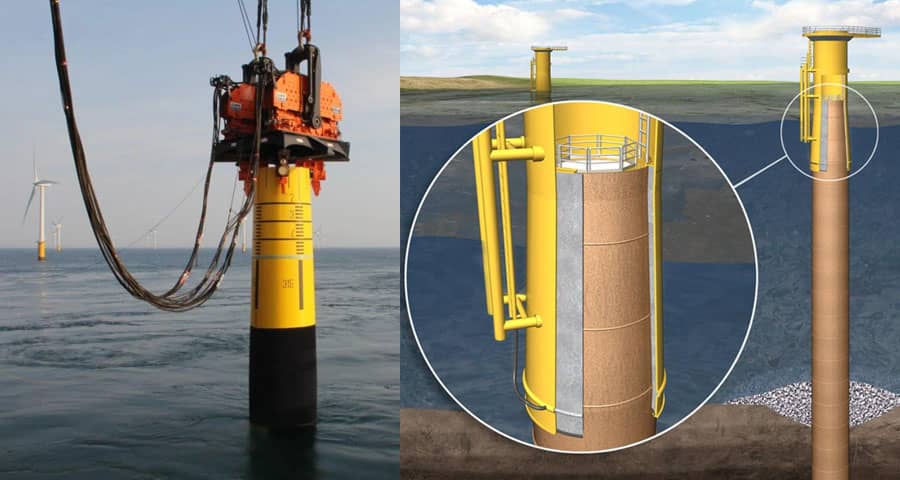
- Offshore monopile foundations
- Jacket foundations
The selection depends on turbine capacity, soil characteristics, water depth, environmental conditions, and construction methodology.
3.3 Offshore Wind Structural Engineering
Offshore wind farms introduce additional engineering challenges because their supporting structures are continuously exposed to seawater, waves, currents, and marine corrosion.
Structural engineers must evaluate:
- Wave and hydrodynamic loading
- Marine corrosion protection
- Seabed characteristics
- Scour around foundations
- Fatigue caused by repeated loading
- Installation and maintenance requirements
Advanced corrosion protection systems, suitable marine-grade materials, and specialised foundation solutions help improve offshore wind turbine durability.
4. Structural Engineering in Hydroelectric Power Projects
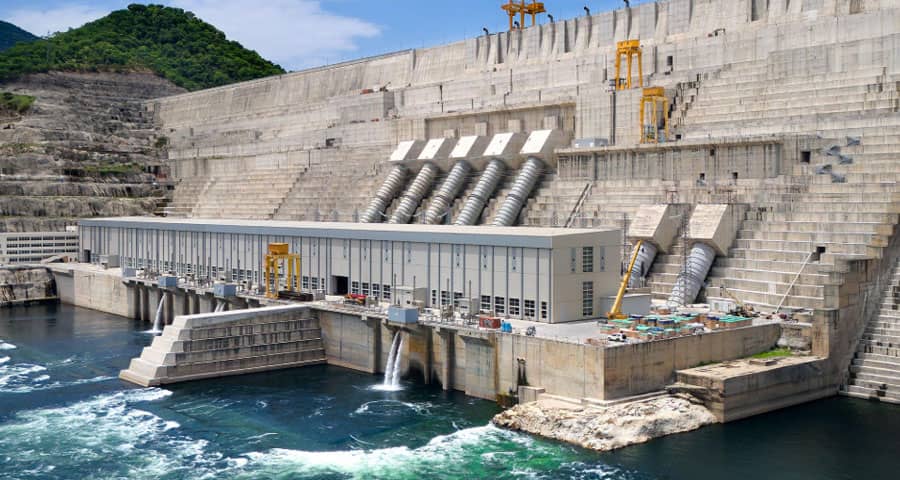
Hydroelectric power projects convert the potential and kinetic energy of flowing water into electricity. These installations require substantial civil and structural infrastructure to manage water pressure, hydraulic forces, and environmental conditions.
Major structural components include dams, spillways, intake structures, powerhouse buildings, penstocks, retaining walls, and water conveyance systems.
4.1 Dam Structural Design
Dam engineering requires careful evaluation of water pressure, uplift forces, foundation conditions, seepage, and seismic loading.
Depending on site conditions, engineers may adopt gravity dams, arch dams, embankment dams, or other suitable configurations.
We must ensure that the dam structure can safely resist all anticipated loading conditions while maintaining stability and controlling seepage.
4.2 Penstock Structural Design
Penstocks are large pipelines that transport water under pressure towards hydroelectric turbines.
Their structural design considers:
- Internal water pressure
- Water hammer effects
- Thermal expansion
- Support and anchorage requirements
- Material strength
- Corrosion protection
Appropriate structural supports and expansion arrangements are essential for maintaining pipeline integrity.
4.3 Powerhouse Structural Design
Hydroelectric powerhouses accommodate turbines, generators, electrical equipment, and operational facilities.
Structural engineers design foundations, reinforced concrete floors, crane support systems, equipment platforms, and building frames to accommodate operational and maintenance loads.
5. Advanced Materials Used in Renewable Energy Structures
Material selection directly influences structural performance, construction costs, maintenance requirements, and environmental impact.
Renewable energy projects increasingly use advanced materials that offer improved strength, durability, and sustainability.
5.1 Structural Steel
Structural steel is widely used in solar mounting systems, wind turbine towers, equipment platforms, and supporting frameworks.
Its advantages include:
- High strength-to-weight ratio
- Excellent fabrication flexibility
- Faster construction and installation
- Recyclability
- Suitability for prefabricated components
Protective coatings and galvanisation improve steel durability in aggressive environmental conditions.
5.2 Reinforced Concrete
Reinforced concrete is commonly used for turbine foundations, hydroelectric structures, equipment foundations, and retaining systems.
Its compressive strength, durability, and flexibility in construction make it suitable for large-scale renewable energy infrastructure.
5.3 Fibre-Reinforced Polymer Composites
Fibre-reinforced polymer (FRP) materials offer high strength, low weight, and corrosion resistance.
These materials are particularly useful in environments where conventional materials may experience corrosion or require frequent maintenance.
5.4 Sustainable Construction Materials
We can further improve the environmental performance of renewable energy projects by incorporating:
- Recycled steel
- Low-carbon concrete
- Supplementary cementitious materials
- Recycled aggregates
- Responsibly sourced construction materials
Selecting sustainable materials helps reduce embodied carbon and supports environmentally responsible infrastructure development.
6. Structural Analysis and Engineering Design Software
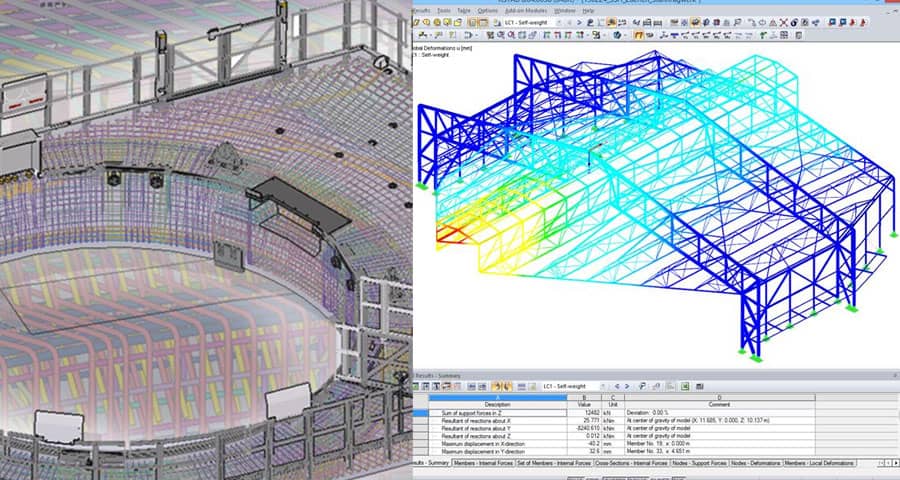
Modern structural engineering increasingly depends on digital design tools and advanced computational analysis.
These technologies allow engineers to evaluate complex structural behaviour, identify potential weaknesses, and optimise designs before construction begins.
6.1 Finite Element Analysis (FEA)
Finite Element Analysis is an important technique for evaluating structural behaviour under different loading conditions.
Engineers use FEA software to analyse stress distribution, deformation, vibration, buckling, and fatigue.
It is particularly useful for complex renewable energy structures, including wind turbine towers, offshore foundations, and specialised solar mounting systems.
6.2 Building Information Modelling (BIM)
Building Information Modelling provides a coordinated digital representation of physical and functional project information.
BIM helps structural engineers collaborate with architects, civil engineers, mechanical engineers, electrical designers, and construction teams.
Key benefits include:
- Improved design coordination
- Accurate structural modelling
- Clash detection
- Better construction documentation
- Quantity estimation
- Improved project communication
- Reduced design errors
6.3 Structural Design and Analysis Software
Several engineering applications support renewable energy infrastructure design.
| Software | Engineering Application |
|---|---|
| Autodesk Revit | BIM modelling and structural coordination |
| Autodesk Robot Structural Analysis | Structural analysis and design |
| STAAD.Pro | Structural analysis of steel and concrete structures |
| ETABS | Building and structural system analysis |
| SAP2000 | Advanced structural modelling and analysis |
| Tekla Structures | Detailed structural modelling and fabrication |
| ANSYS | Advanced finite element analysis |
| PLAXIS | Geotechnical and soil-structure interaction analysis |
Using appropriate software allows engineering teams to improve design accuracy, analyse complex conditions, and coordinate project information efficiently.
7. Environmental Loads and Structural Design Considerations
Renewable energy infrastructure is frequently exposed to environmental conditions that influence structural performance.
We must consider multiple loading conditions throughout the design process.
7.1 Wind Loading
Wind loading is particularly important for solar arrays, wind turbine towers, and offshore structures.
Engineers evaluate wind velocity, pressure coefficients, exposure categories, terrain conditions, and aerodynamic behaviour.
7.2 Seismic Loading
Earthquake forces can significantly affect foundations, supporting structures, and equipment installations.
Seismic design must consider site-specific ground conditions, structural stiffness, natural frequencies, and applicable seismic design requirements.
7.3 Temperature Variations
Temperature changes cause expansion and contraction in structural materials.
Engineers must provide suitable expansion joints, connection details, and movement allowances to prevent excessive thermal stresses.
7.4 Corrosion and Environmental Exposure
Solar and wind installations in coastal regions face aggressive environmental conditions.
Protective coatings, corrosion-resistant materials, proper drainage, and regular inspection programmes help maintain structural durability.
8. Challenges in Structural Engineering for Renewable Energy Projects
Although renewable energy technologies offer significant environmental benefits, their supporting infrastructure presents several engineering challenges.
Site-Specific Geotechnical Conditions: Renewable energy installations are frequently developed in remote locations with varying soil and rock characteristics. Detailed geotechnical investigations are essential for selecting suitable foundations.
Extreme Weather Conditions: Hurricanes, cyclones, heavy rainfall, flooding, and high wind speeds can affect structural safety. Engineers must incorporate appropriate design loads and resilience measures.
Transportation and Installation: Large wind turbine components and specialised structural members require careful transportation planning. Modular fabrication and efficient installation strategies can reduce logistical difficulties.
Construction Costs: Renewable energy projects often involve substantial initial investment. Structural optimisation, material efficiency, and standardised components help control construction expenditure.
Maintenance Accessibility: Remote installations can make structural inspection and maintenance difficult. Engineers should consider accessibility and maintenance requirements during the design stage.
Environmental Impact: Construction activities must minimise disturbance to surrounding ecosystems, water resources, and natural habitats.
Addressing these challenges through detailed planning and engineering coordination helps improve project delivery and long-term performance.
9. The Role of Artificial Intelligence and Digital Technologies
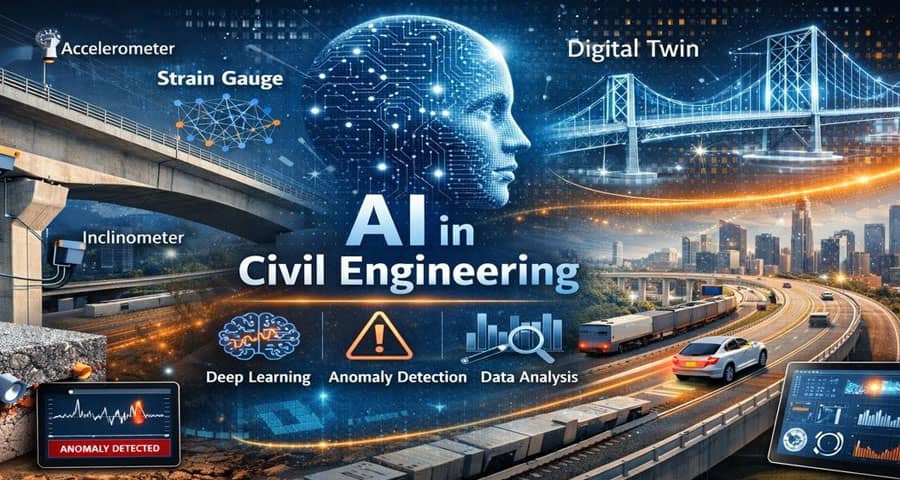
Artificial Intelligence (AI), machine learning, automation, and digital twin technologies are transforming the engineering and management of renewable energy infrastructure.
These technologies help engineering teams analyse large datasets, monitor structural conditions, and improve maintenance strategies.
9.1 AI-Based Structural Monitoring
AI-powered monitoring systems can process sensor information related to vibration, temperature, displacement, and structural strain.
By analysing this information, engineers can identify unusual structural behaviour and investigate potential maintenance requirements.
9.2 Digital Twin Technology
A digital twin is a virtual representation of a physical asset that can be updated using operational and monitoring data.
In renewable energy projects, digital twins can support:
- Structural performance monitoring
- Predictive maintenance
- Operational optimisation
- Asset lifecycle management
- Engineering decision-making
9.3 Drone-Based Structural Inspections
Drones equipped with high-resolution cameras and specialised sensors can inspect wind turbine blades, solar installations, and difficult-to-access infrastructure.
Drone inspections can reduce manual inspection requirements and improve the efficiency of asset condition assessments.
10. Sustainability and Lifecycle Performance in Renewable Energy Structures
Sustainability should remain a priority throughout the complete lifecycle of renewable energy infrastructure.
Structural engineers must consider not only initial construction costs but also material production, transportation, installation, operational maintenance, and eventual decommissioning.
Lifecycle assessment helps identify opportunities to reduce environmental impact while maintaining structural reliability.
Important sustainability strategies include:
- Optimising structural member sizes to reduce material consumption.
- Using recycled and low-carbon construction materials.
- Designing components for easier repair and replacement.
- Improving structural durability to extend service life.
- Reducing construction waste through prefabrication.
- Planning for material recovery and recycling after decommissioning.
By incorporating these principles, we can create renewable energy infrastructure that delivers environmental and economic benefits over its entire operational lifespan.
11. Future Trends in Structural Engineering for Renewable Energy
The renewable energy industry continues to evolve, creating new opportunities for structural engineering innovation.
Several emerging trends are expected to influence future infrastructure development.
Larger Offshore Wind Turbines: Increasing turbine capacities and rotor diameters will require innovative tower configurations, advanced foundation systems, and improved fatigue-resistant structural designs.
Floating Offshore Wind Farms: Floating wind platforms can support renewable energy development in deeper waters where conventional fixed-bottom foundations are unsuitable.
Advanced Composite Materials: Lightweight and corrosion-resistant materials will become increasingly important in demanding renewable energy applications.
Modular Construction: Prefabricated structural components can improve construction speed, quality control, and installation efficiency.
Smart Structural Health Monitoring: Integrated sensors and intelligent monitoring systems will support continuous structural assessment and predictive maintenance.
Low-Carbon Construction: Greater emphasis on embodied carbon reduction will encourage the adoption of sustainable materials and efficient structural systems.
These developments will create new engineering requirements and increase the importance of innovation, collaboration, and advanced structural analysis.
12. Why Structural Engineering Is Essential for Renewable Energy Development
Structural engineering provides the foundation for reliable renewable energy infrastructure. Without properly designed foundations, towers, mounting systems, and supporting structures, renewable energy installations cannot operate safely and efficiently over their intended service life.
Effective structural engineering contributes to:
- Improved structural safety: Ensuring infrastructure can withstand anticipated operational and environmental loads.
- Long-term durability: Reducing deterioration and extending the service life of critical components.
- Cost optimisation: Improving material utilisation and reducing unnecessary construction expenditure.
- Construction efficiency: Supporting accurate detailing, prefabrication, and coordinated installation.
- Environmental sustainability: Reducing material waste and supporting low-carbon construction practices.
- Operational reliability: Minimising structural failures and unplanned maintenance.
Through careful engineering design and the adoption of advanced technologies, we can support the development of efficient, resilient, and sustainable renewable energy infrastructure.
Conclusion
Structural engineering in renewable energy projects is a critical discipline supporting the global transition towards cleaner and more sustainable energy systems. From solar mounting structures and wind turbine foundations to offshore platforms and hydroelectric infrastructure, structural engineers ensure that renewable energy installations remain safe, stable, and durable under demanding environmental conditions.
The integration of advanced materials, finite element analysis, Building Information Modelling, artificial intelligence, and digital twin technologies is creating new opportunities to improve structural performance and project efficiency.
As renewable energy capacity continues to expand, the demand for innovative structural engineering solutions will increase. By prioritising structural safety, sustainable material selection, lifecycle performance, and technological advancement, we can develop renewable energy infrastructure that supports long-term energy security and a more sustainable future.