
A New Era for Clean Energy Construction: Transforming Infrastructure Through Sustainable Technologies
Introduction: The Future of Construction Is Clean Energy
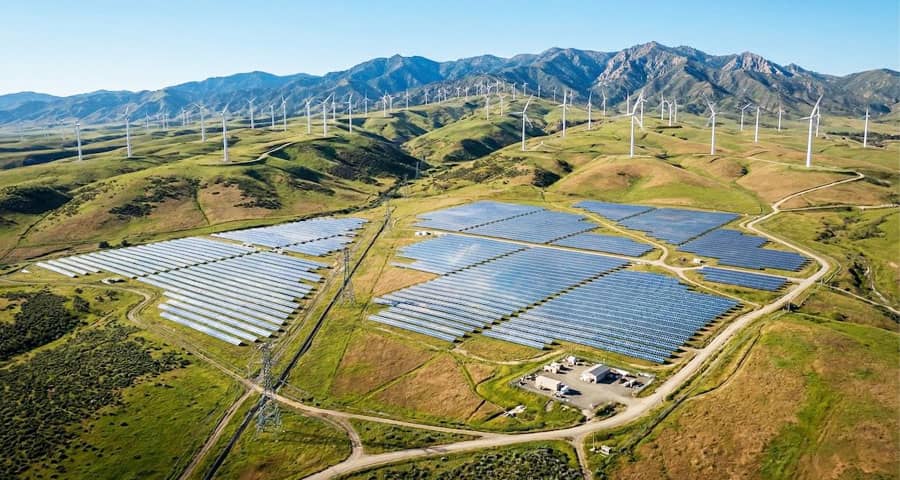
The global construction industry is entering a new era driven by the urgent need for cleaner energy, sustainable infrastructure, and environmentally responsible development. As countries work towards reducing carbon emissions and achieving long-term climate targets, clean energy construction is becoming a major force shaping the future of the built environment.
From large-scale solar farms and offshore wind projects to hydropower facilities, battery energy storage systems, green hydrogen plants, and smart electricity grids, the demand for renewable energy infrastructure is expanding rapidly. These developments are transforming how we plan, design, engineer, and construct the facilities that will power future generations.
Clean energy construction involves more than installing renewable energy equipment. It requires an integrated approach that combines civil engineering, structural design, electrical systems, mechanical engineering, geotechnical investigation, environmental planning, and advanced construction technologies.
The transition towards cleaner energy is also creating new opportunities for engineering consultants, infrastructure developers, construction companies, BIM professionals, and specialist contractors. As renewable energy projects become larger and more technically advanced, the need for accurate engineering design, efficient project execution, and sustainable construction practices continues to increase.
We are witnessing a fundamental shift in infrastructure development. The buildings, power systems, and industrial facilities of tomorrow will increasingly be designed around energy efficiency, renewable generation, and environmental sustainability.
1. What Is Clean Energy Construction?
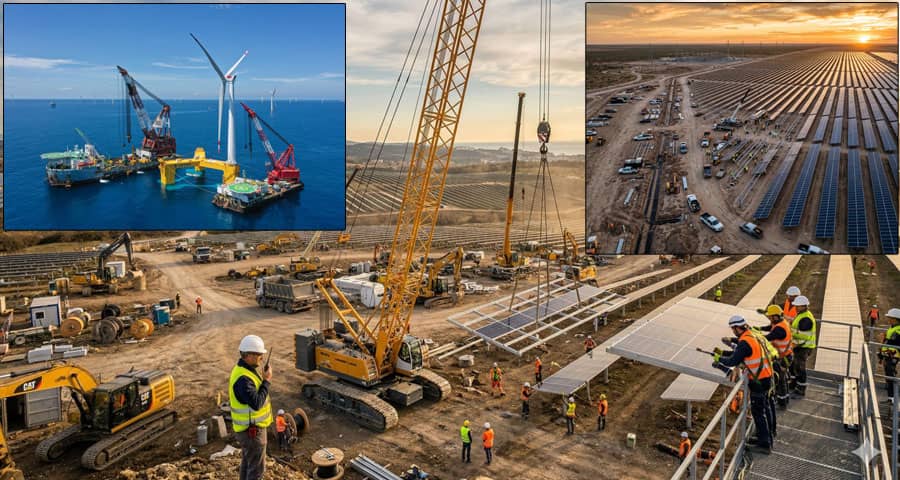
Clean energy construction refers to the planning, engineering, and development of infrastructure that generates, stores, distributes, or supports energy from low-carbon and renewable sources.
Unlike conventional energy infrastructure that primarily depends on fossil fuels, clean energy projects focus on reducing greenhouse gas emissions and improving long-term energy sustainability.
These projects require specialised engineering systems and construction methodologies to ensure reliable operation, structural stability, energy efficiency, and environmental compliance.
Major categories of clean energy construction include:
- Solar energy infrastructure: Solar farms, rooftop solar installations, photovoltaic power plants, and solar thermal facilities.
- Wind energy infrastructure: Onshore wind farms, offshore wind turbines, foundations, substations, and transmission connections.
- Hydropower construction: Dams, reservoirs, turbines, powerhouse structures, and associated water management systems.
- Battery energy storage systems: Utility-scale battery facilities, electrical enclosures, inverters, and energy management infrastructure.
- Green hydrogen facilities: Electrolysers, hydrogen storage systems, processing plants, and associated industrial infrastructure.
- Geothermal energy projects: Geothermal wells, power stations, piping networks, and heat exchange systems.
- Smart grid infrastructure: Substations, transmission lines, distribution networks, and digital power management systems.
Each category involves different structural, electrical, mechanical, and environmental requirements. Successful project delivery depends on coordinating these disciplines from the earliest planning stages.
2. Solar Energy Construction: Building the Foundation of Renewable Power
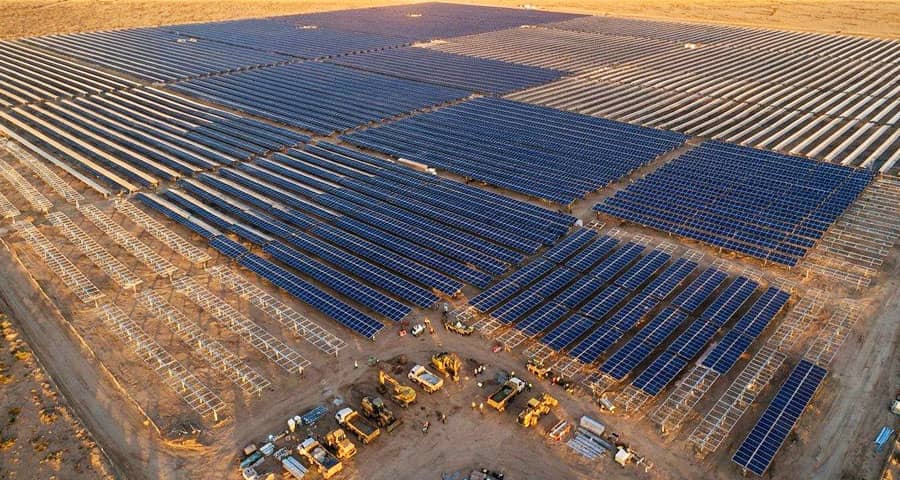
Solar energy is one of the most widely adopted renewable energy technologies. Solar construction projects convert sunlight into electricity through photovoltaic (PV) panels or solar thermal technologies.
The expansion of solar power is creating demand for large-scale construction projects across residential, commercial, industrial, and utility sectors.
Key Components of Solar Power Construction
Solar panel installation: Photovoltaic modules capture solar radiation and convert it into electrical energy. Their arrangement depends on site conditions, orientation, shading, and energy generation requirements.
Mounting structures: Solar panels require suitable mounting systems that provide structural stability and maintain the correct inclination. Structural steel, aluminium, and specialised support systems are commonly used.
Foundations: Ground-mounted solar installations require foundations designed according to soil conditions, wind loads, corrosion exposure, and structural requirements.
Inverters and electrical systems: Inverters convert the direct current generated by solar panels into alternating current suitable for electrical distribution.
Cable management: Electrical cables, conduits, trenches, and cable trays connect solar panels, inverters, transformers, and substations.
Grid connectivity: Solar power facilities require suitable electrical infrastructure to transfer generated electricity into the distribution or transmission network.
Engineering Considerations in Solar Construction
Solar projects require accurate site surveys, topographical assessments, geotechnical investigations, structural calculations, and electrical design.
Engineers must consider wind uplift, foundation settlement, drainage, corrosion protection, maintenance access, and the long-term performance of mounting structures.
By combining efficient structural design with proper site planning, construction teams can improve installation productivity and support reliable solar power generation.
3. Wind Energy Construction: Expanding Renewable Power Infrastructure
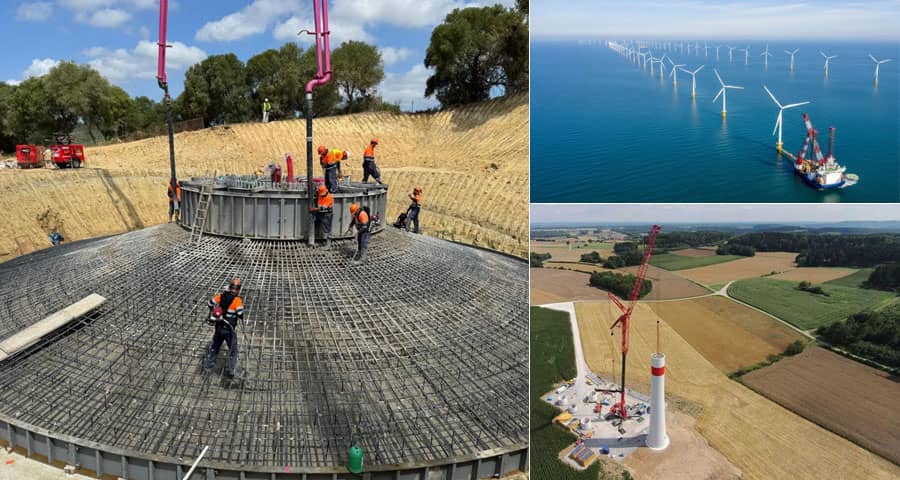
Wind energy is another important component of the global clean energy transition. Wind turbines convert the kinetic energy of moving air into electrical power.
The construction of wind energy infrastructure involves complex engineering activities, particularly when developing large turbines and offshore wind installations.
Onshore Wind Energy Projects
Onshore wind farms are developed on land and typically consist of multiple turbines connected through electrical collection systems.
Major construction activities include:
- Site preparation and access road development.
- Geotechnical investigation.
- Excavation and foundation construction.
- Reinforcement detailing and concrete placement.
- Wind turbine tower installation.
- Nacelle and rotor installation.
- Electrical cabling and substation development.
- Testing and commissioning.
Offshore Wind Energy Projects
Offshore wind farms are constructed in marine environments and introduce additional challenges related to water depth, waves, seabed conditions, corrosion, and marine logistics.
Foundation systems may include monopiles, jackets, or floating platforms, depending on the project conditions and turbine configuration.
Offshore construction requires specialised vessels, lifting equipment, marine engineering expertise, and carefully coordinated installation schedules.
Structural Engineering in Wind Turbine Construction
Wind turbines experience substantial dynamic and environmental loads.
Structural engineers must evaluate wind forces, fatigue, vibration, foundation behaviour, soil characteristics, and other relevant loading conditions.
The turbine foundation must safely transfer operational loads into the supporting ground while maintaining structural stability throughout the facility's design life.
4. Hydropower Construction: Harnessing the Power of Water
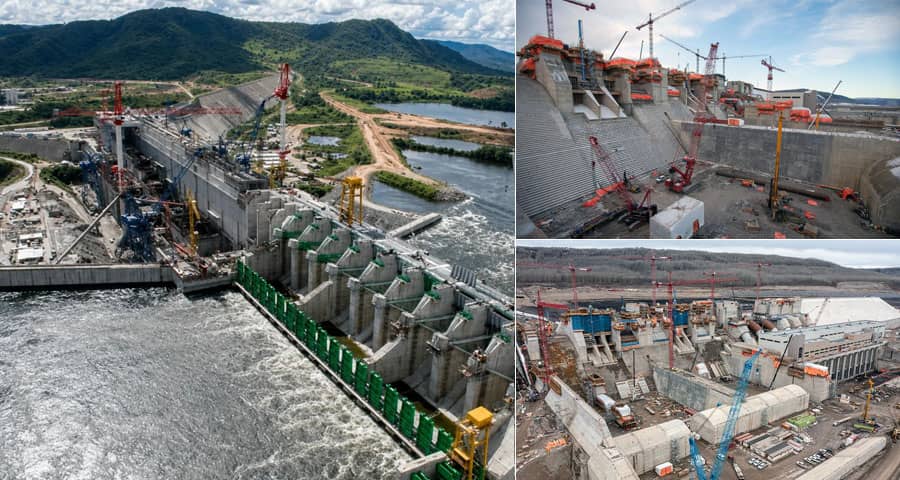
Hydropower is one of the established renewable electricity generation technologies. It uses the movement of water to drive turbines and generate electricity.
Hydropower construction projects range from small run-of-river facilities to large hydroelectric dams with extensive reservoirs and power generation infrastructure.
Major Components of Hydropower Infrastructure
Dams and reservoirs: Dams regulate water flow and create reservoirs that provide controlled water supplies for electricity generation.
Penstocks: These large pipes or conduits transport water under pressure towards the turbines.
Powerhouses: Powerhouse structures accommodate turbines, generators, control systems, and associated mechanical equipment.
Spillways: Spillways safely release excess water and help manage reservoir levels during periods of high inflow.
Transmission infrastructure: Transformers, substations, and transmission lines connect hydropower facilities to electricity networks.
Construction and Engineering Challenges
Hydropower projects require extensive geotechnical investigations, hydraulic studies, structural analysis, and environmental assessments.
Engineers must evaluate foundation stability, water pressure, seismic conditions, sediment management, and the long-term behaviour of concrete structures.
Construction teams also need to manage river diversion, excavation, heavy equipment installation, and complex concrete placement activities.
Modern hydropower construction combines civil engineering expertise with advanced mechanical and electrical systems to deliver reliable renewable electricity.
5. Battery Energy Storage Systems: Supporting the Renewable Energy Revolution
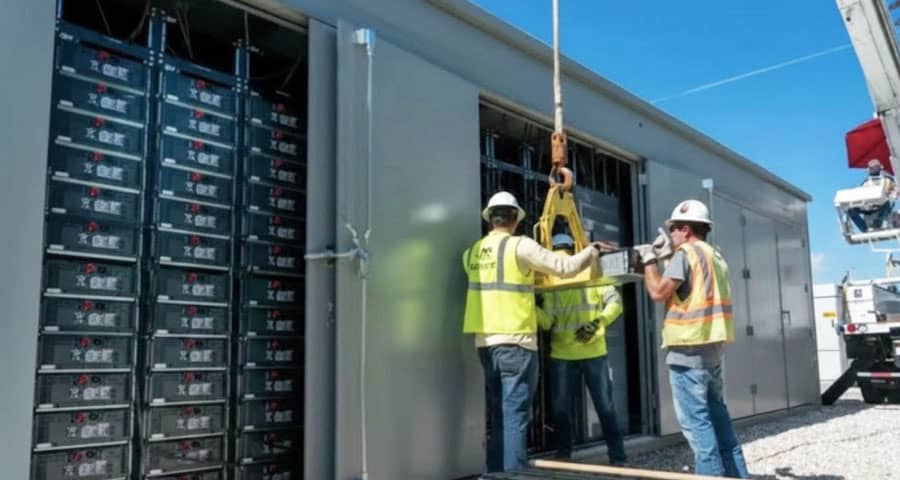
One of the biggest challenges associated with renewable energy is the intermittent nature of solar and wind power. Solar panels generate electricity primarily during daylight hours, while wind power generation depends on changing weather conditions.
Battery Energy Storage Systems (BESS) help address this challenge by storing electricity when generation exceeds demand and releasing it when additional power is required.
Battery storage is becoming an important component of modern energy infrastructure.
How Battery Energy Storage Systems Work
A typical utility-scale battery storage facility includes:
- Battery modules and racks.
- Battery management systems (BMS).
- Power conversion systems.
- Inverters.
- Transformers and switchgear.
- Thermal management systems.
- Fire detection and suppression systems.
- Energy management systems (EMS).
These components work together to store, monitor, control, and distribute electrical energy.
Construction Requirements for Battery Storage Facilities
BESS construction requires careful planning of equipment foundations, container placement, electrical connections, drainage, access roads, ventilation, and fire safety.
Engineers must also evaluate thermal runaway risks, separation distances, emergency access, environmental exposure, and applicable safety standards.
Battery storage facilities can be integrated with solar farms, wind power projects, industrial facilities, and electricity distribution networks.
As renewable energy adoption increases, battery storage infrastructure will play an increasingly important role in improving grid flexibility and energy reliability.
6. Green Hydrogen Construction: Developing the Next Generation of Clean Energy
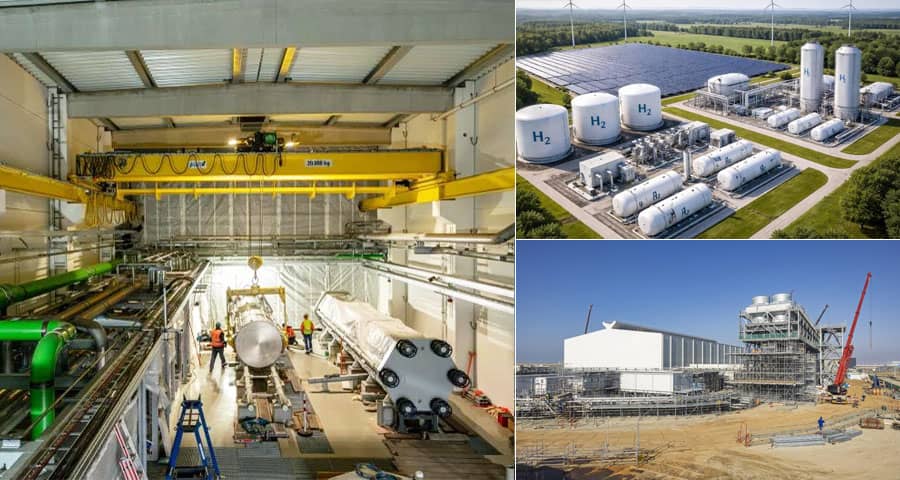
Green hydrogen is attracting attention as a potential low-carbon energy carrier for industries that are difficult to electrify directly.
It is produced by using renewable electricity to split water into hydrogen and oxygen through a process called electrolysis.
The development of green hydrogen facilities requires specialised industrial infrastructure, including electrolysers, water treatment systems, hydrogen compression equipment, storage tanks, pipelines, and electrical installations.
Key Infrastructure Requirements
Electrolyser buildings: These facilities house equipment used to produce hydrogen through electrolysis.
Water treatment systems: High-quality water is required for many electrolyser technologies. Treatment infrastructure ensures suitable water quality.
Hydrogen storage facilities: Hydrogen must be stored using suitable systems designed for the required pressure, temperature, and operating conditions.
Compression and distribution systems: Compressors and specialised piping transport hydrogen to storage facilities or end users.
Electrical infrastructure: Renewable electricity connections, transformers, switchgear, and power conversion systems support hydrogen production.
Safety and Engineering Considerations
Hydrogen has specific physical and chemical properties that require specialised engineering controls.
Design teams must consider leakage detection, ventilation, hazardous-area classification, material compatibility, pressure protection, fire safety, and emergency shutdown systems.
Proper engineering coordination is essential for ensuring the safe construction and operation of green hydrogen infrastructure.
7. Sustainable Construction Materials and Low-Carbon Building Practices
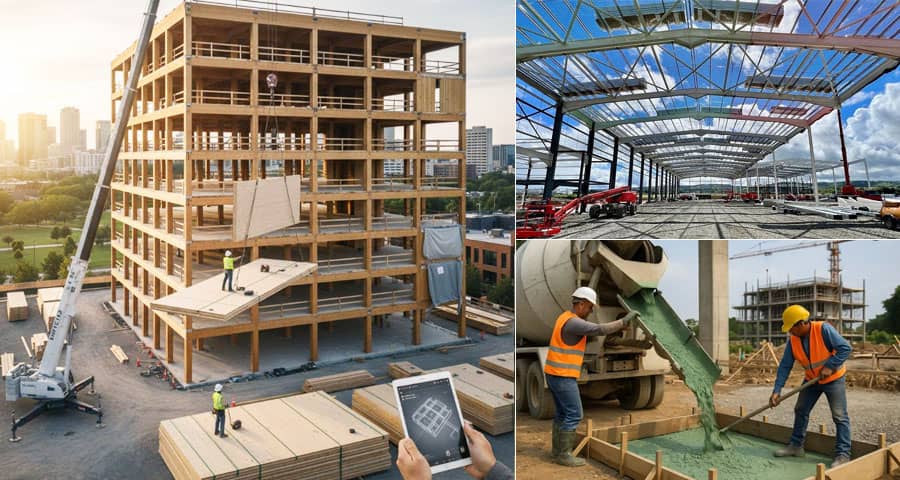
Clean energy construction is not limited to renewable electricity generation. The materials and construction processes used to develop renewable energy infrastructure also influence environmental performance.
Traditional construction materials such as cement, concrete, and steel can contribute significantly to embodied carbon emissions.
Therefore, construction companies are increasingly evaluating alternatives and improved construction practices to reduce environmental impacts.
Low-Carbon Concrete
Concrete is widely used in renewable energy projects, particularly for wind turbine foundations, solar infrastructure, hydropower facilities, and substations.
Low-carbon concrete strategies may include:
- Using supplementary cementitious materials where technically appropriate.
- Optimising concrete mix designs.
- Reducing unnecessary cement consumption.
- Improving concrete production efficiency.
- Using locally available materials where suitable.
- Minimising construction waste.
Recycled and Efficiently Designed Steel
Structural steel is widely used in solar mounting structures, industrial buildings, substations, and energy infrastructure.
Recycled steel and efficient structural design can help reduce material-related environmental impacts.
Engineers can also optimise structural member sizes, connection details, and fabrication processes to minimise unnecessary material consumption while meeting design requirements.
Sustainable Construction Site Management
Construction companies can improve sustainability through responsible material procurement, waste segregation, efficient equipment operation, water conservation, and reduced transportation requirements.
These practices help reduce the environmental footprint of infrastructure development.
8. The Role of BIM in Clean Energy Construction Projects
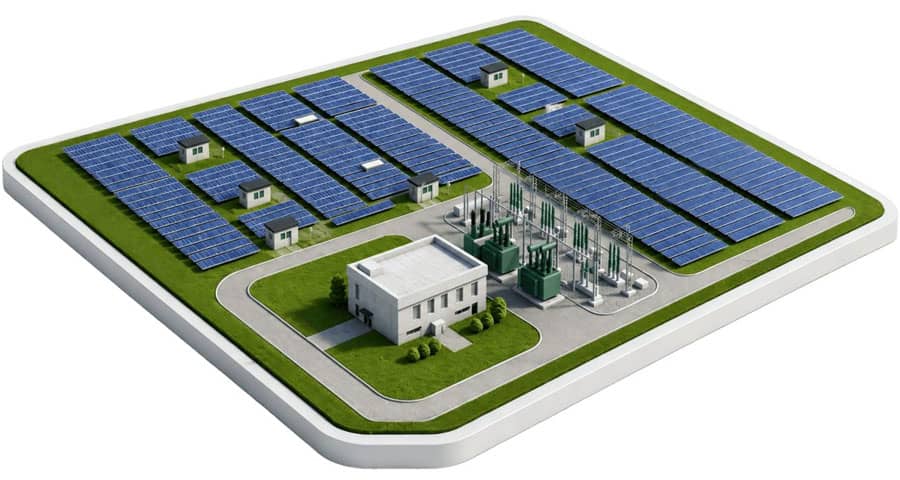
Building Information Modelling (BIM) is becoming increasingly valuable in complex renewable energy construction projects.
BIM provides a digital approach to developing, coordinating, and managing engineering information throughout the project lifecycle.
Although BIM is commonly associated with buildings, its applications extend to industrial plants, substations, powerhouses, renewable energy facilities, and other infrastructure projects.
BIM Applications in Renewable Energy Projects
3D Engineering Modelling: BIM helps develop coordinated digital representations of architectural, structural, mechanical, and electrical components.
Clash Detection: Coordination software can identify conflicts between structural elements, electrical systems, cable trays, piping networks, and equipment.
Quantity Take-Off: BIM models can support the extraction of quantities for concrete, reinforcement, structural steel, equipment, and other construction materials.
Construction Documentation: Engineering teams can produce coordinated drawings, sections, schedules, and installation documentation.
Digital Twin Integration: BIM information can support the development of digital twins for monitoring renewable energy facilities during operation.
BIM Software Used in Clean Energy Construction
Several digital engineering platforms support renewable energy design and construction workflows.
- Autodesk Revit: Architectural, structural, and MEP modelling.
- Autodesk Navisworks: Model coordination and clash detection.
- AutoCAD: Engineering drawings and technical documentation.
- Civil 3D: Civil infrastructure design, grading, and site development.
- Tekla Structures: Structural steel and reinforced concrete detailing.
- Autodesk InfraWorks: Infrastructure planning and conceptual design.
By integrating BIM into project delivery, engineering teams can improve coordination, manage design information, and reduce construction-stage uncertainties.
9. Artificial Intelligence and Digital Technologies in Clean Energy Construction
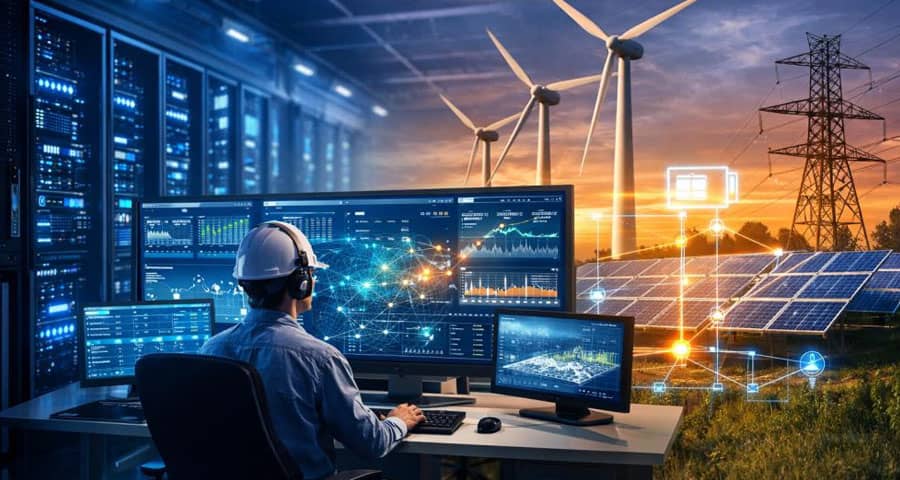
Artificial intelligence is introducing new possibilities for improving renewable energy construction and infrastructure operations.
AI-powered technologies can analyse large volumes of engineering, environmental, and operational data to support better decision-making.
AI in Renewable Energy Design
AI algorithms can help engineers evaluate alternative solar panel layouts, optimise wind turbine positioning, assess energy generation scenarios, and analyse infrastructure performance.
These technologies can support faster evaluations of design alternatives while allowing engineers to retain control over technical decisions.
Predictive Maintenance
Renewable energy infrastructure contains equipment that requires regular inspection and maintenance.
AI-powered predictive maintenance systems can analyse operational information from turbines, inverters, transformers, batteries, and other equipment to identify potential failures.
This allows operators to plan maintenance activities before equipment problems cause major interruptions.
Smart Grid Management
Smart grids use digital communication, monitoring, automation, and intelligent control systems to manage electricity distribution.
AI can support demand forecasting, renewable energy integration, fault detection, and power distribution optimisation.
Digital Twins for Renewable Energy Assets
Digital twins can combine engineering models with real-time operational data.
For example, a wind farm digital twin may integrate turbine performance, weather information, vibration measurements, and maintenance records.
This creates opportunities for improved asset management and long-term operational planning.
10. India's Growing Clean Energy Construction Market
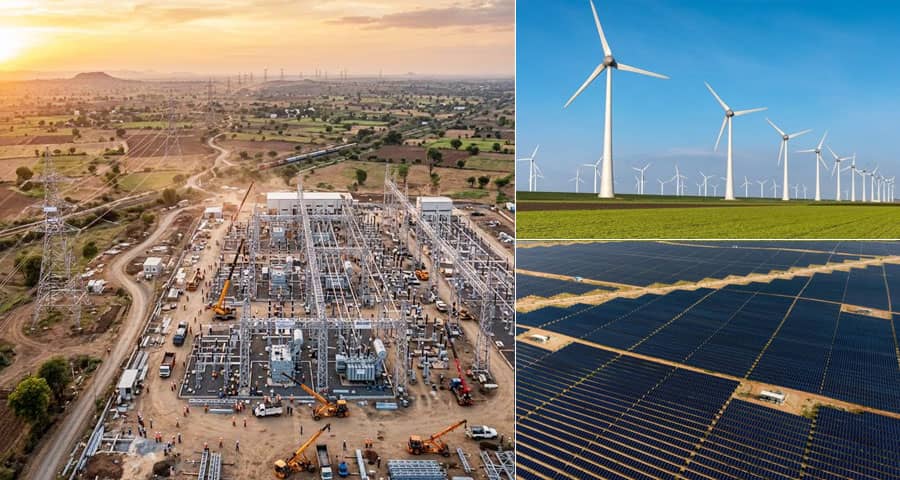
India is becoming an important market for renewable energy infrastructure development.
Growing electricity demand, industrial expansion, urbanisation, and government clean energy initiatives are supporting investments in solar, wind, hydropower, energy storage, and transmission infrastructure.
India has announced a target of achieving 500 GW of non-fossil fuel-based electricity capacity by 2030, making renewable energy construction an important part of its long-term energy strategy.
Major Renewable Energy Development Areas
Rajasthan: Rajasthan has substantial potential for large-scale solar power development because of its solar radiation conditions and available land in suitable locations.
Gujarat: Gujarat is an important market for solar and wind energy projects, supported by industrial development and renewable energy investment.
Tamil Nadu: Tamil Nadu has an established wind energy sector and opportunities for solar and renewable energy infrastructure.
Karnataka: Karnataka has significant solar and wind energy development, alongside supporting electrical infrastructure.
Maharashtra: Maharashtra is expanding renewable energy development to support industrial electricity demand and clean energy objectives.
Engineering and Construction Opportunities in India
The expansion of renewable energy infrastructure creates opportunities for companies providing:
- Solar farm engineering and construction.
- Wind turbine foundation design.
- Structural steel detailing.
- Reinforced concrete detailing.
- Substation design and construction.
- Transmission line infrastructure.
- Battery storage facility development.
- BIM modelling and coordination.
- Civil and geotechnical engineering.
- Quantity surveying and cost estimation.
- Project management and construction supervision.
India's engineering and construction service providers can strengthen their market position by developing specialised renewable energy project capabilities and adopting advanced digital engineering tools.
11. Challenges in Clean Energy Construction
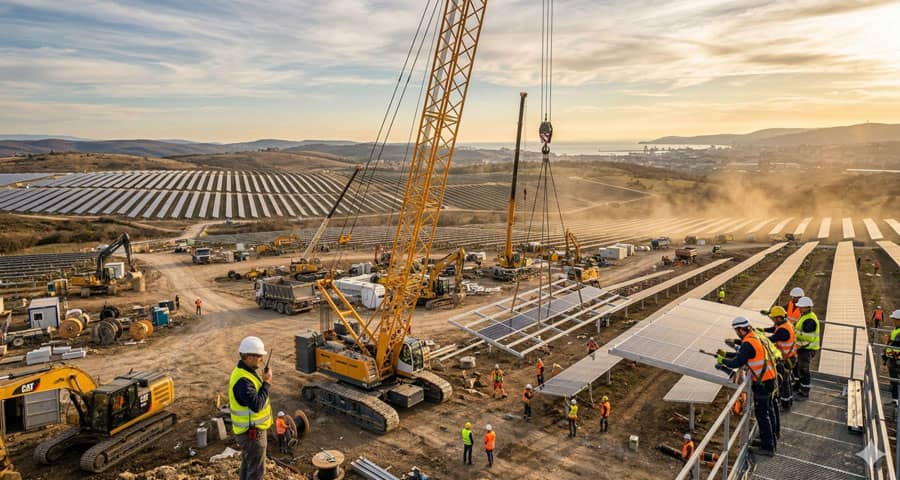
Despite the significant potential of renewable energy, clean energy construction projects face several technical, financial, environmental, and operational challenges.
Land Availability and Site Selection
Large solar and wind projects require suitable locations with appropriate environmental, geographical, and infrastructure conditions.
Land acquisition, local regulations, environmental restrictions, and proximity to electricity transmission networks can influence project feasibility.
Grid Connectivity
Renewable energy generation facilities must be connected to electricity networks capable of handling the generated power.
Transmission capacity, substations, grid stability, and infrastructure upgrades can affect project schedules and costs.
Construction and Equipment Costs
Renewable energy projects require specialised equipment, engineering services, transportation, foundations, electrical systems, and installation activities.
Changes in material prices, equipment availability, and transportation costs can influence project budgets.
Environmental and Social Considerations
Infrastructure development must consider biodiversity, water availability, land use, local communities, and environmental protection.
For example, hydropower projects may affect river ecosystems, while wind farms require appropriate consideration of bird and bat interactions.
Skilled Workforce Requirements
Clean energy construction requires skilled professionals across multiple disciplines, including civil, structural, electrical, mechanical, environmental, and geotechnical engineering.
Developing technical expertise and maintaining workforce availability will be essential as renewable energy projects expand.
12. The Future of Clean Energy Construction
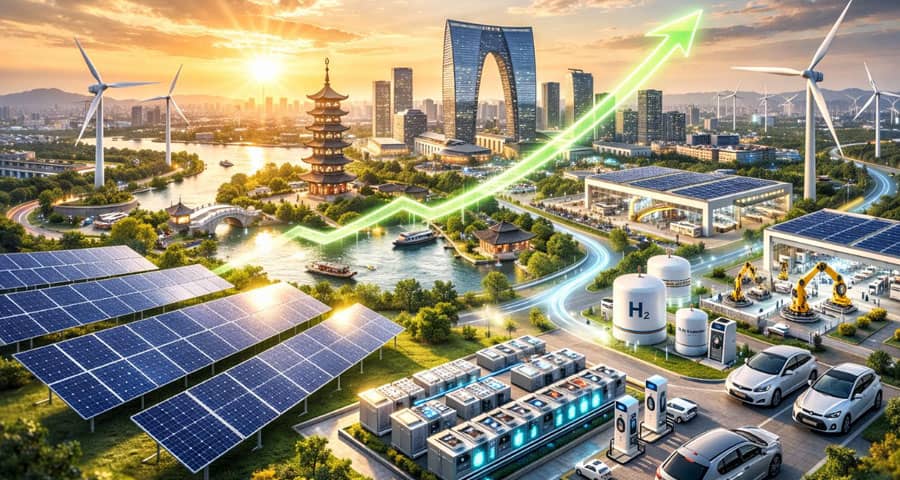
The future of clean energy construction will be shaped by technological innovation, increasing electricity demand, environmental objectives, and the development of more efficient infrastructure systems.
Several technologies and construction approaches are expected to influence the next generation of renewable energy projects.
Floating Solar Power Plants
Floating photovoltaic systems are installed on reservoirs and other suitable water bodies.
They can make use of available water surfaces while reducing the need for additional land. Their design requires specialised floating structures, anchoring systems, electrical connections, and water-related engineering considerations.
Offshore Wind Expansion
Offshore wind technology is creating opportunities for large-scale marine infrastructure development.
Future projects will require advanced turbine foundations, offshore substations, subsea cables, marine installation equipment, and specialised construction expertise.
Advanced Battery Storage
Improvements in battery technologies and energy management systems are expected to support greater integration of variable renewable electricity.
Construction requirements will increasingly include specialised battery facilities, electrical infrastructure, thermal management, and safety systems.
Green Hydrogen Infrastructure
Green hydrogen may support industrial decarbonisation, selected transportation applications, and energy storage.
Its wider development will require investment in electrolysers, storage infrastructure, pipelines, and renewable electricity generation.
Smart and Decentralised Energy Networks
Future electricity networks will increasingly integrate distributed renewable generation, energy storage, smart meters, and intelligent control systems.
This will require new investments in substations, distribution networks, communication infrastructure, and grid modernisation.
13. How Construction and Engineering Companies Can Benefit from Clean Energy Projects
The expansion of renewable energy infrastructure offers significant opportunities for construction companies, engineering consultancies, and specialist service providers.
To participate in this growing industry, companies should develop technical expertise, invest in modern engineering software, and establish capabilities that support complex renewable energy projects.
We recommend focusing on the following areas:
- Develop renewable energy engineering expertise: Build capabilities in solar, wind, hydropower, and battery storage infrastructure.
- Invest in BIM and digital engineering: Use Revit, Navisworks, Tekla Structures, AutoCAD, and Civil 3D to improve project coordination and documentation.
- Strengthen structural engineering capabilities: Focus on wind turbine foundations, solar mounting structures, substations, and industrial facilities.
- Expand MEP and electrical services: Develop expertise in power distribution, electrical systems, cooling infrastructure, and energy storage facilities.
- Adopt sustainable construction practices: Evaluate low-carbon materials, construction waste reduction, and energy-efficient project delivery.
- Use AI-powered engineering tools: Explore intelligent design optimisation, predictive analytics, automated documentation, and construction monitoring.
- Build international partnerships: Collaborate with renewable energy developers, EPC contractors, engineering consultants, and infrastructure companies.
Engineering companies that combine technical knowledge with digital construction capabilities will be better positioned to participate in the growing clean energy market.
Conclusion: Building a Sustainable Future Through Clean Energy Construction
Clean energy construction is transforming the global infrastructure industry. As countries, businesses, and communities work towards more sustainable energy systems, demand for renewable power generation, energy storage, and modern electricity networks continues to create new construction opportunities.
From solar farms and offshore wind installations to hydropower facilities, battery storage systems, and green hydrogen plants, clean energy infrastructure requires advanced engineering, specialised construction expertise, and coordinated project delivery.
At the same time, BIM, artificial intelligence, digital twins, and advanced engineering technologies are changing how renewable energy projects are designed, constructed, and maintained.
For construction and engineering companies, this transition represents an opportunity to expand technical capabilities, deliver innovative infrastructure solutions, and participate in international renewable energy developments.
The future of construction will depend not only on how efficiently we build but also on how responsibly we use materials, energy, land, and natural resources.
Clean energy construction is more than an infrastructure investment. It is a commitment to building a cleaner, more resilient, and sustainable future for generations to come.
Frequently Asked Questions (FAQs)
1. What is clean energy construction?
Clean energy construction involves designing, engineering, and building infrastructure that generates, stores, or distributes electricity from renewable and low-carbon energy sources. Examples include solar farms, wind farms, hydropower plants, battery storage facilities, and green hydrogen plants.
2. What are the main types of clean energy construction projects?
The major types include solar power plants, onshore and offshore wind farms, hydropower facilities, geothermal energy projects, green hydrogen plants, battery energy storage systems, and smart electricity grid infrastructure.
3. Why is clean energy construction important?
Clean energy construction supports the transition towards lower-carbon energy systems, helps diversify electricity generation, creates infrastructure investment opportunities, and contributes to long-term energy sustainability.
4. What engineering disciplines are involved in renewable energy construction?
Renewable energy projects involve civil engineering, structural engineering, electrical engineering, mechanical engineering, geotechnical engineering, environmental engineering, and construction management.
5. How does BIM help in clean energy construction?
BIM helps engineering teams develop coordinated 3D models, identify design conflicts, perform quantity take-offs, prepare construction documentation, and manage project information throughout the construction lifecycle.
6. What is the role of battery energy storage in renewable energy projects?
Battery Energy Storage Systems store electricity generated from renewable sources and release it when required. They help manage fluctuations in solar and wind generation, improve grid flexibility, and support electricity reliability.
7. What are the major challenges in clean energy construction?
Major challenges include land availability, grid connectivity, high initial investment, equipment supply chain limitations, environmental approvals, construction costs, and the availability of skilled engineering professionals.
8. What is green hydrogen construction?
Green hydrogen construction involves developing facilities that use renewable electricity to produce hydrogen through electrolysis. These facilities include electrolysers, water treatment systems, hydrogen storage, compressors, and specialised industrial infrastructure.
9. What opportunities does clean energy construction offer in India?
India offers opportunities in solar power plants, wind farms, hydropower development, battery storage facilities, transmission networks, green hydrogen projects, structural engineering, BIM modelling, and construction management.
10. What is the future of clean energy construction?
The future will involve larger renewable energy projects, floating solar installations, offshore wind farms, advanced battery storage, green hydrogen infrastructure, smart grids, AI-powered engineering, and sustainable construction materials.
Also Read:
 Renewable energy construction