
What Is Sand Blasting | Concrete Sand-Blasting Equipment | Key Benefits of Sand Blasting
Introduction to Sand Blasting
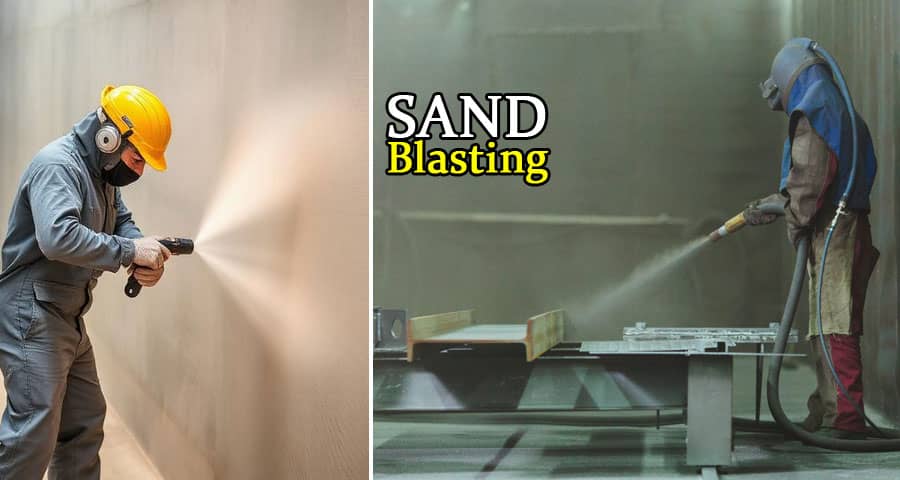
Sand blasting is a highly effective surface preparation and cleaning process widely used in construction, manufacturing, metal fabrication, and concrete surface finishing. In this process, abrasive materials are propelled at high speed using compressed air or mechanical force to clean, smooth, roughen, or shape a surface. We use sand blasting to remove rust, paint, dirt, corrosion, oil stains, and old coatings from different surfaces such as concrete, steel, brick, and stone.
Sand blasting is also known as abrasive blasting, and it plays a critical role in surface preparation before painting, coating, or sealing. The process ensures better bonding of paint and coatings, increasing durability and lifespan of structures.
What Is Sand Blasting
Sand blasting is a surface treatment process in which abrasive particles are blasted onto a surface at high velocity using compressed air or a blasting machine to clean or modify the surface texture.
The abrasive materials used in sand blasting include:
- Silica sand
- Steel grit
- Glass beads
- Aluminum oxide
- Garnet sand
- Copper slag
The selection of abrasive material depends on surface type, required finish, and cleaning intensity.
Sand blasting is commonly used for:
- Concrete surface cleaning
- Rust removal from steel
- Paint removal
- Surface roughening
- Graffiti removal
- Industrial equipment cleaning
- Bridge and building maintenance
Sand Blasting Process Step by Step
Surface Preparation
We first clean the surface to remove oil, grease, and loose particles before blasting.
Abrasive Loading
Abrasive material is loaded into the blasting machine or sand blasting pot.
Air Compression
Compressed air is generated using an air compressor which creates high pressure.
Blasting Operation
The abrasive particles are forced through a nozzle at high speed and directed onto the surface.
Surface Finishing
After blasting, the surface becomes clean, rough, and ready for coating or repair work.
Concrete Sand-Blasting Equipment
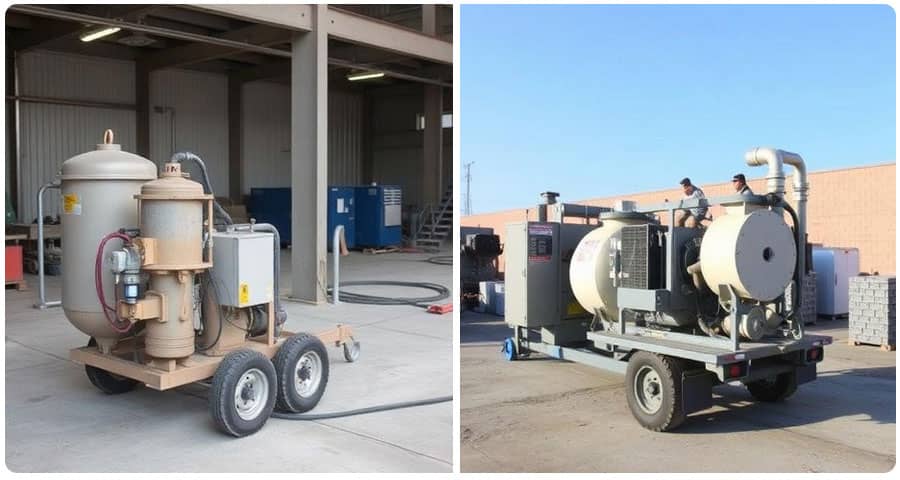
1. Air Compressor
The air compressor is the main component that generates high-pressure air required for blasting operations. The compressor capacity depends on nozzle size and pressure requirements.
2. Sand Blasting Machine / Blasting Pot
This machine stores abrasive material and mixes it with compressed air before blasting. It includes:
- Pressure vessel
- Control valves
- Abrasive metering valve
- Moisture separator
3. Blasting Hose
Heavy-duty rubber hoses carry abrasive and compressed air mixture from the blasting pot to the nozzle.
4. Blasting Nozzle
The nozzle increases the velocity of abrasive particles. Nozzles are usually made of:
- Tungsten carbide
- Boron carbide
- Silicon carbide
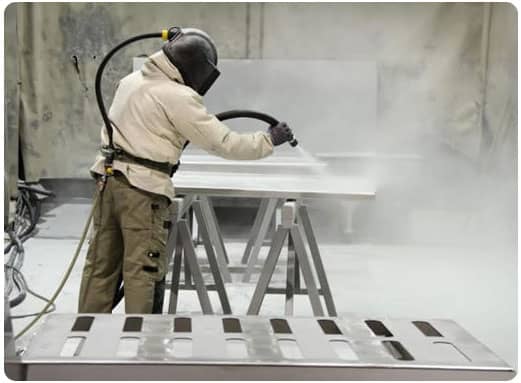
5. Protective Equipment
Safety equipment is very important in sand blasting operations:
- Helmet with air supply
- Safety gloves
- Protective suit
- Safety goggles
- Respirator mask
Types of Sand Blasting
Dry Sand Blasting
This is the most common method where dry abrasive particles are blasted using compressed air.
Wet Sand Blasting
Water is mixed with abrasive material to reduce dust and heat generation.
Vacuum Sand Blasting
A vacuum system collects dust and used abrasive materials during blasting.
Pressure Sand Blasting
High-pressure blasting is used for heavy cleaning and industrial applications.
Micro Abrasive Blasting
Used for delicate surfaces and precision cleaning work.
Key Benefits of Sand Blasting
1. Effective Surface Cleaning
Sand blasting removes rust, paint, oil stains, dirt, and corrosion quickly and efficiently.
2. Better Surface Preparation
It creates a rough surface which improves paint adhesion and coating bonding.
3. Fast Cleaning Process
Sand blasting is much faster compared to manual cleaning methods.
4. Removes Tough Contaminants
It can remove old paint layers, corrosion, scale, and chemical deposits easily.
5. Increases Surface Life
Proper surface preparation increases durability and lifespan of structures.
6. Environment Friendly Options
Wet blasting and vacuum blasting reduce dust pollution.
7. Cost Effective Method
Sand blasting reduces labor cost and time, making it economical for large projects.
8. Smooth Surface Finishing
Used for surface finishing, polishing, and texture creation.
Applications of Sand Blasting in Construction
Sand blasting is widely used in construction projects for:
- Concrete surface cleaning
- Removing old paint from walls
- Surface preparation before plastering
- Bridge maintenance
- Steel structure cleaning
- Removing rust from reinforcement steel
- Cleaning stone and brick masonry
- Road marking removal
- Industrial floor preparation
Sand Blasting for Concrete Surface
Concrete sand blasting is used to:
- Remove laitance layer
- Remove old paint and coatings
- Expose aggregate finish
- Clean oil stains
- Prepare surface for epoxy coating
- Surface roughening before plaster
- Decorative concrete finishing
Concrete sand blasting improves bond strength between old and new concrete surfaces.
Safety Precautions in Sand Blasting
Safety is very important during sand blasting work.
Important safety measures include:
- Use protective helmet and air supply
- Wear safety gloves and suit
- Use dust mask or respirator
- Ensure proper ventilation
- Do not blast in closed area without ventilation
- Check hose and nozzle before operation
- Maintain proper air pressure
- Use moisture separator in compressor line
Difference Between Sand Blasting and Shot Blasting
| Sand Blasting | Shot Blasting |
|---|---|
| Uses compressed air | Uses centrifugal force |
| Uses sand or abrasive particles | Uses steel shots |
| Used for cleaning and finishing | Used for surface strengthening |
| Portable equipment | Heavy machinery |
| Used for concrete and metal | Mostly used for steel surfaces |
Advantages of Sand Blasting Over Manual Cleaning
Sand blasting is preferred over manual cleaning because:
- Faster cleaning
- Better surface preparation
- Removes deep rust and paint
- Less labor required
- Uniform surface finish
- Suitable for large surface areas
- Improves coating life
- Saves time and cost
Conclusion
Sand blasting is one of the most efficient surface preparation and cleaning methods used in construction and industrial applications. It helps in removing rust, paint, dirt, and old coatings while preparing surfaces for painting, coating, and repair work. With proper sand blasting equipment, safety measures, and abrasive selection, the process provides excellent surface finishing, improved bonding strength, and long-lasting results. Concrete sand blasting is especially useful for surface roughening, decorative finishes, and repair preparation, making it an essential technique in modern construction and maintenance work.
Please view the following short video for Sand Blasting and Concrete Sand-Blasting Equipment
Also Read:
 List of Civil Engineering Softwares Every Engineer Must Know
What Are Columns | Types of RCC Column | Round Column vs Square Column | Pillar vs Column
Standard Door Size: International Standard
Steel vs Concrete: A Comprehensive Comparison for Construction Professionals
Spandrel Beam: Advantages, Disadvantages, Uses, and Properties