
Carpentry Tools Used in Construction Projects
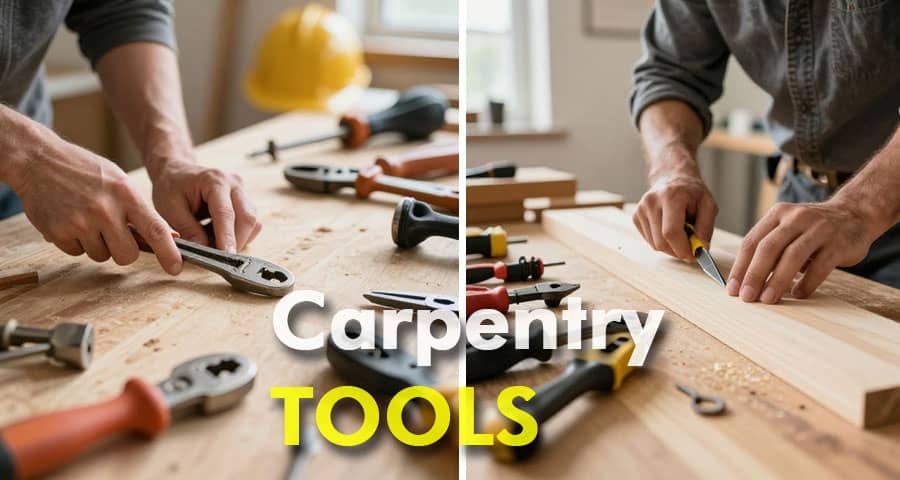
Carpentry is an essential part of building construction, renovation, interior work, furniture installation, and structural finishing. Whether we are constructing a residential house, commercial building, industrial facility, roof structure, staircase, door frame, or custom woodwork, the quality of the finished work depends greatly on using the right carpentry tools.
Professional carpenters use a combination of hand tools, power tools, measuring instruments, cutting tools, fastening tools, and finishing equipment. Each tool serves a specific purpose, and selecting the appropriate equipment helps us achieve greater accuracy, productivity, safety, and consistency on construction sites.
In modern construction projects, carpentry tools have evolved considerably. Traditional hand tools remain important for detailed work, while electric and cordless power tools allow us to complete demanding construction activities more quickly and efficiently.
Importance of Carpentry Tools in Construction
We rely on carpentry tools for almost every stage of construction-related woodworking. Accurate measurement, cutting, drilling, joining, shaping, and finishing are difficult to accomplish without appropriate equipment.
The major advantages of using suitable carpentry tools include:
- Improved measurement accuracy
- Precise cutting and shaping
- Faster construction work
- Better quality of joints
- Reduced material wastage
- Improved productivity
- Consistent finishing
- Greater control over woodworking operations
- Improved job-site safety when used correctly
A professional carpenter does not simply need a large collection of tools. We need to understand which tool should be used for a particular construction task and how it should be operated safely.
Measuring and Marking Tools for Carpentry
Accurate measurement is the foundation of quality carpentry. Even a small measurement error can result in improperly fitted doors, windows, cabinets, roof members, or structural timber.
Tape Measure
A tape measure is one of the most frequently used carpentry tools. We use it to measure the length, width, height, and depth of timber, openings, rooms, framing components, and other construction elements.
A durable tape measure should have clear graduations, a strong locking mechanism, and a reliable hook.
Steel Rule
A steel rule is useful for short and highly accurate measurements. We commonly use it for marking smaller timber components, joints, cabinet parts, and finishing work.
Combination Square
A combination square helps us check and mark 90-degree and 45-degree angles. It is particularly useful when preparing joints and marking cutting lines.
Try Square
A try square is primarily used to determine whether an edge or corner is perfectly square. It is particularly valuable when preparing timber for framing and joinery.
Chalk Line
A chalk line allows us to create long, straight reference lines on timber and construction surfaces. It is useful when marking framing layouts and long cutting lines.
Spirit Level
A spirit level helps us check whether a component is horizontal, vertical, or correctly aligned. We use it during the installation of doors, windows, frames, cabinets, partitions, and other construction elements.
Hand Saws Used in Carpentry
Cutting timber accurately is one of the most fundamental carpentry operations. Different saws are designed for different types of cuts.
Hand Saw
A traditional hand saw is suitable for cutting timber quickly without electrical equipment. We can use it for general construction cutting, framing, and rough carpentry.
Back Saw
A back saw has a reinforced upper edge that provides additional rigidity. We commonly use it for accurate and controlled cuts, particularly in joinery applications.
Coping Saw
A coping saw has a narrow blade that allows us to make curved and intricate cuts in wood. It is useful for decorative carpentry and detailed joinery.
Keyhole Saw
A keyhole saw is designed for cutting openings and making curved or internal cuts. Its narrow blade provides greater access to confined areas.
Chisels for Woodworking and Joinery
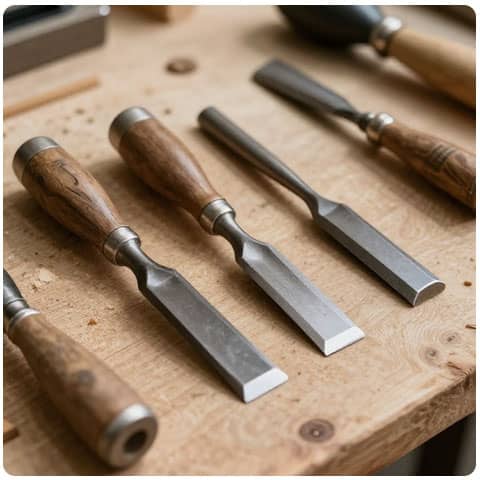
Wood chisels are essential for creating, cleaning, and refining joints. We use chisels to remove small quantities of timber and create accurately fitting components.
Common carpentry chisels include:
- Bevel-edge chisels
- Bench chisels
- Mortise chisels
- Paring chisels
- Corner chisels
A sharp chisel provides considerably better control than a dull one. We should keep cutting edges properly maintained and use appropriate protective equipment when performing demanding work.
Hammers and Striking Tools
The hammer remains one of the most recognizable carpentry tools.
Claw Hammer
A claw hammer is commonly used for driving and removing nails. The claw can also assist with pulling nails from timber.
Framing Hammer
A framing hammer is designed for heavier construction work. It is frequently used for timber framing and other structural carpentry activities.
Mallet
A wooden or rubber mallet is useful when we need to apply controlled impact without unnecessarily damaging the timber surface.
Screwdrivers and Fastening Tools
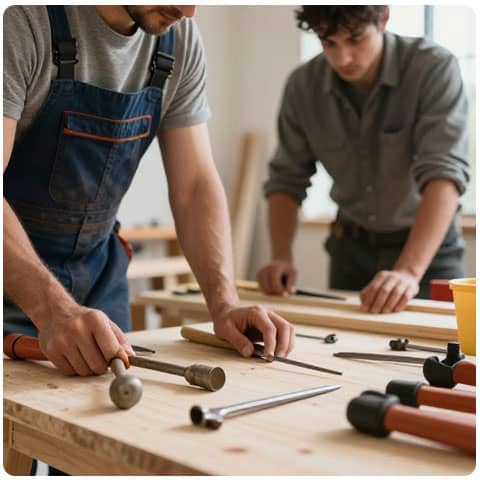
Modern construction carpentry uses many mechanical fasteners. Screws are frequently preferred for applications where strong and removable connections are required.
Screwdriver
We use flat-head, Phillips, Pozidriv, Torx, and other screwdrivers depending on the fastener design.
Cordless Drill Driver
A cordless drill driver is one of the most useful modern carpentry tools. It can be used for drilling pilot holes and driving screws.
Its cordless design makes it particularly convenient on construction sites where electrical access may be limited.
Impact Driver
An impact driver provides high rotational torque and is suitable for driving longer screws and fasteners into timber. We should select the correct bit and avoid excessive torque that could damage the fastener or material.
Power Saws Used in Construction Carpentry
Power saws significantly improve productivity when large quantities of timber need to be cut.
Circular Saw
A circular saw is widely used for straight cuts in timber, plywood, boards, and other sheet materials. We can use different blades depending on the material and required finish.
Miter Saw
A miter saw is designed for accurate crosscuts and angled cuts. It is particularly useful for:
- Door and window trim
- Skirting boards
- Framing components
- Roof members
- Decorative mouldings
- Angled timber joints
Table Saw
A table saw provides controlled straight cutting and is especially useful for repetitive work. We can use it for ripping timber and cutting sheet materials when appropriate safety procedures are followed.
Jigsaw
A jigsaw is suitable for curved, irregular, and detailed cuts. It is commonly used for cutting plywood, boards, and timber components where straight-line cutting is not sufficient.
Reciprocating Saw
A reciprocating saw is useful for demolition, rough cutting, renovation, and difficult-to-access areas. Its design allows us to cut materials where conventional saws may be difficult to operate.
Planers and Shaping Tools
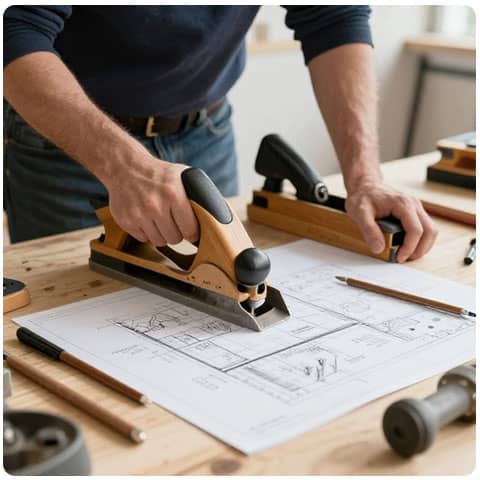
Hand Plane
A hand plane removes thin layers of wood from a surface. We use it to flatten timber, reduce thickness, straighten edges, and improve the fit of components.
Electric Planer
An electric planer allows us to remove material rapidly from timber surfaces. It can be particularly useful when preparing large quantities of timber.
Router
A wood router is a versatile power tool used to create grooves, profiles, decorative edges, recesses, and joinery details.
Routers are commonly used in furniture construction, cabinetry, door manufacturing, and detailed interior carpentry.
Drilling and Hole-Making Tools
Drilling is frequently required for screws, bolts, dowels, electrical installations, plumbing openings, and other construction requirements.
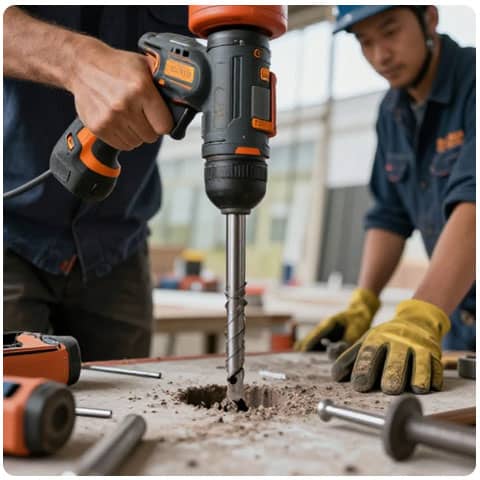
Drill Machine
A drill machine allows us to create holes of different diameters using suitable drill bits. Depending on the application, we may use twist bits, brad-point bits, spade bits, or hole saws.
Hole Saw
A hole saw allows us to produce relatively large circular openings in timber and sheet materials. It is particularly useful for service penetrations and installation work.
Clamps Used in Carpentry
Clamps temporarily hold components together while we measure, cut, glue, drill, or assemble them.
Common types include:
- Bar clamps
- Pipe clamps
- C-clamps
- Quick-grip clamps
- Corner clamps
- Parallel clamps
Using suitable clamps improves accuracy and helps prevent components from moving during assembly.
Sanding and Finishing Tools
Surface preparation has a major impact on the appearance and durability of finished carpentry.
Sandpaper
Sandpaper is available in different grades. We generally use coarser grades for material removal and finer grades for smoothing surfaces.
Random Orbital Sander
A random orbital sander provides efficient surface finishing while reducing visible sanding patterns when operated correctly.
Belt Sander
A belt sander removes material quickly and is suitable for larger surfaces. Because it is aggressive, careful control is required to avoid removing excessive material.
Nail Guns and Staple Guns
Professional construction projects often use pneumatic or cordless nail guns to improve installation speed.
Nail guns can be useful for framing, sheathing, trim installation, flooring, and other applications when the correct fastener type and tool settings are used.
Staple guns are useful for attaching certain lightweight materials, insulation components, fabric, and other suitable construction materials.
Essential Carpentry Tools for Construction Workers
For general construction carpentry, a practical tool collection may include:
- Tape measure
- Combination square
- Spirit level
- Chalk line
- Claw hammer
- Wood chisels
- Hand saw
- Circular saw
- Miter saw
- Cordless drill
- Impact driver
- Wood router
- Orbital sander
- Clamps
- Utility knife
- Pliers
- Screwdriver set
- Wood plane
- Nail gun
- Safety equipment
The exact combination depends on the type and scale of the construction project.
Carpentry Safety Equipment
Using carpentry tools safely is just as important as selecting the right equipment. Construction workers should use appropriate personal protective equipment (PPE) and follow established site safety procedures.
Important protective equipment may include:
- Safety glasses
- Hearing protection
- Dust masks or suitable respiratory protection
- Protective footwear
- Work gloves where appropriate
- Hard hats on applicable construction sites
- High-visibility clothing where required
Power tools should be inspected before use, and damaged blades, electrical cables, batteries, guards, or switches should not be ignored.
When operating cutting equipment, we should maintain a stable working position and keep hands away from moving blades. Workpieces should be properly supported and secured whenever required.
How to Maintain Carpentry Tools
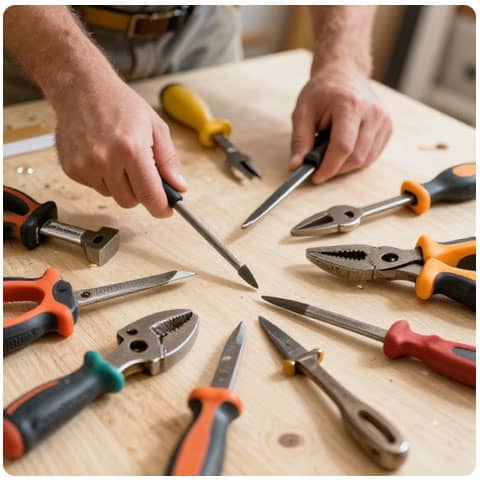
Proper maintenance extends tool life and helps maintain accuracy.
We should regularly:
- Clean tools after use.
- Keep cutting edges sharp.
- Lubricate applicable moving components.
- Inspect electrical cords and plugs.
- Check batteries and chargers.
- Replace damaged blades and bits.
- Store tools in dry locations.
- Protect precision measuring instruments from impact.
- Keep power-tool guards correctly installed.
- Follow the manufacturer's maintenance instructions.
Sharp and properly maintained tools generally provide better control and more predictable results than damaged or poorly maintained equipment.
Choosing the Right Carpentry Tools for Construction Projects
We should select tools according to the project requirements, material type, cutting accuracy, workload, working environment, and required finish.
For basic framing, essential equipment may include measuring tools, a circular saw, drill driver, hammer, square, level, and fastening tools. For detailed interior carpentry, routers, miter saws, sanders, clamps, chisels, and precision measuring instruments become increasingly important.
For large commercial construction projects, cordless and pneumatic equipment can improve productivity, while specialized machinery may be appropriate for repetitive manufacturing or prefabrication work.
Conclusion
Carpentry tools are fundamental to modern construction projects, from initial measurement and timber preparation to cutting, drilling, fastening, assembly, and finishing. The right combination of hand tools and power tools allows us to perform construction carpentry with greater accuracy, efficiency, consistency, and control.
Traditional tools such as hammers, chisels, hand saws, squares, levels, and measuring tapes remain indispensable. At the same time, modern equipment such as cordless drills, circular saws, miter saws, routers, sanders, nail guns, and impact drivers has transformed construction productivity.
By selecting the appropriate carpentry tools, maintaining them properly, and using them according to safe operating practices, we can achieve high-quality results across residential, commercial, industrial, renovation, and interior construction projects.
Please view the following short video for Carpentry Tools Used in Construction Projects
Also Read:
 Mastering Dome Concrete Volume Calculations: Essential Techniques and Tips
External Plastering Work Checklist: A Complete Guide for Quality Construction
Commercial and Residential Estimating for building construction projects
Isolated Footing Foundation: Types, Design, Construction Process, Advantages, and Structural Details