
What Is Clay Product and Its Types
Introduction to Clay Products
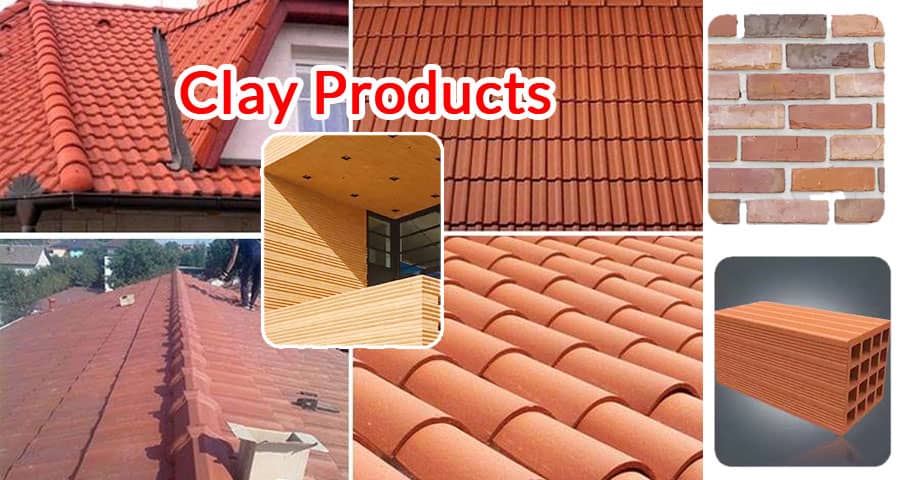
Clay products are one of the oldest and most widely used building and construction materials in the world. We use clay products extensively in construction, pottery, drainage systems, roofing, flooring, and decorative works. These products are manufactured by molding clay into required shapes and then drying and burning them at high temperatures in kilns to achieve strength, durability, and hardness.
Clay is a natural material composed mainly of silica, alumina, and water, along with small amounts of iron oxide, lime, magnesia, and alkalis. Due to its plasticity when wet and hardness after burning, clay is an ideal material for manufacturing various construction products.
What Is a Clay Product?
A clay product is defined as a manufactured product made by shaping clay in plastic condition, drying it, and then burning it in a kiln at high temperature to gain strength and durability.
The manufacturing process of clay products generally involves:
- Winning of clay
- Preparation and tempering
- Molding or shaping
- Drying
- Burning
- Cooling
- Sorting and storage
After burning, clay products become hard, strong, and resistant to water and weather effects.
Types of Clay Products
There are many types of clay products used in construction and engineering works. The main types of clay products are listed below.
1. Bricks
Bricks are the most common and widely used clay products in building construction. They are rectangular blocks made from clay, dried, and burnt in kilns.
Uses of Bricks
Bricks are used for:
- Wall construction
- Foundations
- Pillars
- Partition walls
- Pavements
- Drainage works
Types of Clay Bricks
- First Class Bricks
- Second Class Bricks
- Third Class Bricks
- Fourth Class Bricks
- Engineering Bricks
- Facing Bricks
- Fire Bricks
Bricks are popular because they have high compressive strength, durability, and fire resistance.
2. Tiles
Clay tiles are thin clay products used mainly for roofing, flooring, and wall finishing.
Types of Clay Tiles
- Roof Tiles
- Floor Tiles
- Wall Tiles
- Decorative Tiles
- Drain Tiles
Advantages of Clay Tiles
Clay tiles provide:
- Heat insulation
- Water resistance
- Attractive appearance
- Long life
- Low maintenance
Roof tiles are especially used in residential buildings, heritage buildings, and traditional houses.
3. Stoneware
Stoneware is a dense and hard clay product made by burning clay at very high temperatures. It is non-porous, strong, and resistant to chemicals.
Uses of Stoneware
Stoneware is used for:
- Drain pipes
- Sewer pipes
- Sanitary fittings
- Chemical storage containers
- Laboratory equipment
Stoneware products are very durable and resistant to acids and chemicals, making them suitable for drainage and sewer systems.
4. Earthenware
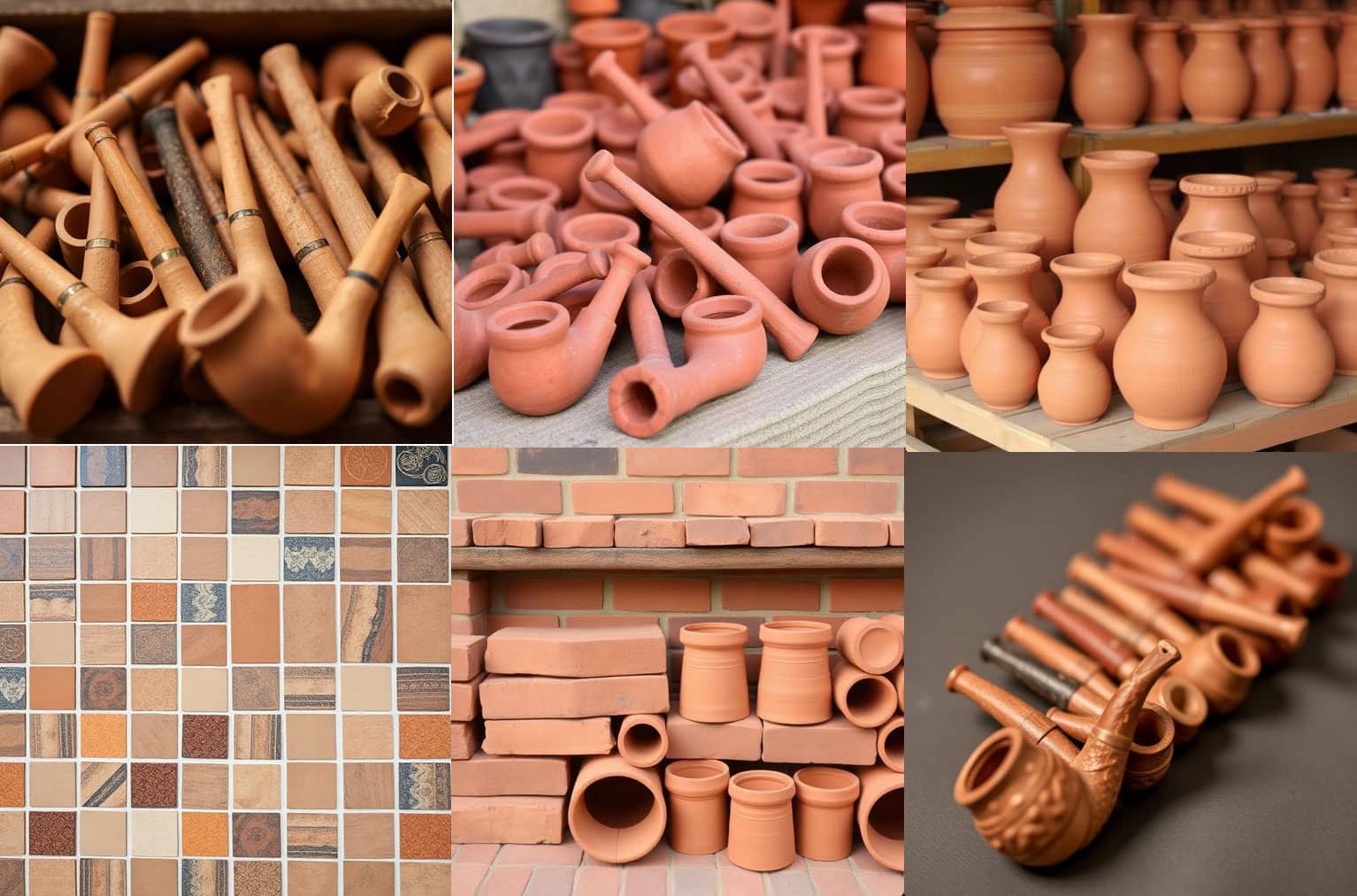
Earthenware is a clay product burned at low temperatures, making it porous and less strong compared to stoneware.
Uses of Earthenware
Earthenware is used for:
- Pots
- Water containers
- Decorative items
- Tiles
- Bricks (low strength)
Earthenware is cheap and easy to manufacture, but it is less durable than other clay products.
5. Fire Clay Products
Fire clay products are made from fire clay, which can withstand very high temperatures without cracking or deforming.
Uses of Fire Clay Products
They are used in:
- Furnaces
- Kilns
- Fireplaces
- Boilers
- Chimneys
Examples include:
- Fire bricks
- Refractory bricks
- Fire tiles
- Refractory blocks
Fire clay products are heat resistant and used in high-temperature industrial structures.
6. Terracotta
Terracotta is a decorative clay product used for architectural and ornamental purposes. It is made from fine clay and burned at controlled temperatures.
Uses of Terracotta
Terracotta is used for:
- Decorative panels
- Statues
- Wall cladding
- Architectural ornaments
- Garden pots
- Jali work
- Roof tiles
Terracotta products provide beautiful appearance, durability, and weather resistance.
7. Clay Pipes
Clay pipes are cylindrical clay products used for drainage and sewer systems.
Types of Clay Pipes
- Drain pipes
- Sewer pipes
- Ventilation pipes
- Water pipes (limited use)
Advantages of Clay Pipes
Clay pipes are:
- Corrosion resistant
- Chemical resistant
- Durable
- Smooth inside surface
- Long lasting
They are widely used in underground drainage systems.
Properties of Clay Products
Clay products have several important engineering properties, which make them suitable for construction.
Main Properties
- High compressive strength
- Durability
- Fire resistance
- Weather resistance
- Good thermal insulation
- Sound insulation
- Low maintenance
- Resistance to insects and pests
- Good appearance
- Long life
Because of these properties, clay products are widely used in building construction and civil engineering works.
Advantages of Clay Products
The major advantages of clay products are:
- Natural and eco-friendly material
- Easily available raw material
- Low cost
- Fire resistant
- Weather resistant
- Durable
- Good thermal insulation
- Good sound insulation
- Low maintenance
- Long service life
- Reusable and recyclable
Disadvantages of Clay Products
Some disadvantages of clay products include:
- Brittle and breakable
- Low tensile strength
- Heavy weight
- Time-consuming manufacturing process
- Not suitable for high tensile structures
- Requires skilled labor for manufacturing
Applications of Clay Products in Construction
Clay products are used in many civil engineering and construction works, such as:
- Building construction
- Wall construction
- Foundations
- Roof covering
- Flooring
- Drainage systems
- Sewer systems
- Decorative works
- Fire-resistant structures
- Industrial furnaces
- Chimneys
- Pavements
- Boundary walls
Clay products are one of the most important traditional construction materials still widely used today.
Conclusion
Clay products play a very important role in construction, engineering, pottery, drainage, and architectural works. These products are manufactured by molding clay, drying it, and burning it in kilns, which makes them strong, durable, and weather resistant. The main types of clay products include bricks, tiles, stoneware, earthenware, fire clay products, terracotta, and clay pipes. Due to their durability, fire resistance, low cost, and long life, clay products remain one of the most widely used building materials in the world.
Please view the following short video for Clay Product and Its Types
Also Read:
 ACP Sheet: Applications, Advantages and Disadvantages