
Road Rollers: Types, Uses, Working Principles, and Advantages in Modern Construction
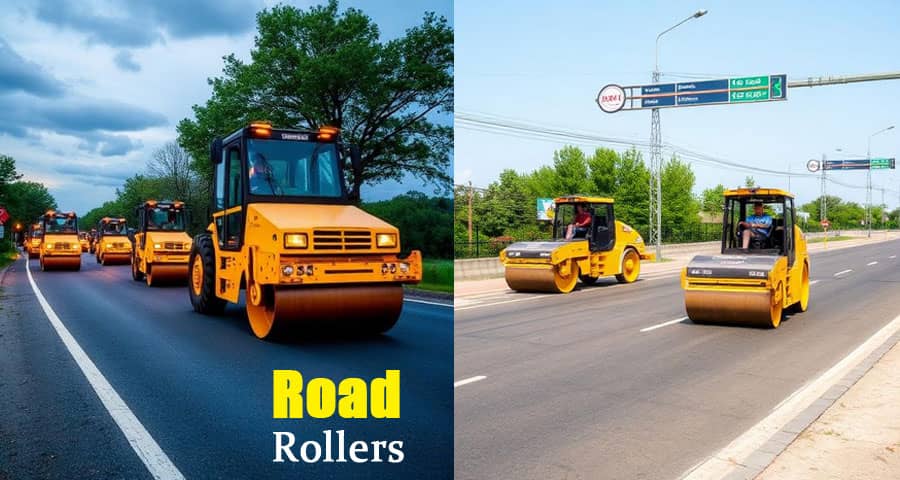
Road rollers are among the most essential heavy construction machines used for soil, asphalt, gravel, and concrete compaction. In modern infrastructure development, we rely on road rollers to create stable, durable, and smooth surfaces for highways, runways, pavements, and foundations. Without proper compaction, roads quickly develop cracks, uneven surfaces, and structural weaknesses.
What Is a Road Roller?
A road roller is a heavy-duty compaction machine used to compress soil, asphalt, concrete, or gravel to increase density and stability. The machine uses its large cylindrical drum or multiple drums to apply pressure and eliminate air voids between materials.
We commonly use road rollers in:
- Highway construction
- Airport runway development
- Railway foundations
- Dam and embankment projects
- Parking lots and industrial yards
- Residential road development
Through controlled weight, vibration, and pressure, road rollers create uniform surfaces capable of handling heavy loads and continuous traffic.
Key Components of a Road Roller
Understanding the primary components of a road roller helps us appreciate how efficiently it performs compaction tasks.
1. Drum
The drum is the main cylindrical steel roller responsible for compressing materials. Depending on the machine type, road rollers may have single, double, or pneumatic drums.
2. Engine
The engine provides power for machine movement and vibration systems. Most modern rollers use diesel-powered engines for high torque and efficiency.
3. Vibration System
Many road rollers include vibratory mechanisms that increase compaction efficiency. The vibration helps particles settle closer together, producing higher density layers.
4. Operator Cabin
Modern rollers feature ergonomic cabins with visibility, control panels, and safety systems that allow operators to control speed, vibration intensity, and direction.
5. Water Spray System
When compacting asphalt, rollers often use a water spray system to prevent asphalt from sticking to the drum surface.
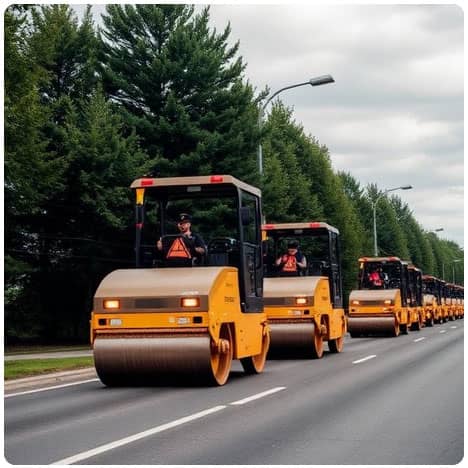
Types of Road Rollers Used in Construction
Different construction conditions require different roller designs. Each type serves a specific purpose depending on the material and compaction requirement.
1. Smooth Wheel Roller
The smooth wheel roller, also known as a static road roller, is one of the most commonly used compaction machines.
Key Features
- Large steel drum at the front
- Smooth cylindrical surface
- High static weight for compression
Best Uses
- Asphalt surface compaction
- Road finishing
- Pavement leveling
These rollers are widely used for final finishing operations to create smooth and even road surfaces.
2. Vibratory Road Roller
The vibratory roller is designed to produce high-frequency vibrations while compacting surfaces.
Advantages
- Increased compaction depth
- Faster project completion
- Higher density in granular soils
Applications
- Highway base layers
- Granular soils
- Subgrade compaction
Vibratory rollers are considered more efficient than static rollers because the vibration helps particles settle tightly together.
3. Pneumatic Tyre Roller
The pneumatic tyre roller uses multiple rubber tyres instead of steel drums. These tyres apply pressure uniformly across the surface.
Characteristics
- Adjustable tyre pressure
- Uniform load distribution
- Excellent sealing capability
Common Uses
- Asphalt road compaction
- Bituminous layer finishing
- Surface sealing
These rollers help eliminate air voids in asphalt layers, improving road durability.
4. Sheep Foot Roller
The sheep foot roller, also called a padfoot roller, contains protruding lugs or pads on the drum surface.
Main Purpose
- Compaction of cohesive soils such as clay
Advantages
- Deep compaction
- Breaks soil clumps
- Improves soil stability
Sheep foot rollers are widely used in dam construction, embankments, and large earthworks.
5. Grid Roller
The grid roller features a steel grid drum with open spaces that crush large materials during compaction.
Suitable Materials
- Weathered rocks
- Coarse soils
- Gravel layers
These rollers are commonly used for initial compaction stages in road base construction.
Working Principle of Road Rollers
The fundamental working principle of road rollers is compaction through pressure, vibration, and kneading action.
1. Static Load Compaction
The weight of the roller drum compresses the material beneath it, reducing air voids and increasing density.
2. Vibratory Compaction
Vibratory rollers create oscillating forces that rearrange soil particles into tighter formations.
3. Kneading Action
In pneumatic tyre rollers, the flexible tyres knead the surface, helping achieve uniform density and improved bonding.
Through repeated passes over the surface, the material becomes compact, stable, and resistant to deformation.
Applications of Road Rollers in Construction
Road rollers play a vital role in large-scale infrastructure projects.
1. Highway Construction
Road rollers ensure strong base layers and smooth asphalt surfaces, improving road longevity.
2. Airport Runways
Runways require high-density compaction to withstand heavy aircraft loads.
3. Railway Foundations
Proper compaction provides stable tracks and prevents settlement issues.
4. Dam and Embankment Construction
Heavy rollers compact soil layers to increase structural strength and prevent erosion.
5. Industrial Construction
Factories and warehouses use rollers to create stable foundations for heavy machinery and structures.
Advantages of Using Road Rollers
Road rollers deliver multiple benefits that make them indispensable in modern construction.
1. Improved Surface Strength
Compaction increases load-bearing capacity and structural stability.
2. Enhanced Durability
Properly compacted surfaces resist cracking, settlement, and deformation.
3. Faster Construction
Modern vibratory rollers allow rapid compaction over large areas.
4. Uniform Surface Finish
Rollers create smooth, level roads that improve driving comfort and safety.
5. Reduced Maintenance Costs
Well-compacted roads require fewer repairs and lower maintenance expenses.
Modern Technologies in Road Rollers
Today's construction industry uses advanced intelligent compaction technologies in road rollers.
1. Intelligent Compaction Systems
Sensors measure soil stiffness, temperature, and compaction levels in real time.
2. GPS Monitoring
GPS-based systems allow accurate compaction mapping and project tracking.
3. Fuel-Efficient Engines
Modern rollers are designed with low-emission engines and optimized fuel consumption.
4. Automated Controls
Advanced control systems improve operator efficiency and compaction precision.
These technologies significantly improve construction productivity and project quality.
Maintenance Practices for Road Rollers
Regular maintenance ensures long-term performance and reliability.
Essential Maintenance Steps
Daily Inspection
- Check engine oil levels
- Inspect hydraulic systems
- Examine drum surfaces
Lubrication
- Lubricate moving components regularly to prevent wear.
Cleaning
- Remove asphalt or soil buildup from the drum surface.
Hydraulic System Monitoring
- Ensure hydraulic hoses and connections remain leak-free.
Scheduled Servicing
- Follow manufacturer recommendations for engine and vibration system servicing.
Proper maintenance improves machine lifespan, operational efficiency, and safety.
Safety Measures While Operating Road Rollers
Operating heavy compaction machinery requires strict safety protocols.
Important Safety Guidelines
- Ensure trained operators only
- Maintain safe distance from edges and slopes
- Use proper protective equipment
- Follow load and slope limitations
- Perform pre-operation inspections
These practices minimize worksite accidents and equipment damage.
Future of Road Roller Technology
The future of road compaction equipment focuses on automation, sustainability, and smart construction technologies.
Innovations include:
- Electric road rollers
- Autonomous compaction machines
- AI-based compaction monitoring
- Eco-friendly construction equipment
These developments will transform infrastructure development by making construction faster, safer, and more environmentally sustainable.
Conclusion
Road rollers remain one of the most critical machines in infrastructure development, enabling engineers and construction teams to create stable, durable, and long-lasting roads and foundations. Through advanced compaction techniques, modern technologies, and proper maintenance practices, road rollers ensure high-quality construction results across highways, airports, railways, and large civil engineering projects.
As global infrastructure demand continues to grow, road roller technology will play a central role in shaping efficient and resilient transportation networks worldwide.
Please watch the following short video for Road Rollers
Also Read:
 All About Waffle Slab Foundation and Its Features, Pros & Cons